

Views: 0 Author: Site Editor Publish Time: 2026-10-14 Origin: Site


Have you ever scrapped an entire textile batch due to erratic color inconsistencies? A massive roll of freshly dyed fabric emerges from the finishing line, only to reveal severe shrinkage and warped edges. This scenario represents a massive financial drain on the factory floor. Inconsistent moisture removal remains a highly destructive finishing problem. It plagues production lines and directly degrades structural integrity. In this engineering guide, we will dissect the exact mechanical causes behind these costly defects. Furthermore, we will explore industrial machinery solutions built to permanently stabilize your workflow and protect your bottom line.
Analyzing current industrial manufacturing trends, the global textile sector is experiencing a rapid shift toward automated precision and sustainability. With rising energy costs and increasingly strict environmental regulations, modern mills can no longer rely on traditional brute-force heating methods. Market data indicates a rapid adoption of smart, sensor-driven drying environments. By utilizing real-time exhaust humidity metrics to adjust burner capacity, facilities are drastically reducing thermal waste while virtually eliminating the risk of irregular drying profiles. This industry-wide push for energy efficiency makes understanding the precise thermodynamics of moisture removal absolutely critical for remaining competitive.
To truly prevent drying defects, operators must first examine the physical mechanics of textile moisture removal. The drying process is far more sophisticated than merely blasting a wet web with heat. It involves a complex phase change. Liquid water trapped deep within the microscopic fiber structure must convert into vapor. The surrounding ambient air then swiftly evacuates this vapor.
During the textile finishing process, water acts as a crucial carrier vehicle for dyes, resins, and chemical softeners. When a fabric enters a drying chamber, evaporation naturally begins at the surface layer. Provided that heat and airflow are applied uniformly, the moisture evaporates evenly across the entire width and length of the material. Consequently, the chemicals remain perfectly distributed.
Conversely, localized temperature and moisture gradients frequently emerge. One section of the material dries significantly faster than another. This imbalance immediately triggers capillary action. The remaining liquid water inside the fabric naturally migrates toward the drier, warmer areas. It carries suspended dye particles and finishing chemicals along with it. Once the water finally evaporates, it leaves these chemicals concentrated in specific spots, fundamentally altering the fabric physical texture and visual vibrancy.
Different textile fibers possess distinct microscopic structures. They hold and release water in entirely different ways. Natural cellulosic fibers, such as heavy cotton and linen, are highly hydrophilic. They absorb water deep into their core, requiring substantial thermal energy and extended dwell times to dry completely. Synthetic fibers, like polyester, are inherently hydrophobic. They hold water mostly on their surface between the yarn intersections, allowing for rapid flash evaporation. When processing blended fabrics on the floor, the differing evaporation rates of these constituent fibers make the material highly susceptible to uneven drying if the machinery is not precisely calibrated.
Identifying the root cause of moisture variance is the mandatory first step in optimizing production efficiency. In high-volume industrial manufacturing, uneven drying is rarely an isolated incident. It is almost always the direct result of mechanical misalignment, poor maintenance, or improper process parameters.
Industrial ovens rely on internal gas burners, thermal oil radiators, or steam coils to heat the circulating air. If these heating elements degrade over time, distinct cold spots will develop within the machine. When the temperature fluctuates across the width of the chamber, operators often notice that the selvedges of the fabric dry rapidly while the center remains noticeably damp. In addition, inconsistent burner modulation causes longitudinal temperature variations. This means the beginning of a fabric roll experiences entirely different drying conditions than the end of the same roll.
Heat alone cannot successfully dry fabric. The moisture-laden air must be continuously and forcefully evacuated. Modern drying machines utilize a complex network of high-efficiency centrifugal fans, impingement nozzles, and exhaust ducts. If top or bottom air nozzles become clogged with accumulated lint, the targeted airflow is disrupted. This invariably leaves distinct wet streaks along the fabric surface. Similarly, if the exhaust fans underperform, the relative humidity inside the chamber spikes. The internal atmosphere becomes saturated and stalls the evaporation process.
Physical tension directly alters the geometric density of the textile. Pulling a fabric too tightly in the warp lengthwise direction severely compresses the intersecting yarns. This mechanical compression reduces the porous space between the fibers, making it incredibly difficult for hot air to penetrate the material core. Sections of the fabric that are stretched will possess a fundamentally different density than sections allowed to slacken. Thermal energy penetrates low-density areas much faster than high-density areas, guaranteeing erratic moisture evaporation.
One of the most frequent culprits occurs before the fabric even enters the oven. During the padding stage, textiles pass through a mangle to squeeze out excess water. If the pneumatic pressure on these heavy rubber rollers is misaligned, the fabric enters the dryer with a highly erratic moisture profile. A common floor defect known as a crowned roller exacerbates this issue. If the center of the fabric retains 60 percent moisture while the selvedges retain only 40 percent, no dryer can correct that initial imbalance. Implementing routine nip pressure calibrations is a mandatory operational practice.
Failing to maintain strict drying parameters is not merely a cosmetic inconvenience. It fundamentally degrades the structural integrity and market value of the final product. This directly leads to rejected batches, expensive client claims, and significant financial losses for the mill.
Drying fabric unevenly under high mechanical tension locks the fibers into an unnatural, elongated state. The moisture evaporates far before the yarns have the opportunity to relax into their standard geometric structure. This creates massive residual stress within the textile. When the end-consumer eventually washes the garment, the introduction of water and mechanical agitation suddenly releases this stored stress. The fibers violently snap back to their natural state, resulting in severe and permanent dimensional shrinkage.
Uneven moisture evaporation forces capillary action. In dyed fabrics utilizing disperse or reactive dyes, this physical phenomenon manifests as dye migration. If the edges of a fabric dry faster than the center, water from the center travels outward. It drags unfixed dye particles along with it. The result is a ruined batch featuring dark, heavily saturated edges and a faded center. Once dye migration occurs during the thermal phase, the color variance is permanently baked into the fibers.
Modern performance textiles heavily rely on elastane to provide stretch and recovery. However, these elastic fibers are notoriously sensitive to thermal degradation. Irregular drying creates localized hot spots within the machine chamber. The elastane fibers in those specific areas can melt, become irreparably brittle, or entirely lose their molecular elasticity. This localized thermal damage leads to garments that sag and fail to recover their shape after stretching.
To systematically combat the physical variables causing drying defects, textile manufacturers rely on specialized heavy-duty engineering. When addressing dimensional instability and edge curling, a Stenter Machine is universally recognized as the industry standard. This highly specialized equipment dictates the physical dimensions of the fabric while applying meticulously regulated thermal energy.
Unlike standard tumble dryers that allow fabrics to float freely, a stenter machine physically grips the edges of the fabric. It utilizes a continuous, heavy-duty chain of pins or clips. As the fabric is fed into the entry zone, these chains diverge to stretch the material to a precise predetermined width. Holding the fabric taut and perfectly flat throughout the entire thermal cycle actively prevents the edges from folding. Because folded edges naturally trap moisture, this mechanical control eliminates a primary catalyst for uneven drying.
Once securely gripped, the fabric travels through heavily insulated heating chambers. Modern stenters deliver high-velocity, temperature-controlled air that impinges on the fabric at a precise 90-degree angle. The heat distribution remains identical across every square inch of the material, effectively preventing capillary dye migration. Furthermore, the stenter is an essential tool for heat-setting synthetic fibers. By bringing the fabric to a uniform peak temperature often between 180°C and 210°C, the machine permanently locks the molecular structure of the fibers in place. This rigorous process guarantees maximum dimensional stability.
While woven fabrics heavily benefit from rigid controlled tension, knit fabrics require an entirely different mechanical approach. Knits are constructed from interlocking loops of yarn, making them highly susceptible to stretching. For these delicate materials, an industrial Relax Dryer provides the optimal solution by facilitating a completely tensionless drying environment.
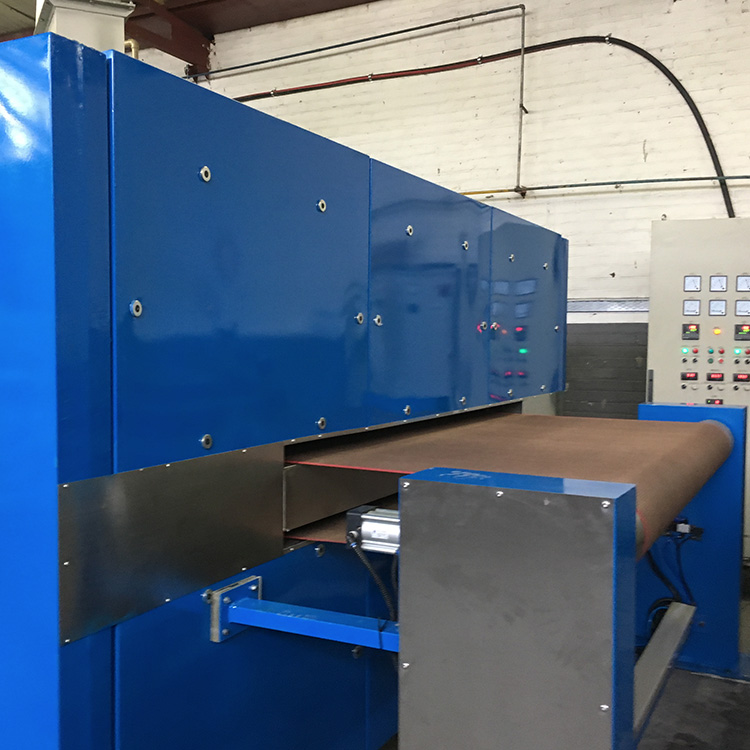
The core operational principle revolves around overfeeding. The machine feeds the wet material onto a specialized Teflon-coated fiberglass conveyor belt at a speed slightly faster than the belt itself is moving. Advanced designs often feature multiple layer configurations, such as 3-layer systems, to maximize floor space and extend dwell time. This deliberate overfeed creates a wave-like accumulation of loose fabric. Pulsating hot air blown from alternating bottom nozzles physically lifts and tumbles the fabric. This creates a continuous gentle fluttering effect without subjecting the yarns to longitudinal pulling.
Tensionless drying remains the most effective technique for preventing residual shrinkage in knit fabrics. Freed from rigid physical tension, the fibers naturally contract, bulk, and untwist as the moisture evaporates. Because the pulsating hot air penetrates the loosely accumulated fabric from all angles, moisture is removed at an identical rate across the entire batch. This dynamic movement guarantees completely even moisture evaporation, preserving the soft voluminous hand-feel of the textile.
Selecting the correct drying technology requires matching machine mechanical properties to fabric physical requirements. For facilities handling heavy woven fabrics, denim, or continuous sizing operations, the Cylinder Dryer represents a highly effective approach to moisture removal based on direct conduction.
A cylinder dryer relies on direct thermal contact rather than circulating hot air convection. The machine consists of a vertical or horizontal series of large rotating stainless steel or Teflon-coated cylinders. These massive drums are internally heated using pressurized steam. Threading the wet fabric tightly over these rotating drums causes rapid explosive water evaporation. The exceptionally high thermal conductivity of the metal makes this process incredibly fast and energy-efficient.
To assist plant managers in making informed equipment choices, understanding the fundamental differences between these technologies is vital. Below is a comparative breakdown of optimal use cases tailored for industrial applications.
| Parameter | Cylinder Dryer | Relax Dryer | Stenter Machine |
|---|---|---|---|
| Drying Mechanism | Direct contact conduction via steam rollers | Pulsating hot air convection | Targeted hot air nozzles convection |
| Fabric Tension | High longitudinal pulling | Zero tensionless tumbling | Controlled width held rigidly by pins or clips |
| Best Fabric Types | Heavy wovens, denim, cotton sheeting | Cotton knits, delicate blends, terry towels | Synthetics, elastane blends, wide wovens |
| Primary Function | High-speed moisture removal | Shrinkage control and bulk preservation | Heat-setting and precise width control |
Investing in advanced machinery is only half the equation. To permanently eradicate irregular drying profiles, textile manufacturers must implement stringent standard operating procedures. The drying stage is incredibly sensitive to variables introduced in earlier processing steps.
Uneven squeezing at the mangle guarantees an uneven drying result. Maintenance teams must prioritize routine calibration of nip pressure across the entire width of the padder. Regularly grinding the rubber rollers to ensure a perfectly flat profile prevents the center or edges of the fabric from retaining excess water before reaching the heating chambers.
Relying on manual touch to determine if a fabric is dry is an outdated and risky practice. Modern textile facilities utilize advanced automated residual moisture sensors installed directly at the exit of the drying machinery. These sophisticated sensors continuously scan the width of the fabric to detect the exact moisture content in real-time. If sensors detect a variance, the system communicates with the internal controller to automatically adjust conveyor speed or modulate burner temperatures. This closed-loop automation entirely removes human error.
Uneven fabric drying fundamentally degrades textile quality, causing severe shrinkage and inconsistent color migration that ruins entire production runs. To protect your bottom line and ensure consistent product excellence, upgrading your equipment is the only guaranteed path to uniform finishing. Evaluate your current production line today to identify mechanical bottlenecks. Whether you require the precise width control of a Stenter, the tensionless shrinkage control of a multi-layer Relax Dryer, or the high-speed efficiency of a Cylinder Dryer, choosing the right industrial solution is paramount. Visit Virock Machines today to explore our advanced textile finishing equipment and permanently stabilize your manufacturing quality.
It causes a physical phenomenon known as dye migration. As water evaporates, it naturally moves toward the areas of the fabric that are drying the fastest. This aggressive capillary action carries unfixed dye particles along with the moving water. It results in a heavy concentration of color in dry areas and a severe lack of color in damp areas, creating highly visible light and dark patches.
Yes, absolutely. Drying textile fibers unevenly while subjected to mechanical tension stores immense residual stress within their molecular structure. When the end-consumer later washes the garment in warm water, the fibers finally relax and contract. This causes sudden, permanent, and often severe dimensional shrinkage that ruins the fit of the garment.
From a mechanical standpoint, a Stenter Machine holds the fabric perfectly taut at the edges using pins or clips to strictly control the width and apply high heat for setting the material. Conversely, a Relax Dryer utilizes an overfed conveyor belt to transport the fabric completely tension-free. This allows it to tumble, bulk, and shrink naturally, which is highly ideal for preserving the elasticity of knit fabrics.
Elastic fibers, such as spandex or elastane, are exceptionally sensitive to extreme thermal exposure. Uneven drying often creates localized hot spots inside the machine chamber. These sudden temperature spikes easily melt, brittle, or chemically degrade the elastane fibers, permanently ruining the fabric stretch, recovery properties, and overall structural integrity.
Generally, no. A Cylinder Dryer operates by pulling the wet fabric tightly over a series of steam-heated metal rollers. This intense longitudinal tension stretches delicate knit fabrics out of shape and forcefully flattens their natural loop structure. Knits are much better suited for the gentle tensionless convection environment provided by a Relax Dryer.
Modern facilities utilize automated residual moisture sensors installed at the machine exit. These sensors continuously scan the fabric width to detect real-time variance. This data-driven approach replaces outdated manual touch methods and allows the machine PLC to automatically adjust exhaust fan speeds and burner outputs to correct the profile instantly.
While it varies by fiber type, cotton blends typically require a uniform moisture content of roughly 60 percent after passing through the padding mangle. Ensuring this baseline consistency across the entire width of the fabric is critical to preventing capillary dye migration during the subsequent thermal phase.


