

Views: 0 Author: Site Editor Publish Time: 2026-10-01 Origin: Site


Walk onto any active production floor. A fresh batch of premium single jersey fabric exits the dye house. The moment it hits the slitting machine, the edges aggressively roll inward. Fabric edge curling stands out as one of the most frustrating and costly defects in textile manufacturing. When selvedges fold onto themselves, the immediate fallout includes significant material waste, uneven dye penetration, and chaotic garment construction. For textile manufacturers, these persistent defects directly sabotage profit margins and operational efficiency.
This curling phenomenon primarily haunts knit fabrics and materials boasting a high elastane content. The inherent structural tension locked within these synthetic yarns causes the fabric to snap into a tight roll as soon as it is processed in an open-width state. Overcoming this complex physical challenge requires far more than basic fabric handling. It demands a highly strategic mix of mechanical intervention, precise machine calibration, and specialized finishing equipment.
Mastering the alignment of your stenter frame, uncurling devices, and compaction units is the ultimate key to flawless production. This comprehensive guide explores the mechanical, thermal, and chemical strategies required to maintain perfectly flat selvedges from the wet processing stage all the way to the cutting table.
Before diving into the technical mechanics of textile processing, operators must establish a high-level understanding of the factors influencing selvedge behavior. Fabric edge curling is never a random occurrence. It is a predictable physical reaction triggered by unbalanced structural tension. Addressing this requires a systematic, multi-tiered approach.
| Intervention Category | Primary Solution | Technical Objective |
|---|---|---|
| Mechanical Control | Edge Uncurler Installation | Physically spreads and flattens rolled selvedges immediately prior to pinning or heating. |
| Thermal Processing | Stenter Machine Optimization | Utilizes controlled temperature zones and overfeed parameters to permanently set the yarn structure. |
| Dimensional Stability | Open-Width Compaction | Applies tensionless mechanical shrinkage to lock the fabric dimensions and prevent post-production curling. |
| Chemical Application | Edge Gumming Stiffening | Applies water-soluble adhesives to the extreme edges to provide temporary structural rigidity during handling. |
Understanding the root cause of edge curling requires a brief dive into textile physics. The phenomenon is rarely the fault of a single machine operator. Instead, it is the result of inherent yarn properties violently reacting to environmental and mechanical stresses during the manufacturing cycle.
The structural architecture of a textile dictates its behavior when cut. Woven fabrics feature an interlaced grid of warp and weft yarns. This grid inherently provides structural stability that keeps the edges flat. In contrast, knit fabrics are constructed from continuous interlocking loops. These loops consist of face stitches and purl stitches. Due to the asymmetric nature of a single-knit structure, the face of the fabric naturally pulls in one direction while the back pulls in another. The moment the fabric is slit open, this stored mechanical energy is unleashed. The result is an immediate, tight edge curl.
Integrating elastane into cotton or synthetic blends acts as a massive catalyst for the curling effect. Elastane yarns are introduced into the knitting machine under extreme draft tension. While this tension gifts the final garment with desirable stretch and recovery properties, it leaves the raw fabric in a constant state of high internal stress. Slitting an elastane-blended tubular fabric causes the stretched synthetic fibers to aggressively attempt a return to their relaxed state. This rapid retraction creates a stubborn selvedge roll that is incredibly difficult to manage without specialized outward-pulling machinery.
Edge curling is frequently amplified by upstream processes long before the fabric reaches the finishing department. Throughout washing, bleaching, and dyeing, textiles are often subjected to excessive lengthwise tension. When a fabric is stretched too tightly along the warp direction, its width naturally narrows. This narrowing forces the edges to fold inward. If operators fail to relax this tension adequately before the fabric enters the final drying stages, those curled edges will become permanently heat-set.
Standardizing the finishing process requires operators to implement targeted, actionable techniques that neutralize internal yarn tension. The textile industry relies on three primary methodologies to flatten rogue edges and prepare the material for seamless garment construction.
Mechanical uncurling acts as the most immediate, front-line defense for processing single knits. This technique relies on active pneumatic or motor-driven scroll rollers positioned precisely at the entry point of the heating chambers. As the fabric feeds into the machine, these counter-rotating devices gently grip the curled selvedge. They unroll it outward just milliseconds before the fabric is secured onto the pin chain. This physical spreading guarantees that the material enters the heat-setting phase in a completely open state.
For particularly stubborn substrates, such as high-gauge synthetic blends or ultra-lightweight silks, mechanical spreading alone may fall short. Edge gumming involves the precise application of a chemical stiffening agent directly to the extreme 1 to 2 centimeters of the fabric edge via a specialized applicator wheel. As the fabric passes through the heating chambers, the water-soluble resin flash-dries and hardens. This creates a rigid border that completely resists curling during subsequent cutting and sewing phases. Since this stiffened edge is trimmed away during garment assembly, it leaves the final product's luxurious hand feel entirely untouched.
Thermal heat-setting remains the definitive method for erasing the memory of synthetic and elastane yarns. By elevating the fabric temperature to the specific glass transition point of the synthetic fibers, the internal molecular structure of the yarn is temporarily relaxed. This typically hovers between 180°C and 195°C for standard blends. Utilizing an efficient stenter machine with a gas-electricity combined heating system ensures ultra-precise temperature control across all chambers. This hybrid approach prevents localized temperature drops that often lead to inconsistent edge setting. While held in this heated, flat state by the pinning chain, the fabric is rapidly cooled at the machine's exit. This sudden temperature drop freezes the yarns in their new configuration, permanently eliminating the structural urge to curl.
To achieve consistent, repeatable results, finishing lines must utilize specialized equipment engineered specifically for edge management. Operating without a dedicated uncurling device is a guaranteed recipe for material waste.
An edge uncurler is a highly specialized mechanical or pneumatic assembly mounted at the entry zone of textile finishing machinery. Its primary function is to detect, capture, and flatten rolled selvedges before the fabric undergoes any thermal or mechanical compaction. Without this critical intervention, the curled edges would simply be pinned or pressed into a permanent, unusable crease.
The operational mechanism of this device relies on continuous, outward-directed friction. As the fabric approaches the entry rails, angled spindles or grooved scroll rollers rotate in the opposite direction of the fabric's curl. These rollers apply a gentle but persistent outward lateral force, smoothing the fabric edge. Because this action occurs immediately before the fabric is pressed by the brush wheels onto the pinning apparatus, the elastane has absolutely no time to retract or re-curl.
Selecting the appropriate uncurling device depends heavily on your specific fabric substrate. Mechanical scroll uncurlers utilize motor-driven ribbed rollers and are highly effective for heavy cotton knits and standard tension blends. Pneumatic uncurlers, conversely, utilize targeted blasts of compressed air to blow the curled edges open. Air-blown systems are heavily preferred for highly delicate, lightweight, or easily snagged fabrics where mechanical friction might cause surface abrasion or yarn distortion.
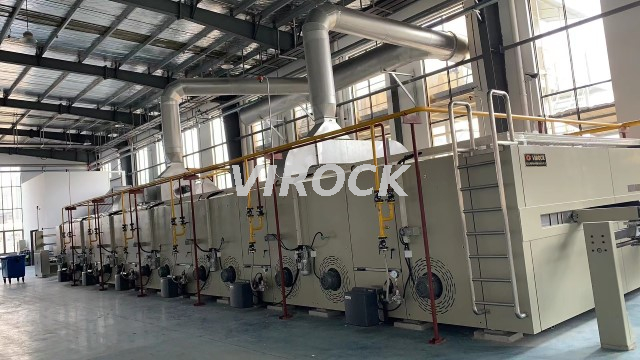
The stenter frame is arguably the beating heart of the textile finishing line. Its primary purpose is to control the width, length, and dimensional stability of the fabric. However, improper calibration of this powerful equipment will permanently lock in edge curling defects.
The foundation of a flat selvedge relies entirely on how accurately the fabric is secured to the machine's transport chain. Modern machines utilize a pinning mechanism where the fabric edges are pressed onto fine metal needles by rotary brush wheels. If the fabric is even slightly curled when the brush wheels make contact, that curl will be locked in place. Operators must continuously monitor the pinning depth and optical edge tracking sensors to ensure the selvedge is captured perfectly flat.
Tension management within the heating chambers is dictated by overfeed parameters. If a fabric is pulled tightly along its length, the internal loops elongate, and the edges naturally roll inward. By increasing the overfeed, operators essentially feed more fabric into the machine than the transport chain is pulling away. This eliminates lengthwise tension. It allows the knit loops to relax, bulk up, and lay flat. Engineers looking to master these specific metrics should consult detailed Stenter Settings and Parameters to ensure optimal thermal and mechanical calibration for varying fabric weights.
The thermal environment inside the chambers must be meticulously balanced. If the circulating air blowers are set too high, the turbulent aerodynamic force can physically blow the delicate fabric edges off the pins during the drying phase. Operators must carefully adjust the ratio of top and bottom airflow, often utilizing variable frequency drives, to keep the fabric pressed gently downward or perfectly suspended in the center of the chamber.
While heat-setting stabilizes the yarn's memory, a final mechanical step is often required to guarantee that the fabric will not shrink or curl once it reaches the cutting room floor. This is where compaction technology proves indispensable.
Historically, many knit fabrics were processed in a tubular format, which kept the edges relatively stable. However, modern demands for wider cutting markers and complex garment patterns have driven the industry toward open-width processing. Slitting a tubular fabric inherently exposes the raw edges, making them highly vulnerable. Processing these open fabrics requires specialized equipment. Implementing Open-Width Compactor Machines engineered specifically for delicate slit knits is crucial. These units handle the fabric without introducing new lengthwise tension.
Compaction is a precision mechanical shrinking process. As the fabric enters the machine, it is permeated with steam to soften the fibers. It then passes over heated cylinders and feeds into a compaction zone. A high-quality compactor utilizes a specialized Teflon shoe and a 20mm thick heat-resistant Nomex felt blanket. The feed roller pushes the fabric in faster than the take-up roller pulls it out, forcing the knit loops to physically compress together. This micro-compression pre-shrinks the fabric uniformly across its width, effectively locking the edges in a flat, stable configuration that will survive subsequent commercial laundering.
The ultimate goal of the finishing process is to deliver a perfectly relaxed roll of fabric to the garment manufacturer. The final stage of the compactor features a tensionless winding or folding unit. If tension is accidentally reintroduced during the batching process, the edges will stretch, and the compaction effect will be ruined. Advanced compactors utilize sensor-driven synchronization to lay the fabric down with zero pulling force, ensuring the selvedges remain impeccably smooth.
Even with state-of-the-art machinery, human error and chemical miscalculations can easily disrupt the finishing process. Identifying and eliminating these common floor-level mistakes is critical for strict quality control.
One of the most frequent errors in fast-paced textile manufacturing is rushing the production cycle. Forcing fabric straight from a highly stressed wet processing environment directly into high-temperature stretching equipment is a recipe for severe curling. Fabrics need time to breathe. Implementing a resting period or passing the fabric through a relaxation dryer allows the internal moisture and yarn stress to equalize. This drastically reduces the severity of edge rolling before the material even reaches the pinning stage.
The chemical finishing agents applied during the padding phase play a massive role in fabric handling. While silicone softeners are necessary to achieve a luxurious, drapeable hand feel, over-application creates a surface that is excessively slippery. When the yarn becomes too slick, the mechanical uncurling rollers struggle to gain traction. Consequently, the pinning brushes may fail to secure the selvedge onto the needles. Formulating the precise balance of softeners and anti-slip agents is essential.
Mechanical degradation is a silent, creeping contributor to edge defects. Over time, the fine metal pins on the transport chain can become bent, blunted, or coated in hardened resin. Dull pins fail to pierce the fabric cleanly, creating micro-frays and uneven tension that encourage the edge to lift. Strict, scheduled maintenance of all cutting blades, pins, and scroll rollers is an absolute necessity for defect-free production.
As fast fashion accelerates and sustainability mandates tighten, the textile industry is undergoing a massive shift in how it handles edge curling. Historically, operators relied on manual adjustments and visual checks to keep fabrics flat. Today, the focus is squarely on Industry 4.0 integration. Modern finishing lines are increasingly equipped with AI-assisted optical sensors. These sensors detect selvedge curl in real-time. They automatically adjust the pneumatic pressure of uncurlers without human intervention.
Furthermore, mills are under immense pressure to reduce both material waste and energy consumption. The adoption of hybrid heating technologies allows plants to maintain the exact thermal conditions required for spandex relaxation while cutting fuel costs. This push for zero-waste, energy-efficient manufacturing makes achieving perfectly flat, usable edges right up to the millimeter a critical competitive advantage rather than just a basic quality control metric.
When persistent fabric edge curling cannot be resolved through process optimization, chemical tweaks, or operator training, the limitation often lies within the machinery itself. Evaluating your current equipment capabilities is the first step toward a permanent, profitable solution.
If your facility processes high-elastane blends or delicate single knits, legacy equipment may simply lack the necessary precision. When evaluating new machinery, prioritize systems with automated, optical edge-tracking sensors. Ensure the stenter features independent overfeed controls capable of a -10% to +30% range. The pinning chain must utilize rotary brush wheels synchronized with the chain speed to prevent micro-fraying. Additionally, seek out machines featuring integrated, variable-speed overfeed controls and built-in edge gumming units.
Not all compaction machines are engineered to handle the specific challenges of slit knits. A high-quality compactor must feature an extended entry zone equipped with dedicated uncurling rollers. Precise steam control is equally critical. The machine must distribute moisture evenly across the fabric width without over-saturating the edges. For facilities handling high-spandex blends, look for compactors that utilize advanced felt blanket tensioning systems to ensure maximum shrinkage without surface distortion.
Capital expenditure on new finishing lines is significant, prompting many plant managers to consider retrofitting. Upgrading an existing line by installing modern pneumatic uncurlers or optical sensors on an older frame can yield substantial improvements in edge management at a fraction of the cost. However, if the core heating chambers lack uniform temperature distribution or the overfeed motors are incapable of maintaining consistent tension, a retrofit acts only as a temporary bandage. Analyzing the overall mechanical health of your current line will dictate whether a component upgrade or a full system replacement is the most cost-effective long-term strategy.
Preventing fabric edge curling during finishing is a holistic process that requires a deep understanding of textile physics combined with the right technological infrastructure. By addressing the root cause of internal yarn tension through careful mechanical spreading, precise thermal setting, and tensionless handling, manufacturers can virtually eliminate this costly defect.
Investing in the correct synchronization of your edge uncurling devices, stenter frame, and open-width compactor will drastically reduce material waste, improve dye consistency, and ultimately elevate buyer satisfaction. If your current production line is struggling to deliver flat, defect-free selvedges, it is time to evaluate your hardware. Upgrading to advanced textile finishing equipment ensures consistent quality and drastically reduces material waste. Explore tailored solutions designed for high-tension knits and secure your competitive edge in the market today.
Single jersey has an unbalanced knit structure. The face stitches inherently pull in one direction, while the purl stitches pull in the opposite direction. When the fabric is cut and the internal tension is released, this structural imbalance causes a natural, immediate roll at the edges.
Yes, most modern edge uncurlers are highly adaptable. They are engineered to be easily retrofitted to the entry rails of existing stenter machines, compactors, or even inspection frames, providing an immediate upgrade to your line's fabric handling capabilities.
Edge gumming applies a stiffening agent only to the extreme selvedge, typically the outer 1 to 2 centimeters. Because garment manufacturers cut this stiffened portion away during the pattern cutting and sewing process, it does not affect the drape, stretch, or luxurious feel of the final apparel.
Yes, specifically for fabrics intended to be utilized in an open-width format. An open-width compactor is mechanically designed to address the specific lateral tension and vulnerability of slit edges. Tubular compactors are designed to process fabric in a closed, continuous loop where edge curling is not a factor.
High-spandex blends are notoriously difficult due to their stored kinetic energy. They require precise thermal heat-setting on a stenter to permanently reset the molecular memory of the elastane yarn. This thermal process must be combined with strict tensionless handling and active mechanical uncurling throughout the entire finishing sequence.
For most standard spandex blends, the ideal heat-setting temperature ranges between 180°C and 195°C. Maintaining this precise temperature across all heating chambers is crucial to relax the synthetic fibers without causing thermal degradation or yellowing.
Overfeed works by feeding more fabric into the heating chamber than the transport chain is pulling out. This eliminates lengthwise tension, allowing the knit loops to naturally relax and bulk up. When the lengthwise tension is removed, the fabric is less prone to narrowing, which directly prevents the edges from rolling inward.


