Innovating the Future of Textile Machinery.
You are here: Home » Application[copy]

Stenter Machines Application

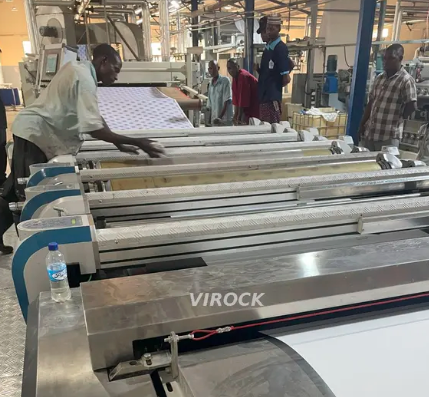
Stenters are a vital component of the modern textile industry, providing a soft and stable texture to unprocessed fabrics. They enhance the fabric's performance, making it less prone to deformation after a series of processing and finishing treatments. Additionally, stenter machines can elevate the fabric's hand feel, making it more appealing to consumers and increasing its marketability.

Stenter machines are versatile, catering to a wide range of fabrics such as warp and weft knitting, synthetic fabrics, coatings, wool, cotton, and polyester.
 
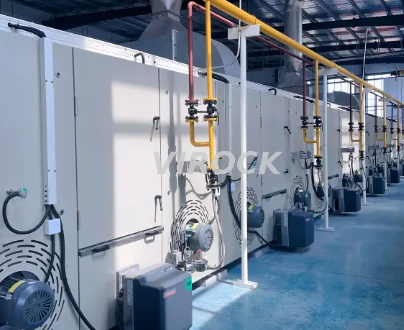
Customizable working widths range from 800mm to 3600mm, ensuring a perfect fit for your specific needs. Heat sources include oil, natural gas, electricity, and saturated steam, offering flexibility and versatility in the production process. Working temperatures range from 100 to 230 degrees Celsius, ensuring precise heat settings for high-quality output.

Stenter For Knitted Fabrics

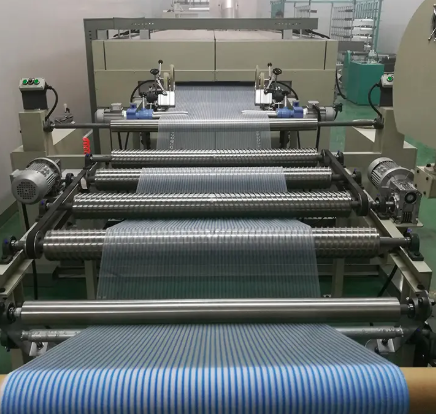
Application: This type of stenter machine is suitable for open-width dipping and heat-setting of pure cotton, polyester cotton, chemical fiber and their blended knitted fabrics with a gram weight of 50-900g/m2. It is also suitable for open-width dipping and heat-setting of polyester filament, polyester low elastic knitted fabrics and their interwoven materials.

Stenter For Woven Fabrics

Application: This type of stenter machine is suitable for open-width dipping and heat-setting of pure cotton, polyester cotton, chemical fiber and their blended woven fabrics with a gram weight of 50-900g/m2.
  • [Textile Field] Different Types of Finishes in Textiles​
    Textile finishing is the critical final step in fabric production that transforms raw woven or knitted cloth into materials that are ready for market, visually appealing, and functionally enhanced. Discover comprehensive insights on finishing of textile fabrics and how VIROCK Textile Machinery Co., Ltd. supports superior textile finishing processes. Read More
  • [Textile Field] What Is Eco Textile Finishing​?
    Modern consumers love fashion that feels good and does good. Yet behind every soft, wrinkle-free shirt lies a complex process called textile finishing. It’s the stage that gives fabrics their look, touch, and special abilities — but also where much pollution happens. Read More
  • [Textile Field] What is the textile finishing process?
    Textile finishing is a critical stage in fabric production, transforming raw, unprocessed cloth into high-quality materials suitable for clothing, home textiles, and technical applications. Learn how textile finishing transforms fabrics with mechanical and chemical methods, improving appearance, durability, and performance for the garment industry. Read More
  • [Textile Field] What machine is used for textile finishing?
    Textile finishing is the final and critical stage in fabric production, where raw or semi-processed textiles are transformed into high-quality, visually appealing, and functional fabrics. But what machine is used for textile finishing? Explore the best textile finishing machinery from VIROCK Textile Machinery Co., Ltd., a leading textile finishing machinery manufacturer delivering high-quality, efficient fabric solutions. Read More
  • [Medical material field] How Is Medical Textiles Made?
    Medical textiles have become a cornerstone of modern healthcare, playing a crucial role in wound care, implants, hygiene, and protective equipment. But have you ever wondered how medical textiles are made? Discover how medical textiles are made, from fiber selection and yarn processing to fabric formation, finishing, and advanced technologies for implants, PPE, and wound care. Read More
  • [Textile Field] What Is Rotary Printing?
    Have you ever wondered how your favorite printed T-shirts or patterned bedsheets are made so quickly? The answer often lies in rotary printing—a fast and powerful method used in the textile and packaging industries. It's trusted for large-scale, colorful, and consistent results. Read More
  • [Textile Field] What Is The Difference between A Dryer And A Stenter?
    Have you ever wondered why some fabrics stay smooth while others shrink or wrinkle after washing? The secret lies in how they're dried and finished. In the textile industry, dryers and stenter finishing machines play very different roles—even though they may seem similar. Read More
  • [Textile Field] Heat Transfer Vs Screen Printing: Which Is Better?
    Ever wondered why some printed shirts last for years while others crack after a few washes? Choosing the right printing method can make all the difference. For anyone customizing apparel—whether it’s a small business, a bulk T-shirt order, or a one-off gift—the method matters. Read More
  • [Textile Field] Types of Hats in Textile Industry
    Why do some hats keep you cool, while others make a bold fashion statement? Hats aren’t just accessories—they’re powerful tools in both design and protection. In the textile industry, hats combine form, function, and fabric in fascinating ways. Read More
  • Total 4 pages  Go to Page
  • Go
Polyester Staple Fiber Production Line
Textile Industries
Stenter for 3-mesh special warp knitting textile
Stenter design for lace production
Stenter for mosquito-net
Stenter for woven fabrics
Stenter for knitted fabrics
VIROCK Textile Machinery Co., Ltd. is a professional textile equipment manufacturer with nearly 20 years of experience

QUICK LINKS

PRODUCT CATEGORY

CONTACT INFO

  +86-13974856209
  shirley.virock@gmail.com
      shirely@virock.com
  +86-731-88051998
  #8 Virock Road, Wangcheng Economic & Technological Development Zone, Changsha, Hunan, China
Copyrights  2023 VIROCK Textile Machinery Co., Ltd. Technology by Leadong. Sitemap.