

Views: 0 Author: Site Editor Publish Time: 2026-08-15 Origin: Site


Standard finishing machines often ruin delicate fabrics before they even reach the cutting room floor. Processing warp-knitted mosquito nets requires exceptional care. Many traditional systems apply destructive longitudinal stress to these fragile textiles. This excessive tension causes severe dimensional distortion, bowing, and uneven GSM (grams per square meter) across the mesh. Manufacturers face plummeting yields and rejected batches when trying to stabilize synthetic structures using standard equipment.
You need a transition to a specialized tensionless finishing approach. This guide provides plant managers and procurement engineers an objective framework to evaluate equipment. You will learn how to shortlist the exact machine configurations required for flawless mesh and netting production.
Traditional tension alters the fundamental geometry of synthetic netting. Materials like polyester, nylon, and fiberglass have specific structural behaviors under thermal load. Mechanical pulling forces distort the delicate hexagonal or diamond patterns. The yarns stretch linearly under stress. This forced elongation reduces the crucial tear strength of the final product. Global health authorities maintain strict regulatory standards for vector control products. The WHO specifications for Long-Lasting Insecticidal Nets (LLINs) mandate highly accurate mesh dimensions. Tension-warped nets fail these regulatory compliance tests immediately.
Eliminating mechanical stress controls residual shrinkage effectively. Synthetic fabrics often shrink unpredictably during consumer washing routines. Shrinkage also occurs during subsequent chemical coating processes. A zero-tension heat setting process locks the yarn memory in a completely relaxed state. The fabric maintains its intended dimensional stability throughout its entire lifespan.
Tension-induced defects directly damage your profit margins. Distorted selvedges lead to immense material waste during the cutting phase. Uneven GSM parameters cause entire fabric rolls to fail standard quality control checks. High rejection rates compound your raw material waste. Adopting a relaxed finishing process prevents these costly manufacturing errors directly.
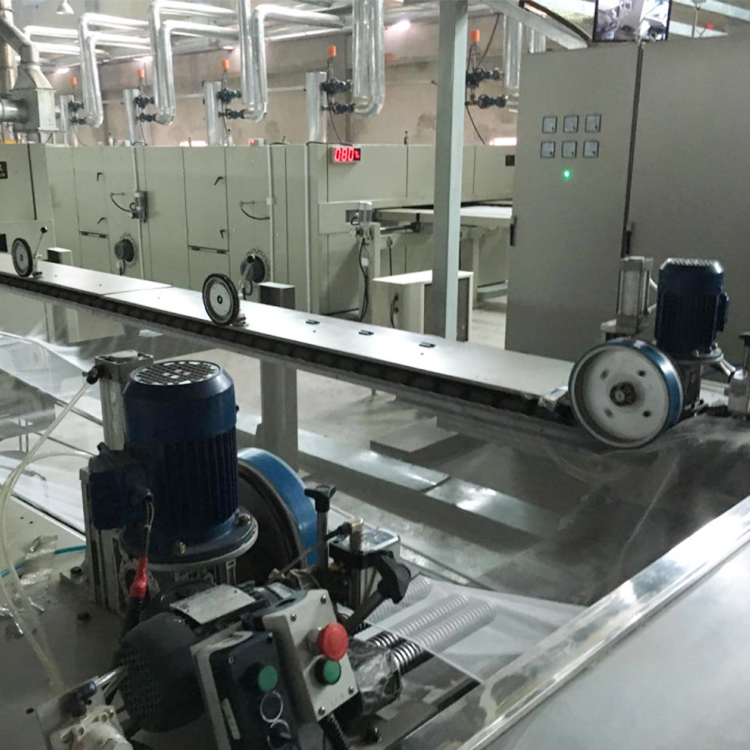
Open-width feeding stands as the undisputed industry standard for delicate netting. Tubular feeding methods typically create permanent central creases. They also encourage severe edge curling in lightweight synthetic mesh. Open-width systems utilize specialized entry frames. Pneumatic uncurlers flatten the selvedge completely before pinning occurs. We can compare the operational differences using a basic evaluation chart.
| Feeding Mechanism | Edge Control | Crease Prevention | Ideal Fabric Application |
|---|---|---|---|
| Open-Width Feeding | Excellent (uses active pneumatic uncurlers) | High (fabric remains completely flat) | Warp-knitted mesh, LLINs, technical textiles |
| Tubular Feeding | Poor (edges tend to roll inward) | Low (high risk of center fold lines) | Standard circular knits, heavy cottons |
Transport mechanisms dictate how the machine handles the selvedge. Pin-chain systems prove vastly superior to standard clips for netting. Clips crush the delicate mesh structure aggressively. They prevent natural width expansion during the thermal heating phase. Pins pierce the fabric selvedge gently. They hold the material securely without compressing the structural yarns.
Airflow delivery systems control fabric stability inside the drying chamber. Traditional nozzle layouts blast hot air directly onto the material surface. This creates severe mechanical friction against the transport bed. You need a staggered, dual-action nozzle design instead. This specific configuration floats the fabric between upper and lower air cushions. It eliminates friction entirely. When evaluating a mosquito net processing tensionless stenter machine, demanding aerodynamic floating capabilities is critical.
When you review tensionless stenter machine specifications, overfeed system precision requires immediate attention. The equipment must feature independent, servo-driven overfeed rollers. Operators need precise ±0.1% adjustment capabilities. This extreme precision compensates for any unavoidable warp stretch introduced during knitting.
Thermal control determines your final product quality. Heat-setting synthetic nets requires exact temperature maintenance. You must require temperature uniformity tolerances of strictly ±1.5°C to ±2.0°C. Wide temperature fluctuations cause uneven curing across the fabric web. This leads to visible discoloration and inconsistent tensile strength. Follow these evaluation steps when checking thermal specs:
Variable Frequency Drive (VFD) blowers are absolute necessities. Inverter-controlled blowers allow operators to adjust airflow intensity instantly. You must match the exact air pressure to the specific mesh GSM. Excessive airflow blows lightweight fabric directly off the transport pins. Insufficient airflow prevents proper thermal penetration.
Cooling zone efficiency solidifies your entire finishing process. The fabric requires rapid cooling at the chamber exit. This immediate temperature drop locks in the dimensional stability permanently. Strong cooling prevents further distortion before the fabric reaches the batching or plaiting station.
Installing multi-chamber drying equipment requires serious facility planning. Larger drying zones demand massive physical floor space. You must address footprint constraints early in your procurement project. Layout planning dictates your overall factory production flow. Ensure you have adequate clearance for entry frames and exit plaiters.
Energy consumption modeling determines your daily operational viability. Different heat sources provide unique advantages. Thermal oil provides highly stable, uniform heating across long chambers. Direct gas firing offers rapid temperature adjustments and superior thermal efficiency. Steam heat suits specific low-temperature synthetic blends. Direct gas requires strict local safety compliance and advanced ventilation infrastructure.
Off-the-shelf equipment rarely performs perfectly for specialized textiles. Standard models often fail to handle ultra-lightweight mesh without causing damage. You should consider investing in a custom tensionless stenter machine. Manufacturers must engineer selvedge uncurlers specifically for your fabric type. Entry configurations and chamber lengths must match your exact plant throughput requirements.
Never purchase industrial finishing equipment without running a verified fabric trial first. Require the supplier to process your specific mosquito net material through a demonstration unit. This proof of concept must demonstrate perfect dimensional stability. It must also prove strict GSM consistency across the entire fabric width.
Evaluate the aftermarket support infrastructure thoroughly before signing contracts. You need concrete guarantees regarding technical support response times. Selecting a reliable tensionless stenter machine supplier ensures your production never stops unexpectedly. Focus on these critical support elements:
Machinery must meet stringent international safety standards unconditionally. Look for verifiable CE or ISO compliance certifications. The equipment must incorporate robust internal fire-suppression systems. Heating synthetic materials always carries inherent fire risks. Proper exhaust ventilation is equally mandatory.
Ask for verifiable references within the technical textiles sector. A supplier might build an excellent standard tensionless stenter machine for heavy cottons. That does not mean they understand fragile synthetic mesh. Shortlist manufacturers with active, successful installations specifically in netting and warp-knitted textiles.
Stabilizing mosquito nets demands precise engineering and absolute thermal consistency. You must prioritize overfeed precision, aerodynamic airflow, and verifiable temperature uniformity over simple upfront mechanical speed. Eliminating longitudinal stress protects your material yields and preserves crucial profit margins. Customization ensures the equipment handles your specific netting weight without edge curling.
Your next step is drafting a comprehensive Request for Proposal (RFP). Include your exact mesh specifications, target production speeds, and available factory energy infrastructure. Share this detailed document with your shortlisted manufacturers to secure the most accurate equipment configurations.
A: Processing speed depends heavily on your chamber count and chosen heat source. It generally ranges from 20 to 60 meters per minute. This specific speed range ensures complete heat-setting without introducing mechanical stress to the synthetic yarns.
A: Yes, they can process both materials effectively. However, it requires specific nozzle adjustments to accommodate different fabric weights. You will also need potentially different chemical padding setups at the entry zone depending on the exact material blend.
A: It prevents curling through a combination of active pneumatic selvedge uncurlers and immediate pinning. The entry zone mechanisms hold the lightweight net completely flat right before it enters the thermal heat chambers.


