

Views: 0 Author: Site Editor Publish Time: 2026-09-03 Origin: Site


Producing medical-grade nonwovens demands strict adherence to hygiene, breathability, and barrier performance standards. A mismatch between raw material properties and your finishing equipment often leads to compromised product integrity. This quickly causes failed compliance audits and expensive scrap rates.
In the highly regulated medical material field, you must precisely calibrate finishing processes. These processes include slitting, rewinding, coating, and heat setting. You must tailor these steps to your specific nonwoven substrate. Common materials include SMS, Spunlace, and Meltblown fabrics. Each material behaves differently under tension and heat.
This article equips production engineers and procurement managers with a definitive evaluation framework. We will help you match nonwoven materials to the correct machine configurations. You will learn how to minimize implementation risks and maximize production yields. By understanding these technical intersections, you can protect your operational margins and product quality.
The optimal finishing machine configuration depends entirely on the tensile strength, thermal sensitivity, and application of the substrate (e.g., surgical drapes vs. wound care).
Evaluating medical nonwoven finishing machine specifications must prioritize precision tension control and cleanroom-grade hygiene design.
Spunlace and Meltblown materials require specialized handling to prevent distortion, whereas SMS fabrics often benefit from a customer tailored heat setting finishing machine.
Shortlisting a medical nonwoven finishing machine supplier requires analyzing their proven track record in medical device compliance (e.g., ISO 13485 support) and factory acceptance testing (FAT) transparency.
Selecting the correct finishing equipment directly dictates the final physical properties of your medical textiles. Regulatory bodies like the FDA and CE maintain strict standards for barrier protection. Poor tension control or improper thermal management frequently damages these essential barrier properties. When equipment compromises surgical gowns or medical masks, regulatory rejection becomes inevitable.
To secure compliance, production teams must measure machine performance against strict operational success criteria. Manufacturers evaluate these criteria daily to maintain facility profitability and product safety.
Achieving a reliable production environment requires hitting three main operational targets. Missing any of these targets introduces significant risk to your manufacturing line.
Zero-defect processing: You must maintain absolute material structural integrity. Equipment cannot create micro-tears during slitting or stretching. Micro-tears compromise bacterial filtration efficiency.
Contamination control: Machine surfaces and mechanical components must not introduce particulates. Cross-contamination ruins cleanroom compliance. You must utilize hygienic machine designs.
Throughput efficiency: Your facility needs to achieve high processing speeds. However, operators cannot sacrifice edge quality or web stability to hit these speed targets.
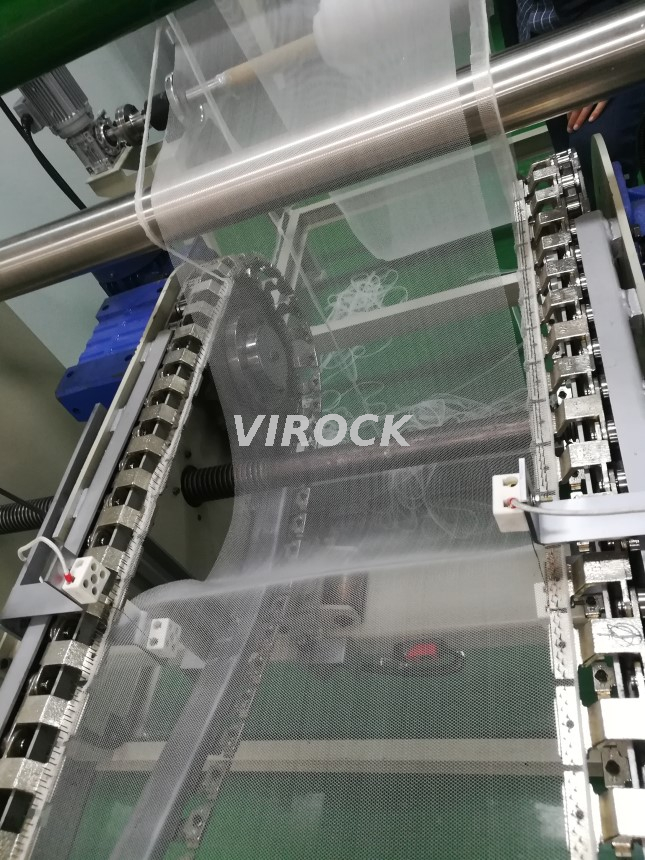
Different nonwoven substrates present unique mechanical and thermal properties. Understanding these variations helps you configure the optimal medical nonwoven finishing machine for your facility.
Spunbond fabrics offer excellent durability. Manufacturers often use them as the outer protective layers in medical PPE. Because they possess high tensile strength, they handle mechanical stress well.
These materials require robust slitting mechanisms. Standard web guiding systems generally suffice for spunbond fabrics. Operators can usually rely on straightforward rewinding processes without needing highly specialized tension zones.
Meltblown materials feature fragile, ultra-fine fibers. Medical brands use them for vital viral and bacterial filtration. They break or stretch under minimal physical stress.
Handling meltblown requires ultra-sensitive closed-loop tension control. You must use minimal contact rollers to prevent surface abrasion. Additionally, static elimination is mandatory to prevent fiber disruption during the winding process.
SMS composites balance outer layer strength against inner layer barrier protection. This composite nature makes them highly sensitive to improper thermal exposure. Too much heat degrades the delicate meltblown core.
Because of this thermal sensitivity, processors often require a customer tailored heat setting finishing machine. A tailored system stabilizes the composite layers perfectly. It bonds the outer layers without degrading the inner core's filtration efficiency.
Spunlace materials feel soft and offer high absorbency. Hospitals use them extensively in wound care and surgical sponges. However, this structure means they stretch and distort easily under tension.
Finishing spunlace requires extremely low-tension web transport. Precision edge-trimming is necessary to prevent annoying fraying. Furthermore, these lines often integrate specialized coating modules to apply antimicrobial liquid treatments.
Material Type | Primary Medical Application | Critical Machine Requirement | Common Processing Risk |
|---|---|---|---|
Spunbond | Outer PPE Layers | Robust shear slitting | Dust generation at edges |
Meltblown | Respirator Filtration | Ultra-low closed-loop tension | Web tearing, fiber crushing |
SMS Composite | Surgical Drapes & Gowns | Precise thermal management | Core melting, barrier loss |
Spunlace | Wound Care Sponges | Low-tension transport systems | Web stretching (necking) |
When engineering your production line, specific technical features drive measurable manufacturing outcomes. Translating machine capabilities into product quality metrics is essential for equipment procurement.
Tension control relies heavily on load cell accuracy. Servo-driven control systems process load cell data to adjust roller speeds instantly. You should evaluate the exact feedback loop time of these electrical systems.
Proper tension control prevents web stretching. Industry experts call this stretching "necking." Necking damages delicate materials like Spunlace and Meltblown. Advanced web guiding ensures consistent material width and uniform material density throughout the roll.
Manufacturers must choose between shear, crush, and razor slitting options. Shear slitting acts like scissors and works well for heavier composites. Razor slitting works cleanly on lightweight films but dulls quickly.
The main outcome is achieving clean edges. You must avoid thermal fusing. You must also prevent particulate generation during cutting. Dust generation ruins compliance inside ISO-certified cleanroom environments.
Thermal management involves monitoring zone temperature variance across heating cylinders. You should also evaluate cooling roller efficiency. Rapid cooling locks in the material structure after heating.
When reviewing medical nonwoven finishing machine specifications, exact thermal control is non-negotiable. It ensures SMS fabrics bond properly. Precise heating sets the material without causing microscopic breaches inside the critical barrier layer.
Hygiene starts with machine construction materials. Specify stainless steel construction, typically using 304 or 316L grades. Ensure drives remain fully enclosed to prevent oil or grease leaks. Cleaning zones must be highly accessible for sanitation crews.
These design choices support ISO Class 7 or Class 8 cleanroom integration. Smooth surfaces and enclosed components prevent bio-burden buildup. This minimizes the risk of bacterial contamination on your medical textiles.
Installing new finishing equipment brings inherent production risks. Recognizing these pitfalls early allows your engineering team to establish solid mitigation strategies before commissioning the machine.
During the rewinding process, uneven material thickness causes the roll edges to build up unevenly. This leads to roll telescoping, where layers slide outward like a collapsible telescope. This ruins the roll structure and causes downstream packaging failures.
Mitigation: Specify differential rewind shafts on your equipment. You must also implement automated lay-on roller pressure control. Differential shafts apply independent torque across the web width. This accommodates varying material thicknesses automatically.
Nonwoven materials naturally generate high static charges during high-speed transport. Static electricity attracts dust from the ambient environment. This leads to unplanned downtime, failed quality inspections, and potential operator shocks.
Mitigation: Mandate integrated active static eliminators throughout the web path. Place ionizing bars before slitting and rewinding zones. Additionally, install automated vacuum extraction systems. These extract edge trims and airborne dust directly within the machine footprint.
Multi-layer composites require delicate handling. Operators often underestimate the complexity of managing new thermal and tension parameters. Human error during recipe setup frequently causes massive scrap generation during the first few months of operation.
Mitigation: Negotiate comprehensive on-site training directly from the manufacturer. Demand an intuitive Human-Machine Interface (HMI). The HMI must feature locked recipe management. This allows supervisors to save optimal parameters, preventing operators from making unauthorized adjustments.
Partnering with a reliable vendor determines your long-term manufacturing success. A machine might look good on paper, but the supplier's engineering background and validation support matter just as much.
Evaluate whether the medical nonwoven finishing machine supplier offers modular machine designs. Your production requirements will likely shift over time. A modular frame allows you to adapt later. For example, you might need to add a chemical coating station next year. Modular machines accommodate these retrofits without requiring a complete line replacement.
Never purchase complex finishing equipment based solely on digital blueprints. Different nonwoven formulations react unpredictably to speed and tension. You need physical proof of machine capability.
Insist on material trial runs. Use your exact nonwoven substrates. Conduct these trials before finalizing the machine design. This Proof of Concept phase exposes potential stretching or cutting issues early in the engineering cycle.
Medical manufacturing heavily relies on rigorous documentation. Auditors will investigate your equipment qualification processes. If you lack proper documentation, your facility cannot legally produce certified medical devices.
Ensure the supplier provides comprehensive validation protocols. You specifically need Installation Qualification (IQ) and Operational Qualification (OQ) documents. These documents prove the machine was installed correctly and operates exactly as specified. Auditors require IQ/OQ records during medical manufacturing inspections.
There is no universal finishing machine for medical nonwovens. The right choice is dictated entirely by the specific mechanical and thermal tolerances of your substrate. Sometimes your product demands ultra-low tension handling for delicate Spunlace. Other times, it requires precision thermal control for securing SMS composite barriers.
To move forward, audit your current material scrap rates carefully. Document your exact material specifications, including web width, GSM (grams per square meter), and elasticity limits. Use this data to draft a highly targeted Request for Proposal (RFP). A data-driven RFP ensures potential equipment partners understand your precise production boundaries immediately.
A: Ultra-low, closed-loop tension control is paramount to prevent stretching or tearing the fragile fibers. Stretching these fibers would ruin the material's structural integrity and completely destroy its viral filtration efficacy.
A: Standard heat setting can easily melt or degrade the internal meltblown layer. A tailored machine precisely controls temperature zones, material dwell time, and rapid cooling. This stabilizes the fabric layers without compromising the internal barrier properties.
A: Cleanroom compatibility necessitates the removal of hydraulic systems to prevent accidental oil leaks. It requires using non-corrosive materials like stainless steel. Equipment must also feature enclosed cabling and integrated dust extraction units to meet ISO airborne particulate standards.
A: A rigorous FAT should demonstrate the machine running your specific nonwoven material at real-world production speeds. The test must prove absolute tension stability, clean edge quality, and successful roll formation before the equipment ever leaves the manufacturer's facility.


