

Views: 0 Author: Site Editor Publish Time: 2026-09-22 Origin: Site


In high-volume textile production, the finishing process is the final bottleneck before quality control. Standardized equipment often forces manufacturers to adapt their processes to the machine, rather than the machine to the process. Upgrading or installing new finishing equipment requires significant capital expenditure. Decision-makers must weigh the immediate cost savings of off-the-shelf machinery against the long-term operational efficiencies of a customized setup. You face a choice between standard compromises and tailored optimization.
This guide provides a direct evaluation framework to help plant managers and technical directors determine if, when, and how to invest in custom finishing configurations. We will explore specific operational triggers for machinery customization. You will learn how to evaluate your facility constraints accurately. Finally, we will help you assess potential engineering partners to ensure a successful equipment upgrade.
Defining what a successful equipment upgrade looks like is your first crucial step. Plant managers often rely on standard catalogs for quick replacements. However, modern production floors require rigorous success criteria. A truly successful upgrade delivers reduced chemical waste and higher daily throughput. It also ensures significantly lower energy consumption per meter of fabric. You must establish these baseline metrics before reviewing any equipment proposals.
Standard lines often fail in modern textile industries. They provide a middle-ground solution designed for average fabric weights and standard blends. Standard machines struggle when handling extreme variations in fabric weight. They might stretch a delicate silk while failing to penetrate a heavy industrial canvas. Furthermore, rigid chemical application methods restrict your product development team. Standard padders limit your ability to experiment heavily. You cannot adapt quickly to new market demands using inflexible equipment.
You must model the return on investment carefully. Compare custom engineering fees against standard depreciation schedules. Custom equipment demands a higher upfront investment. However, tailored machines eliminate secondary processing steps. They reduce fabric seconds and capture waste heat more efficiently. These direct operational savings accelerate your break-even point. Custom engineering pays for itself through daily utility reductions and higher prime product yields. You offset the initial premium by generating less waste.
Common Mistake: Relying solely on the initial purchase price to make procurement decisions. You must factor in yearly energy usage and chemical waste reductions.
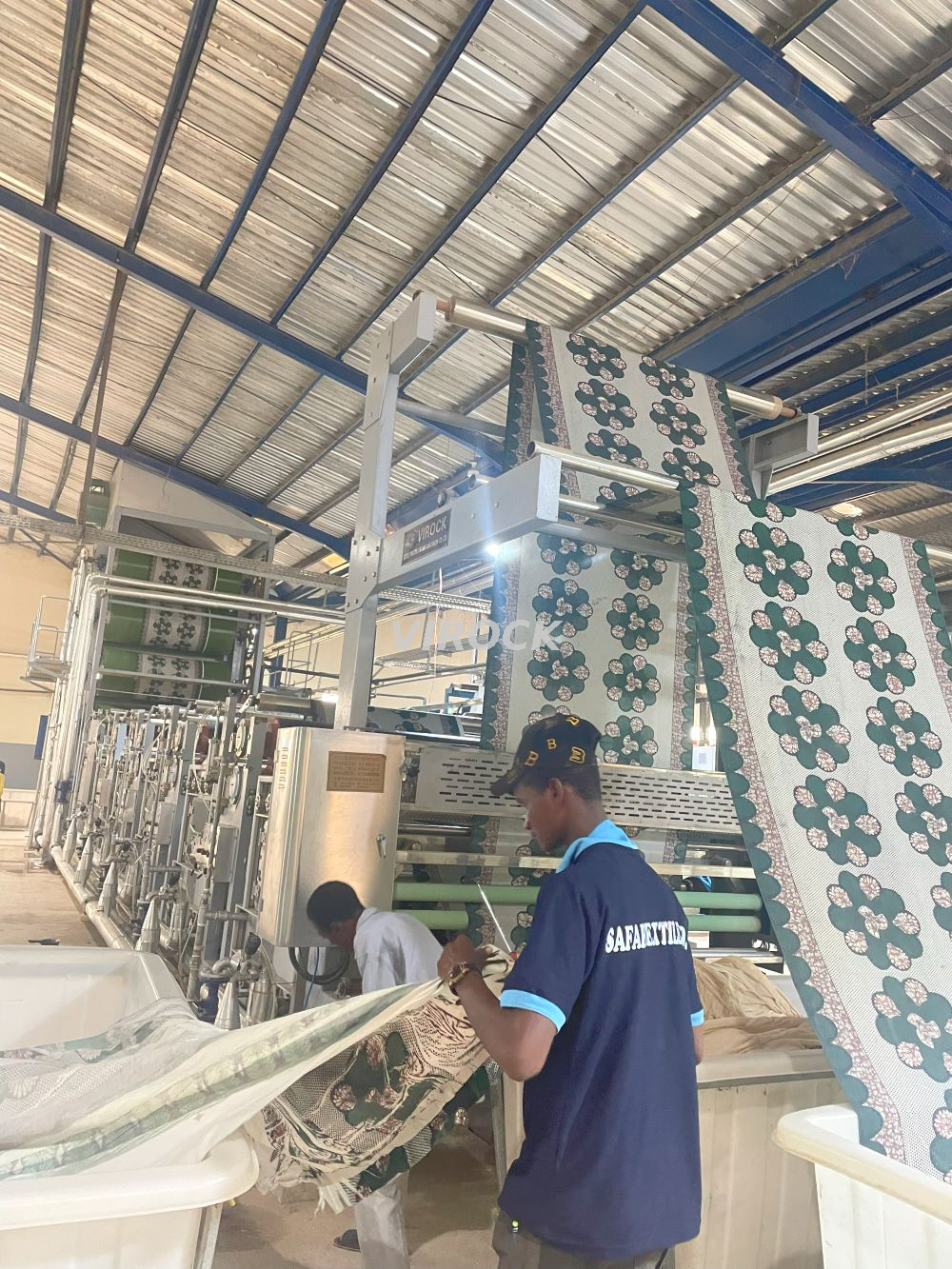
Standard equipment works adequately for basic cotton processing. However, specific operational challenges demand bespoke solutions. You must recognize the breaking points of standardized machinery. Below, we explore the primary triggers for customizing your textile finishing line.
Modern consumers and industrial buyers demand highly functional textiles. Processing requirements for synthetics, elastomerics, or delicate knits are incredibly strict. These advanced fabrics demand hyper-specific tension control. They require exact thermal profiling to prevent shrinkage or thermal degradation. Standard tension zones often stretch delicate spandex blends beyond recovery.
Custom lines utilize specialized load cells. They incorporate precision inverter drives tailored to your specific fabric elongation limits. This level of customization keeps web tension precisely calibrated. It ensures your technical textiles meet strict ISO dimensional stability standards.
Innovation often lies in chemical finishing. You might need to apply unique flame retardants, water repellents, or bio-based finishes. Standard padders and stenters cannot apply these complex chemicals uniformly. Viscous bio-based finishes often pool or distribute unevenly on standard rollers.
Adapting the machine guarantees uniform chemical penetration. Custom bath geometries prevent costly chemical separation during the run. You can specify exact nip roller pressures and specialized coating heads. This ensures your proprietary treatments bond perfectly to the fibers. Consistent application prevents field failures of protective garments.
Many legacy textile plants feature irregular floor spaces. You cannot easily fit a standard 40-meter stenter into a building designed fifty years ago. Modifying entry and exit frameworks becomes essential. Custom layouts fit legacy plant footprints seamlessly. You avoid costly building modifications by engineering the machine to fit the room.
Furthermore, digital integration represents a major hurdle for standard machines. You must integrate the new line into existing ERP and SCADA systems. Custom control panels allow seamless data handshakes. This integration ensures centralized compliance tracking. You gain real-time visibility into machine downtime and energy usage.
Evaluation Chart: Standard vs. Custom Capabilities
| Production Factor | Standard Equipment | Custom Engineered Line |
|---|---|---|
| Fabric Weight Range | Narrow (optimizes for average GSM) | Wide (handles ultra-light to heavy industrial) |
| Tension Control | Basic zone pacing | Micro-tension load cells per chamber |
| Chemical Dosing | Manual or single-recipe automated | Multi-recipe proportional automatic dosing |
| Footprint Adaptability | Fixed modular lengths | Configurable entry/exit to fit facility |
Printed fabrics demand specialized post-weaving processes. You must lock in colorfastness and prevent dye migration. Standard drying lines often smear uncured inks before they set. They lack the gentle material handling required for high-resolution prints. To preserve design integrity, you need specialized configurations.
Calculating the exact web tension is critical. A custom printing finishing line synchronizes tension and speed perfectly. Tension spikes cause immediate pattern distortion. You must also calculate precise curing times. Heavy dye loads require longer dwell times in the heating chambers. Custom configurations allow you to program exact thermal profiles for different ink types. This prevents over-curing, which degrades fabric hand-feel.
Washing and drying modules also require deep integration. You customize washing compartments based on your specific ink chemistry. Reactive, disperse, and pigment inks all behave differently during washing.
Custom water flow dynamics remove unfixed dyes efficiently. You can vary the number of compartments to match your production speed. This customization reduces total water consumption and ensures vibrant end products.
Best Practice: Always test your heaviest dye coverage patterns during the machine design phase. This ensures the custom drying chambers have sufficient evaporative capacity.
You must map out every technical requirement clearly before signing a purchase order. Ambiguity leads to expensive retrofits later. Detailed specifications protect your investment.
Energy consumption heavily dictates your daily operating margins. You should specify custom heat recovery systems. Choose between air-to-air or air-to-water units based on local energy costs. You must also consider local environmental compliance mandates regarding exhaust emissions. Custom thermal modules capture waste heat efficiently and return it to the process. This dramatically lowers your reliance on external gas or steam boilers.
Chemical waste destroys profitability. Outline precise textile finishing line specifications for chemical handling. You need exact chemical pickup ratios for every fabric type. Define your moisture profiling parameters clearly.
Automated dosing systems reduce chemical waste significantly. They eliminate human error during batch mixing. A custom PLC control system adjusts chemical flow based on line speed and fabric weight. This dynamic dosing guarantees consistent finish application from the first meter to the last.
Do not bolt sensors onto the machine post-installation. Add-on sensors often suffer from vibration issues and data lag. Instead, embed custom inline sensors directly into the line architecture.
Integrated sensors provide faster feedback loops. The machine controller can adjust fan speeds automatically based on live moisture readings. This creates a closed-loop quality control system.
Not all machinery builders can execute complex custom projects. You must conduct intense due diligence. Distinguish between simple equipment assemblers and true engineering partners.
Many suppliers merely assemble standard modular components sourced from third parties. They offer limited customization options. Look for teams boasting true in-house mechanical and software engineering capabilities. A reliable textile finishing line supplier models your process digitally before cutting any steel. Their software engineers write custom PLC code to match your exact recipes. They do not force you to use generic operating interfaces.
Assess implementation realities carefully to mitigate risk. Ask potential partners about their Factory Acceptance Testing (FAT) protocols. A premium supplier conducts rigorous pilot trials using your specific fabric rolls. They prove the machine works before shipping it. You must also request detailed installation downtime estimates. A realistic timeline prevents supply chain disruptions during the machinery switch-over.
Consider post-installation support deeply. Custom machines require custom spare parts. Assess the long-term availability of these critical components. Does the supplier keep your custom drawings on file? Furthermore, remote diagnostic capabilities save days of troubleshooting. Ensure the supplier can access the machine PLC securely via the cloud. Comprehensive operator training programs ensure your team maximizes the new technology quickly.
Customization is not about adding unnecessary features to your production floor. It is about eliminating process compromises. Standard machinery forces you to dilute your fabric quality to match the equipment's limitations. Custom machinery adapts perfectly to your most demanding formulations and delicate textiles.
Base your final decision on a verifiable gap analysis. Compare what standard machines offer against what your specific fabric quality metrics demand. If a standard line causes high defect rates or excessive energy use, customization becomes a financial necessity.
Take these direct action steps to begin your evaluation process:
A: While upfront capital costs can be 15–30% higher due to engineering and non-standard parts, the long-term financial returns often break even within 2–3 years via energy savings, reduced chemical waste, and lower defect rates.
A: Yes, modular retrofitting (e.g., adding a custom coating head or upgrading the exhaust system) is viable, provided the existing drive system and frame can handle the new tolerances.
A: Depending on the complexity and supplier backlog, custom design, manufacturing, and FAT generally require 6 to 9 months, plus 4 to 8 weeks for site installation and commissioning.


