

Views: 0 Author: Site Editor Publish Time: 2026-07-30 Origin: Site


Purchasing a commercial stenter machine stands as a major capital expenditure for any textile mill. A mismatch in technical specifications often leads to severely bottlenecked production lines. It also causes irreversible fabric damage. This risk runs exceptionally high when processing highly delicate knits. Furthermore, misaligned thermal components will quickly inflate your monthly energy bills. We designed this article to provide a purely technical, decision-stage framework. It helps you evaluate different vertical rail configurations accurately. We focus strictly on feature-to-outcome mapping. You will explore real-world maintenance realities. We also guide you through rigorous supplier validation methods. By the end, technical buyers will possess the exact insights needed. You can finalize your procurement shortlist confidently. You will learn how to match hardware capabilities directly to your mill’s unique production demands. We strip away the marketing noise to reveal the underlying mechanical truths.
Horizontal chains return side-by-side. This standard layout consumes massive amounts of horizontal factory space. Conversely, vertical rails return the chain top-to-bottom. This structural shift drastically reduces the overall machine width. A narrower footprint allows mills to install additional machinery in the same hall. You maximize your facility layout efficiency instantly.
Tension-sensitive textiles demand highly specific handling mechanisms. A warp knitting vertical rail stenter frequently operates as the industry standard here. Warp knits inherently want to curl at the edges. Vertical pin geometries grip these delicate edges securely. They prevent edge-curling effectively. They maintain structural integrity in stretch fabrics during intense heat setting. Delicate knits easily lose their dimensional shape on standard horizontal frames. The vertical approach applies tension differently, preserving the loop structure of the knit beautifully.
Successful procurement decisions hinge on matching mechanical limits precisely. You must align the machine capabilities to your highest-volume fabric weights (GSM). You also need to accommodate your required finishing widths. A lightweight frame vibrates heavily under high speeds. You need heavy-duty cast iron or reinforced steel structures to maintain stability during peak production runs.
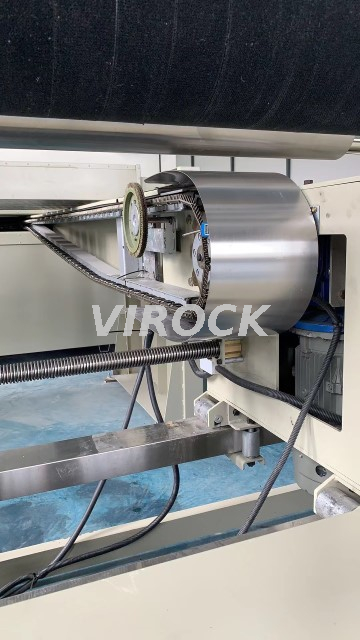
Selecting the right machine requires deep technical scrutiny. You cannot rely on broad marketing claims. Every component interacts with your fabric differently. Let us examine the five most critical hardware specifications.
The pin and clip chain materials determine your production longevity. Track design dictates smooth, continuous operation. Look exclusively for wear-resistant steel alloys. Ask your manufacturer for modular track designs. Modular tracks allow partial replacements instead of full systemic overhauls. Evaluate the lubrication system closely. Vertical rails require precise, anti-drip lubrication. Heavy oil drops will ruin entire fabric batches instantly. Alternatively, you can specify graphite or completely oil-free systems. These advanced systems prevent fabric contamination during high-speed runs.
Common Mistake: Ignoring the track thermal expansion coefficient. Tracks expand under heat. Poorly engineered rails warp, causing catastrophic chain jams and costly downtime.
Review the proposed heating type carefully. Options typically include natural gas, thermal oil, steam, or electric heating. Match the heat source to your local energy availability. Facility infrastructure strictly dictates what you can support. Scrutinize the insulation panel thickness. For example, demand 150mm high-density rock wool panels. Check the internal airflow symmetry. Symmetrical nozzle layouts guarantee uniform edge-to-edge heat setting. Uneven heat causes severe color migration. It also creates patchy, inconsistent finishes across the fabric width.
| Heat Source Type | Heating Speed | Infrastructure Need | Ideal Production Match |
|---|---|---|---|
| Natural Gas | Very Fast | Gas pipelines | High-speed synthetic setting |
| Thermal Oil | Moderate | Boiler system | Consistent, heavy GSM fabrics |
| Steam | Slow | Steam boiler | Low-temp natural fibers |
| Electric | Instant | High voltage grid | Small batch, precision heat |
Understand nominal versus useful working width clearly. The nominal width rarely represents the actual spinnable fabric width. Compare minimum to maximum meters per minute (m/min). Do not buy a machine based solely on its maximum theoretical speed. Assess the machine's speed stability under actual physical load. Heavy GSM fabrics draw significant power. They easily slow down weaker drive motors. Ensure the width adjustment spindles operate synchronously. Synchronized spindles prevent rail jamming during rapid width changes. They keep your production moving smoothly between different fabric batches.
Fabric entry systems dictate final quality. Pinning accuracy and load cells control continuous tension. These elements remain absolutely critical for shrinkage control. Look for independent left and right overfeed controls. Independent controls fix fabric skew effectively. Demand servo-driven pinning brushes for maximum accuracy. Detailed vertical rail stenter specifications must show precise tolerance margins. You need extremely tight margins to manage highly elastic blends safely. Spandex blends easily snap or distort without accurate overfeeding and pinning.
Review the integrated air purification units. Check the energy recycling mechanisms thoroughly. Assess your local environmental compliance readiness. Fume extraction remains a massive regulatory issue globally. Calculate the promised thermal recovery efficiency. Compare this promised return against increased maintenance demands. Cleaning heat exchanger fins takes significant operational time. If fins clog easily with fabric lint, your thermal efficiency drops rapidly. Dirty exhaust systems also pose severe factory fire risks.
Identifying integration gaps early saves money. Standard, off-the-shelf models often fail complex factory integrations. They struggle to align with non-standard upstream washing units. Downstream winding equipment also poses serious mechanical integration challenges. Sometimes you must specify a custom vertical rail stenter from the start. This proactive choice prevents costly aftermarket retrofits later.
We can view customization through three specific lenses:
You must conduct a thorough risk assessment. Custom builds naturally increase your lead times. You must evaluate the promised operational efficiency realistically. Does the long-term throughput outweigh the delayed deployment? Short-term installation delays often yield massive long-term production gains.
High-performance specifications mean absolutely nothing if machines constantly break down. Complex maintenance keeps equipment offline. This hidden downtime damages your production schedules severely.
Design for serviceability above all else. Evaluate the specs for easy-access chamber doors. Heavy doors slow down daily cleaning routines. Demand quick-release lint screens. Insist on standardized, non-proprietary bearings and drives. Proprietary parts trap you into expensive service contracts. Standard parts allow your internal maintenance team to source replacements locally.
Vertical rail systems present unique cleaning challenges. They remain inherently harder to access manually than horizontal ones. Verify automated cleaning systems. Check the blow-down mechanisms on the spec sheet. Ensure they hold proven track records in real-world mill environments. Lint buildup acts as a severe fire hazard inside hot chambers. Ask the supplier for specific maintenance interval documentation.
Best Practice: Schedule comprehensive rail cleaning every 400 operational hours. This prevents sticky resin buildup from synthetic fabrics from ruining your chain glides.
Supplier qualification separates true manufacturers from mere assemblers. Assemblers just bolt third-party parts together in a shed. True manufacturers engineer cohesive thermal solutions. They own extensive CNC machining centers and testing labs.
Demand a rigid proof of concept. Ask for verifiable case studies. Request immediate site visits showing identical fabric profiles. You want to see them running delicate warp knits at massive scale. A reliable vertical rail stenter supplier welcomes these technical requests openly. They hide nothing about their machine's performance.
Evaluate their Service Level Agreements (SLAs) rigorously:
The optimal vertical rail stenter balances your fabric-specific tension needs flawlessly. It manages realistic energy usage efficiently. It also respects your internal maintenance overhead limits. You cannot compromise on these three pillars.
Take immediate action now. Compile a rigid technical requirement document (TRD). Base it entirely on the specifications evaluated above. Challenge your shortlisted manufacturers directly. Force them to run a comprehensive fabric trial. Do this before signing any final purchase order. Proper physical trials expose hidden machine flaws immediately. Protect your capital investment through relentless technical validation.
A: Vertical systems significantly reduce the machine's overall footprint. The top-to-bottom chain return geometry saves valuable factory floor space. This specific pin-return geometry also handles delicate knits better, preventing excessive edge curling during high-speed processing.
A: You must calculate your maximum fabric stretch alongside shrinkage allowances. Typically, you should spec a nominal width at least 200mm wider than your widest finished fabric requirement. This buffer accommodates heavy overfeeding without rail jamming.
A: Industry timeframes for standard models typically range from 3 to 4 months. If you order a heavily customized build with specialized chambers or hybrid heating, expect lead times to extend between 5 and 6 months.
A: Retrofitting heating systems is highly complex and usually cost-prohibitive. Changes require new ducting, modified insulation panels, and upgraded exhaust fans. You must future-proof your thermal specifications during the initial purchase to avoid this trap.


