

Views: 0 Author: Site Editor Publish Time: 2026-08-26 Origin: Site


Sourcing a washing line represents a high-stakes capital expenditure for any manufacturing facility. It demands rigorous engineering scrutiny and precise operational planning. During advanced carbon fiber processing, the washing and drying phases directly dictate material quality. These stages control the final tensile strength, surface purity, and sizing adhesion of the product. If you select substandard machinery, you risk severe production bottlenecks downstream. Poor washing leaves residual chemicals on the precursor. It causes unpredictable fiber breakage and dangerous static accumulation across the plant floor. This guide provides process engineers and procurement teams with a strict evaluation framework. We base our criteria on evidence-backed industry standards and practical operational experience. You will learn how to assess multi-zone tension control, evaluate thermal consistency, and verify tow versatility. We will show you exactly what specifications matter before you finalize your equipment purchase.
Let us explore the true cost of poor washing practices. Residual chemicals from the precursor stage actively compromise surface energy. This leftover residue leads to poor resin matrix adhesion in the final composite products. Your structural components will suffer microscopic weaknesses. Manufacturers cannot afford these invisible defects in critical applications. Proper equipment extracts all unreacted monomers and solvents completely. It prepares the filament surface for optimal bonding.
Process engineers must balance mechanical fragility against desired throughput. You naturally want to run lines at high speeds to maximize daily output. However, aggressive speeds significantly increase the risk of mechanical shear. Carbon filaments are notoriously brittle during the wet stages. High-speed rollers can snap them easily if alignment fails. You need equipment engineered for gentle handling under high tension. The machinery must absorb operational shocks without transferring them to the tow.
The business impact extends far beyond the initial purchase price. The right machinery acts as a direct driver of your overall yield rate. It significantly reduces the scrap generated from broken filaments. When fewer filaments break, your prime grade output quality rises. We see facilities lose thousands of dollars daily due to excess fuzz generation. This critical equipment choice ultimately determines your long-term production profitability.
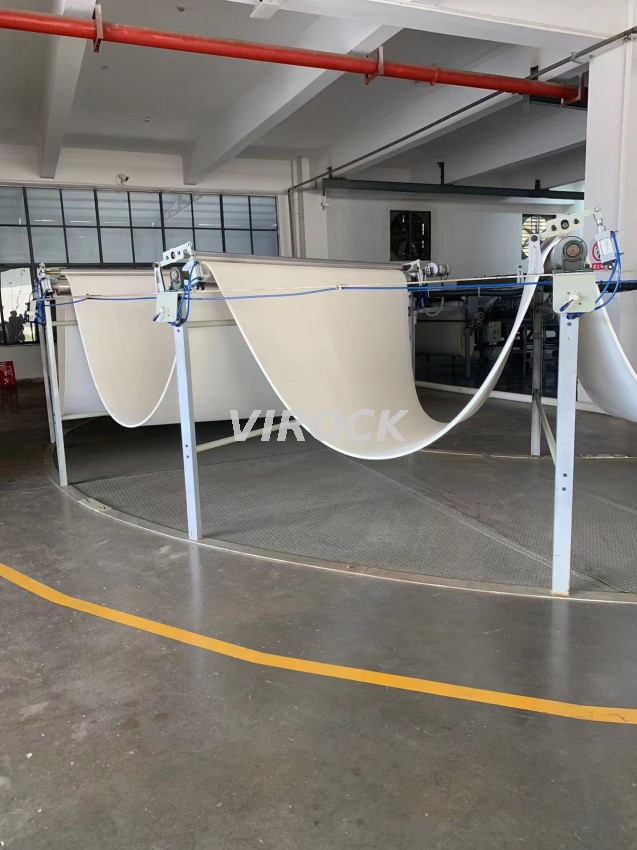
Evaluating specific technical parameters ensures operational success. You must review the carbon fiber washing line specifications carefully before making decisions. Let us break down the core requirements for modern facilities.
The fiber changes its modulus as it moves through wet baths. It absorbs moisture and responds physically to the chemical environment. Localized tension zones accommodate this constantly changing modulus. Precision load cells measure tension in real-time across every segment. They feed this data back to the primary drive motors instantly. This synchronization prevents the tow from slackening or snapping unexpectedly. Common mistake: Facilities often rely on single-zone tension systems for long washing lines. This causes catastrophic filament breakage.
Water consumption remains a massive operational hurdle for manufacturers. You absolutely need counter-current flow systems installed. These designs push clean water against the direction of fiber travel. They ensure maximum chemical extraction efficiency in every bath. Simultaneously, they keep overall water consumption minimal. Modern baths utilize targeted fluid dynamics for better penetration. They direct high-velocity streams precisely through the thickest fiber bundles. This guarantees a thorough wash at the microscopic level.
Roller surfaces require specialized engineering and meticulous maintenance. Bare metal rollers damage fragile filaments very quickly. Top-tier manufacturers apply specific roller coatings to prevent this. They use specialized conductive polymers or highly polished ceramics. These advanced coatings prevent dangerous static electricity buildup. They also stop the physical abrasion of the raw carbon filaments. Best practice: You should inspect roller surface roughness (Ra values) before installation. Always specify non-stick, anti-static materials for wet zones.
You must evaluate the rated equipment throughput against actual operational limits. Some machines claim incredibly high speeds on paper. However, they drastically degrade wash quality at peak capacity. Ask vendors for performance data across various speed ranges. Ensure the chemical extraction rates remain perfectly stable. A scalable carbon fiber washing line adapts to future production demands effortlessly. It allows you to increase capacity without replacing the core infrastructure.
| Coating Material | Primary Benefit | Wear Resistance | Static Dissipation |
|---|---|---|---|
| Polished Ceramic | Ultra-low friction | Excellent | Moderate |
| Conductive Polymer | Prevents static buildup | Good | Excellent |
| Hard Chrome Plating | High durability | Very Good | Poor |
| Teflon Composite | Chemical resistance | Moderate | Good |
Different tow sizes demand highly adaptable processing equipment. A versatile washing line handles various industrial grades flawlessly. It seamlessly shifts between delicate fibers and robust bundles.
Aerospace and high-performance grades rely heavily on small tow fibers. Here, tension sensitivity remains extremely high throughout the process. Even minor fluctuations cause catastrophic fiber alignment issues downstream. Equipment must feature ultra-precise tension controllers for these grades. Spreaders must be incredibly delicate and highly responsive. They should separate filaments without inducing any mechanical shear. Small tow production requires a hyper-controlled, vibration-free environment.
Heavy industrial tow presents completely different operational obstacles. Thick bundles naturally resist fluid penetration during the wash. You need sufficient spreading mechanisms to open them up effectively. Spreading bars force the dense bundle to flatten out. This action allows deep chemical penetration into the core. If the core remains unwashed, the entire batch fails quality testing. Large tow demands robust mechanical support and much longer residence times.
Production facilities rarely run a single tow size forever. You will frequently switch between different material specifications. Evaluate how quickly operators can recalibrate the line. Look for automated recipe management via central PLCs. Quick-release rollers and automated tension resets minimize expensive downtime. A fast, repeatable changeover keeps your production schedule strictly on track.
The transition from wet baths to drying zones is exceptionally delicate. It requires advanced thermal engineering and precise atmospheric control. Let us examine the crucial elements of this phase.
We frame the handover from washing to drying as a high-risk zone. The fibers carry significant moisture as they exit the final bath. Sudden exposure to high heat causes immediate thermal shock. This shock degrades the fiber's internal structural integrity permanently. You must ramp up temperatures gradually across multiple zones. The transition area also requires strictly controlled ambient humidity. Sudden atmospheric changes induce micro-cracking on the filament surface.
The drying phase directly dictates ultimate surface purity. You must demand uniform temperature distribution across all drying rollers. Convection zones must eliminate cold spots entirely. Consistent moisture evaporation is the absolute primary goal here. Overdrying makes the fibers brittle and prone to snapping. Underdrying leaves moisture trapped beneath the final surface sizing. Precision thermostats and multi-point IR sensors are mandatory here.
Carbon fiber manufacturing consumes massive amounts of industrial power. A truly high efficient carbon fiber washing drying module incorporates intelligent heat recovery. These systems capture exhaust heat from the high-temperature drying ovens. They seamlessly redirect it to pre-heat the incoming wash water. This closed-loop thermal strategy drastically offsets high energy costs. It makes your entire facility much more sustainable and profitable.
Choosing the right machinery partner requires deep, methodical investigation. You are building a long-term manufacturing relationship. You must identify a highly reputable carbon fiber washing line supplier.
We challenge every buyer to look past slick marketing claims. Sales brochures often overstate actual equipment capabilities. Demand proven installation case studies from the vendor. Ask to speak directly with engineers in similar operating environments. Real-world performance rarely matches perfect laboratory conditions. You want a supplier who openly discusses their troubleshooting history. Transparency during the vetting process indicates long-term reliability.
Your washing line does not operate in total isolation. Assess the supplier's ability to seamlessly integrate the equipment. It must connect smoothly with upstream oxidation ovens. It must interface perfectly with downstream sizing and winding equipment. Standard PLC interfaces are absolutely critical for plant operations. Ethernet/IP or Profinet connectivity ensures seamless data handoffs. Integrated systems allow for centralized monitoring across the entire plant floor.
Never skip the Factory Acceptance Test under any circumstances. Provide a strict checklist for testing the equipment at the supplier’s facility. You must use your actual precursor materials during this test. Standard test fibers behave very differently than your proprietary blends. Verify tension stability, extraction rates, and roller alignment carefully. Do not sign off or accept delivery until all FAT criteria are met.
Continuous operation grinds industrial equipment down eventually. Wear parts will inevitably fail over time. We highlight the importance of localized technical support. Check the guaranteed lead time on specialized rollers and proprietary seals. A cheap machine becomes incredibly expensive if replacement parts take months. Demand a guaranteed SLA (Service Level Agreement) for critical spares. Ensure the supplier maintains a robust inventory of essential components.
To conclude, the right equipment perfectly balances aggressive chemical removal with incredibly gentle handling. It extracts harmful impurities without fracturing brittle filaments. You must invest heavily in superior tension control and precise thermal uniformity. These features yield excellent long-term results and higher-grade fiber output. Do not settle for off-the-shelf compromises when sourcing this machinery. Request detailed technical schematics from your shortlisted vendors immediately. Schedule a pilot material trial to definitively prove their operational claims. Secure your production quality and scale your facility today.
A: Modern lines use counter-current designs to minimize water usage. However, specific rates depend heavily on tow size and line speed. High-speed 48K lines require more fluid turnover than slow 3K lines. Always emphasize asking suppliers for detailed consumption models based on your exact throughput goals.
A: Larger tows contain significantly more filaments. They require wider spreading bars to open the bundle effectively. They also need longer residence times in the chemical bath. This ensures the fluid adequately washes the deep core of the fiber bundle. Smaller tows focus more on delicate tension limits.
A: You must ensure proper equipment grounding across all operational zones. Utilize anti-static roller materials, such as specialized conductive polymers or grounded ceramics. Additionally, maintaining optimal ambient humidity in the transition zones prevents static discharge. Unchecked static could otherwise misalign or snap the filaments.
A: We recommend testing for continuous run stability first. Demand no filament breaks for a specified number of hours. You must verify tension control accuracy while the system operates fully under load. Finally, conduct a rigorous moisture content analysis immediately post-drying to confirm overall thermal consistency.


