

Views: 0 Author: Site Editor Publish Time: 2026-09-06 Origin: Site


Miscalculating production needs carries massive financial risk for textile manufacturers. Under-sizing your equipment leads to severe production bottlenecks and rapid mechanical wear. Over-sizing results in wasted capital expenditure, chronic underutilization, and excessive energy consumption. Buyers must adopt a strict, capability-based approach to equipment selection. You cannot just look at maximum theoretical output. You must align specifications closely to actual substrate behaviors, required coating chemistries, and projected facility constraints.
This article provides plant managers and production engineers a highly realistic, evidence-based roadmap. You will learn how to determine the exact scale of equipment required for your specific textile applications. We cover the crucial transition from pilot lines to full-scale industrial operations. We also explore the impact of specialized substrates, precise tension control, and modular machine designs on your actual production yield.
Many facilities struggle deciding exactly when to upgrade their operations. Moving from manual batch processes to automated continuous lines represents a complex engineering challenge. You need clear thresholds based on daily output volume, material handling limits, and labor costs. Establishing these baseline metrics prevents premature scaling. Choosing a properly scaled fabric coating machine prevents costly production stops later.
You must establish clear operational thresholds before buying new equipment. Small-scale batch operations eventually face insurmountable labor bottlenecks. Continuous lines automate material handling, but they require consistent sales volumes to justify the investment. Facility managers must track current manual output against projected order volumes. If your manual scrap rates exceed acceptable margins, upgrading to an automated continuous process becomes necessary.
Investing in a pilot line offers immense return on investment. Pilot lines serve as vital bridging equipment for R&D departments. They allow teams to run proof-of-concept trials. You can conduct economical formulation testing using minimal raw materials. Validating your chemical recipes on a pilot scale prevents disastrous errors on massive industrial footprints. Pilot machines replicate the mechanical tensions of larger machines but use a fraction of the energy.
Equipment scale dictates your market agility. Mid-scale machines offer incredible modularity. They handle quick product changeovers efficiently. Industrial lines focus purely on high-speed, single-purpose volume. Mid-scale setups suit dynamic, multi-product markets where order sizes fluctuate. Industrial setups dominate bulk commodity production where machine settings rarely change. Your sales strategy must dictate this choice.
Operators often face a very common pitfall during expansion. Do not assume laboratory formulation behaviors scale linearly. High-speed industrial capacities alter fluid dynamics entirely. Chemical viscosity changes dramatically under high shear forces. The drying times required at fifty meters per minute differ vastly from laboratory draw-down tests. You must test these variables on scalable pilot equipment to mitigate financial risk.
Common Mistakes to Avoid:
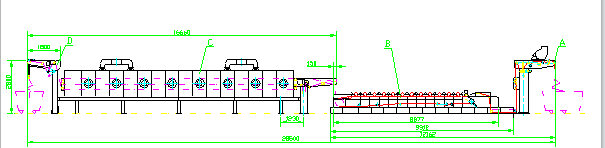
Evaluating fabric coating machine specifications requires looking beyond surface numbers. Nominal speed and width rarely reflect your actual daily output. You must analyze mechanical constraints, thermal dynamics, and facility limitations together.
Working width differs fundamentally from maximum web width. You must calculate usable width carefully. Manufacturers often quote the physical width of the rollers. However, actual usable fabric width is much smaller. Account for fabric shrinkage occurring inside the high-temperature oven. Consider necessary edge trimming allowances required after curing. Factor in the lateral tension requirements needed to keep the web flat. A machine with a 2.4-meter roller might only yield 2.0 meters of finished, sellable product.
Mechanical running speed directly dictates your required oven length. The fabric must achieve proper curing without scorching. Dwell time depends heavily on the specific coating chemistry applied. Faster mechanical speeds require exponentially longer drying zones to achieve the same dwell time. If facility floor space restricts your oven length, you must reduce your line speed proportionally. You cannot rush thermodynamic curing limits.
Sensitive textiles demand multi-zone closed-loop tension control systems. Easily distorted fabrics stretch unpredictably under intense heat. Advanced tension control actively adjusts roller speeds across different machine zones. This strict regulation limits your absolute maximum operating speed. However, it guarantees absolute yield quality. Processing lightweight knits without closed-loop tension results in massive product curling and edge distortion.
Facility constraints often dictate maximum capacity. You must evaluate floor space requirements alongside energy loads. High-capacity lines consume massive thermal and electrical energy per meter of output. Older facilities may require expensive electrical sub-station upgrades to support industrial-scale heating elements.
Equipment Footprint and Utility Scaling Matrix
| Scale Category | Typical Line Speed | Estimated Floor Space | Primary Energy Load |
|---|---|---|---|
| Pilot / R&D Line | 1 - 5 m/min | 10 - 15 meters | Low Electrical / Minimal Thermal |
| Mid-Scale / Modular | 10 - 25 m/min | 20 - 35 meters | Moderate Electrical / High Thermal |
| Industrial Volume | 30 - 60+ m/min | 40 - 70+ meters | High Electrical / Extreme Thermal |
Specialized materials demand unique machine capabilities. Standard configurations fail when processing advanced composites or delicate apparel textiles. High-modulus materials change how engineers configure the entire production line.
Handling carbon fiber processing requires extreme mechanical care. It demands incredibly robust un-winding and re-winding capacities. The equipment must maintain perfect alignment continuously. Precise resin impregnation speeds prevent catastrophic fiber breakage. Carbon fiber lacks elasticity. Sudden tension spikes will snap the web immediately. High-capacity composite lines utilize massive, precisely machined rollers to distribute tension evenly across the rigid fiber tow.
Integrating specialized applicator heads heavily impacts overall production speed. Using a magnetic table resin coating rotary screen provides distinct quality advantages. It ensures highly uniform liquid penetration. It successfully maintains consistent coat weights at mid-to-high capacities. However, precision applicators require careful speed calibration. Pushing a rotary screen beyond its volumetric limit causes uneven resin distribution and severe pattern distortion.
The base weight of the fabric strictly dictates the machine's mechanical engineering. It determines the necessary drive motor capacity. It also impacts the structural rigidity required for the machine frame. Heavy textiles, like industrial tarpaulins, need massive torque to pull wet material through the oven. Conversely, lightweight apparel fabrics require highly sensitive web handling. Heavy-duty machines run slower but push massive tonnage. Lightweight machines run exceptionally fast but require delicate, low-friction rollers.
Substrate Alignment Best Practices:
Achieving true financial return requires looking at long-term operational scalability. A cheaper machine quickly becomes a liability if it cannot adapt to changing market conditions. Strategic procurement focuses on future-proofing the installation.
Modularity protects your upfront investment. Buying a machine possessing a slightly higher capacity baseline makes excellent business sense. It offers a very strong cost-benefit ratio over a five-year period. You can retrofit secondary coating heads later as new product lines launch. You can easily extend drying zones by bolting on additional oven modules. Expanding a modular machine costs significantly less than purchasing a completely new industrial line.
You must consider scrap and waste metrics carefully during the purchasing phase. Properly sized machinery minimizes start-up and shut-down waste fabric. Reducing material waste remains a critical cost factor. It matters heavily in high-value textile processing. Oversized industrial machines generate massive scrap during the initial alignment and temperature-ramping phases. If you primarily process short, custom orders, an oversized machine will destroy your profit margins through sheer material waste.
Selecting a reliable fabric coating machine supplier requires strict evaluation protocols. You are purchasing a long-term manufacturing partnership, not just welded steel. A rigorous vetting process separates genuine engineering firms from basic assemblers.
A dependable manufacturer willingly demonstrates actual implementation reality. They should run your client-provided substrates directly. They must use their own testing facility for this validation. Do not rely on generic video demonstrations. Providing your own fabric and chemical formulations ensures the proposed machine handles your specific operational quirks. If a supplier refuses to run physical samples, consider it a major red flag.
Factory Acceptance Testing remains absolutely non-negotiable. Enforce strict FAT protocols at the manufacturer’s site before shipping. The machine must run successfully at your specified continuous capacity. Do not accept short, five-minute burst tests. The equipment must hold operating temperatures and tension stability over extended trial periods. Identifying mechanical flaws during FAT saves thousands of dollars in delayed installation costs.
Evaluate compliance and safety architecture thoroughly. High-capacity machines generate significant hazardous fumes. Check the proposed exhaust handling systems carefully. Verify VOC (Volatile Organic Compound) compliance mechanisms meet your local environmental regulations. Ensure robust operator safety guarding operates effectively at high line speeds. Automated emergency stop systems must integrate flawlessly across all tension zones.
Establish clear benchmarks for ongoing lifecycle support. Look for acceptable and realistic installation timelines written into the contract. Demand comprehensive operator training programs for your facility staff. Ensure local spare parts availability exists near your production plant. Waiting three weeks for a specialized replacement bearing will completely erase your monthly production margins.
Determining the correct scale for your textile equipment requires a balanced, analytical approach. The optimal capacity balances your currently validated sales volume against realistic three-year growth projections. Buying an oversized line drains capital and creates excessive material waste. Under-sizing limits market responsiveness and accelerates mechanical wear.
Your next steps require precise data gathering. Compile your specific substrate samples, chemical formulation data, and target yield metrics before reaching out to manufacturers. Knowing your exact physical constraints ensures productive engineering discussions.
We encourage you to request a customized capability audit today. Connect directly with an application engineer to review your precise project specifications. Matching your production goals to the right mechanical architecture guarantees long-term manufacturing success.
A: Standard speeds vary drastically based on the specific coating method and necessary drying requirements. Typical industrial lines range from 10 to 50+ meters per minute. Complex resin impregnations run slower, while basic surface treatments can exceed 60 meters per minute.
A: Yes. Many facilities use pilot equipment for low-volume, high-margin specialty orders. While labor costs per yard increase, pilot machines handle bespoke, highly technical commercial runs economically without tying up massive industrial lines.
A: Coating thickness directly dictates drying time. A heavier wet coat weight contains more moisture or solvent. Evaporating this volume requires either a significantly longer oven setup or a drastic reduction in mechanical line speed to prevent under-curing.
A: A proper specification sheet must include maximum mechanical speed, usable working width, specific heating mediums (gas, thermal oil, electric), tension control ranges, and comprehensive facility utility requirements (voltage, compressed air, and exhaust volume).


