

Views: 0 Author: Site Editor Publish Time: 2026-09-14 Origin: Site


Procuring industrial-scale thermal processing equipment involves massive capital expenditure. It also carries immense operational risk. You cannot afford blind spots when sourcing these vital assets. Inconsistencies in bulk heat setting lead to catastrophic batch failures. Whole production runs can suffer from severe fabric shrinkage. When processing advanced composites, inadequate thermal control compromises the structural integrity of the final product entirely.
A standardized, rigorous inspection protocol remains the only reliable way to safeguard your investment. This evaluation must span everything from exact thermal precision to overall supplier reliability. Skipping these evaluations threatens your production scalability and output quality. You need a proven framework to assess machinery before signing a purchase order. This guide reveals exactly what to inspect, test, and verify. By following these technical criteria, you guarantee your facility acquires robust equipment built for long-term industrial success.
Consistent thermal distribution and accurate tension control are non-negotiable for bulk processing.
Verifying heat setting machine specifications against actual Factory Acceptance Test (FAT) data prevents costly post-installation modifications.
Advanced materials require specialized adaptations, such as customized drying capabilities heat setting machine configurations.
Evaluating the heat setting machine supplier for post-sale SLA and spare parts availability is as critical as the hardware itself.
A massive thermal processor endures extreme physical stress. Addressing mechanical integrity early prevents devastating downtime. You must treat the physical build quality as the foundation of your production line.
Inspect the synchronization of all rollers, stenter chains, and continuous feed mechanisms. Unbalanced tension causes material warping and severe edge curling. Textile webs easily snap if tension zones fall out of sync. You should examine the variable frequency drives (VFDs) managing these moving parts. They must offer ultra-fine adjustments. Watch the chains during a test run. Jerky movements indicate poor synchronization. Smooth, seamless operation ensures consistent fabric handling.
Evaluate the gauge of the steel and the overall welding quality. Bulk operations generate heavy, constant vibrations. Inferior frames inevitably lead to micro-misalignments over time. These tiny shifts compound, eventually throwing the entire feed system off-center. Look for continuous bead welding instead of cheaper spot welds. Robust structural rigidity directly dictates the machine’s lifespan.
Check every critical roller for surface scoring. Assess the coating integrity thoroughly. High-grade Teflon coatings prevent material sticking under high heat. You also need to locate all high-temperature bearing lubrication points. They should be easily accessible for maintenance crews. Sealed bearings rated for extreme temperatures prevent premature mechanical seizures.
Insist on running a physical dry-run before approval. You need to monitor acoustic anomalies during this test. Grinding, whining, or clicking sounds indicate premature mechanical wear or poorly aligned gears. Experienced engineers rely heavily on these auditory cues. A silent, humming machine signifies tight tolerances and excellent build quality.
Common Mistakes: Overlooking bearing accessibility often leads to skipped maintenance. Hard-to-reach lubrication points guarantee future mechanical failures.
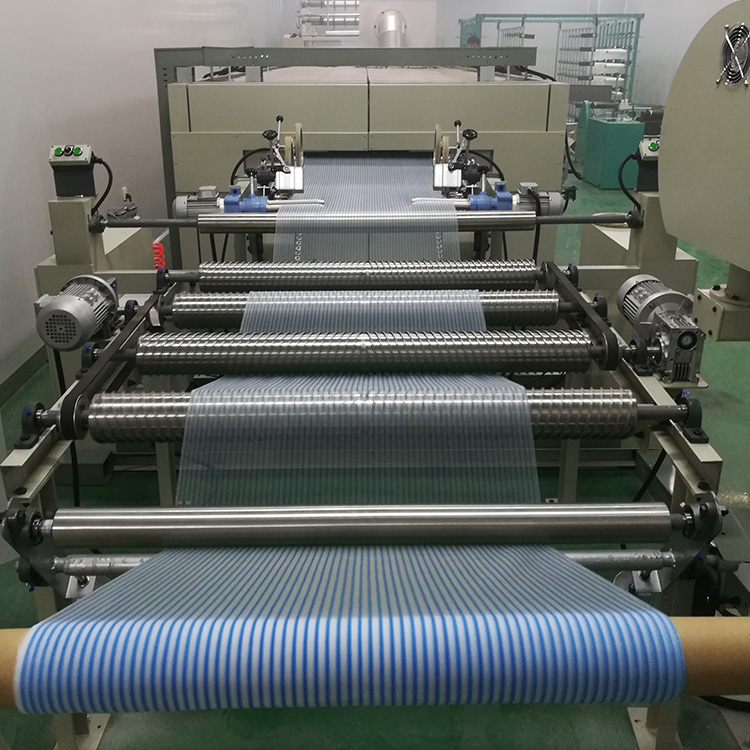
Heat distribution defines the success of your batches. Even minor fluctuations create disastrous quality control issues downstream. Evaluating the thermal mechanics separates capable machinery from inadequate options.
The core function of a heat setting machine is maintaining exact temperatures across the entire working width. You must inspect the thermal delta. This is the temperature variance from the center of the web to the outer edges. A variance larger than 2°C causes uneven dye uptake in synthetic fabrics. It also leads to inconsistent material shrinkage. Precision calibration ensures identical treatment across every square inch of material.
Assess the primary heat source carefully. Facilities typically use thermal oil, natural gas, or direct electric heating. Each has distinct ramp-up times and operational costs. Evaluate the overall heat-up times from a cold start. Fast ramp-ups save hundreds of production hours annually. Furthermore, check for integrated energy recovery systems. Capturing exhaust heat and recycling it back into the chamber drastically reduces daily power consumption.
Inspect the exhaust and ventilation systems thoroughly. Processing damp textiles generates massive steam volumes. For high-moisture processing, verify the integration of a specialized customized drying capabilities heat setting machine module. These modules actively extract humidity. Failing to vent steam properly causes condensation drops. These drops fall back onto the fabric, creating permanent stains and structural defects.
Never trust static brochure claims regarding thermal stability. Demand independent thermal imaging reports. Request multi-point sensor logs recorded during continuous operation. You need empirical data proving the chamber holds exact temperatures under a physical load.
Your production requirements will evolve. Buying rigid, single-purpose machinery limits future business growth. Modern industrial processors must handle highly sensitive, advanced materials safely.
Inspect the machine’s ability to manage temperature-sensitive polymers. Modern synthetics require gentle, highly stable thermal ramps. Sudden temperature spikes cause irreversible thermal degradation. The equipment must offer modular heating zones. Zoned heating allows operators to gradually raise the material temperature, preventing thermal shock.
Advanced composites demand extreme precision. For high-end applications like carbon fiber processing, verify the machine’s oxidation prevention mechanisms. Carbon precursors require strict atmospheric controls. Oxygen inside the heating chamber destroys the fibers. You must verify inert gas integration capabilities. Furthermore, these materials need ultra-precise tension zones. Even slight tension imbalances cause brittle carbon fibers to snap instantly.
Check if the underlying machine architecture allows for future retrofitting. Can you seamlessly add extra heating zones later? Production demands shift rapidly. You might need to install additional cooling cylinders next year. Coating units also become necessary as product lines expand. A modular chassis design prevents you from buying an entirely new line when your process requirements change.
Best Practice: Always ask the manufacturer for a schematic of expansion slots. Knowing exactly where future exhaust fans or tensioners will fit saves major engineering headaches down the road.
Authoritative certification and intuitive controls protect your staff and your facility. You must audit the software, safety layers, and legal compliances rigorously.
Inspect the user interface extensively. The Human-Machine Interface (HMI) acts as the brain of your operation. Are recipe management screens intuitive? Operators need quick access to pre-saved thermal profiles. Data logging must happen automatically. Fault diagnostics should pinpoint exact sensor failures instantly. Complex, outdated interfaces lead directly to operator errors and ruined batches.
You must cross-reference all stated heat setting machine specifications against reality. Review the working width, max continuous speed, upper temperature limits, and peak power consumption. Compare the sales sheet directly to the physical metal nameplates bolted to the chassis. Confirm all component brands. Verify actual compliance certificates. Look for legitimate CE, UL, and ISO markings. Forged certifications present massive liability risks.
Inspect the emergency stop network. Emergency buttons must exist at every potential operator station. Test the thermal overload protections. If a sensor fails, the system must shut down heating elements immediately. Investigate the automatic cooling protocols. In case of a total facility power failure, the machine must safely dissipate chamber heat. Trapped heat ignites stationary fabrics, causing catastrophic factory fires.
Table Title: Machine Specification and Compliance Checklist
Inspection Category | Specific Verification Item | Acceptance Criteria |
|---|---|---|
Control Automation | PLC/HMI Recipe Management | Supports minimum 100 saveable material profiles. |
Hardware Specs | Nameplate Cross-referencing | Voltage and max temperature match the initial quote exactly. |
Safety Systems | Power Failure Cooling | Backup pneumatic vents open automatically upon power loss. |
Compliance | International Certifications | Valid CE/UL markings verified via third-party databases. |
Industrial machinery breaks down. How quickly you recover depends entirely on your vendor relationship. Evaluating the manufacturer proves just as vital as evaluating the metal itself.
Does the supplier allow rigorous testing at their facility before shipping? You need to run live-material testing. Bring your own actual fabric rolls to their testing center. A transparent vendor welcomes this level of scrutiny. Running real product exposes tension flaws and thermal inconsistencies. You can fix these issues easily at the factory. Fixing them on your floor costs ten times more.
A credible heat setting machine supplier provides extensive onsite commissioning. They do not just drop shipping containers at your dock. They send specialized technicians to assemble, calibrate, and wire the line. Operator training ensures a smooth handover. Your staff must learn routine maintenance, HMI navigation, and emergency procedures directly from the builders.
Inspect the supplier's warranty terms closely. Look for guaranteed response times for technical support. If a drive shaft snaps, waiting four days for a callback destroys your production schedule. Furthermore, investigate the local availability of proprietary wear parts. Highly specialized heating elements or custom drive belts should ideally sit in regional warehouses. Relying on overseas shipments for basic wear parts paralyzes your operations.
Review the Service Level Agreement (SLA): Ensure specific penalties exist for missed response times.
Audit the Spare Parts List: Demand a list of recommended spare parts to keep on your shelf.
Check References: Call three past clients. Ask them specifically about post-installation technical support.
Inspecting a bulk thermal processor goes far beyond ticking boxes on a spec sheet. It requires proving mechanical reliability, verifying thermal uniformity, and confirming supplier integrity. You must approach the evaluation as a holistic system audit. Overlooking the exhaust capability or the software interface guarantees future production bottlenecks.
We strongly advise buyers to compile a strict Factory Acceptance Test checklist. Base this document entirely on your specific material needs. Complete this step long before signing the final purchase order. Demanding empirical proof of temperature deltas and running acoustic dry-runs mitigates your operational risk effectively.
Take proactive steps today. Consult your internal engineering team to discuss customized specifications. Request a fully transparent, live machine demonstration from your shortlisted vendors to see their claims in action.
A: Typically, the acceptable variance is ±1°C to ±2°C. Critical materials, like medical textiles or aerospace composites, demand this tight tolerance to prevent structural weaknesses. Always emphasize verifying these thermal tolerances using independent multi-point sensors rather than relying solely on the machine's built-in readouts.
A: No. Standard equipment lacks the required precision. You need specialized tensioning mechanisms, inert gas atmospheres, and exact thermal profiling capabilities. Processing carbon precursors in standard oxygen-rich environments causes rapid oxidation, which completely destroys the structural integrity of the delicate fibers.
A: A robust FAT must include continuous runtime tests and multi-point temperature logging. You should trigger all safety systems physically to ensure they react correctly. Crucially, insist on running a large sample of your actual production material to verify real-world tension and thermal performance.
A: You should conduct full frame and drive calibrations bi-annually. However, operators must perform monthly localized checks for tension stability and thermal uniformity. This routine prevents minor misalignments from cascading into major batch failures and maintains strict production quality compliance.


