

Views: 0 Author: Site Editor Publish Time: 2026-09-26 Origin: Site


Textile manufacturers face a constant battle against material distortion. For technical fabric processors, machine precision directly impacts product consistency. Your ability to maintain correct Grams per Square Meter (GSM) relies entirely on mechanical accuracy. Edge waste and dimensional stability depend on flawless width control. The mechanisms controlling this width are highly sensitive. Components like chain rails, width-adjustment spindles, and overfeed sensors require rigorous protection. We define this protection through two crucial layers. First, physical export packaging secures the equipment during global transit. Second, an operational package of process controls protects the fabric dynamically during production. This guide breaks down these protective measures in detail. You will learn how to evaluate physical shipping protocols alongside integrated software features. We show you how to ensure your equipment maintains strict width tolerances from initial delivery to daily high-speed production. A well-protected machine yields consistent product quality. Meeting strict buyer demands hinges on these dual packaging strategies.
Transit Rigidity is Critical: Micro-bending of width-adjustment spindles during shipping is a leading cause of calibration failure; demand heavy-duty cross-bracing from your supplier.
Application Dictates the Control Package: High-stakes materials require specialized width-protection features (e.g., tensionless feeding for mosquito nets, extreme rigidity for carbon fiber).
Sensors Protect Margins: An integrated process control suite (shrinkage and GSM monitoring) is the operational "packaging" that protects fabric width during high-speed runs.
Supplier Vetting: Contracts must clearly define working width tolerances, installation calibration support, and transit damage liability.
Deviations in the specified working width trigger a cascade of production failures. When rails misalign, you experience bowed or skewed wefts immediately. Heat distribution becomes uneven across the chamber. Ultimately, you fail to meet strict buyer GSM requirements. A fabric stretched even a few millimeters beyond its target width loses density. This density loss translates directly to rejected shipments and ruined profit margins.
We must understand the inherent mechanical vulnerability of these components. Width-adjustment spindles utilize extremely fine threads to ensure millimeter-level precision. Chain rail joints rely on microscopic tolerances to glide smoothly. These parts face two distinct threats. First, heavy-sea transit introduces severe vibrations and lateral shocks. Second, operation induces extreme thermal expansion. As the chamber heats beyond 200°C, the metal structural integrity shifts. If the components suffer micro-bending during shipping, this thermal expansion exacerbates the flaw.
A successfully protected width system delivers clear operational results. It requires minimal manual recalibration after factory installation. You should expect the machine to hold its set point across multiple shifts. Furthermore, a highly accurate system yields less than 1% edge-trim waste. Protecting the stenter working width mechanics is not merely an engineering concern. It serves as a direct safeguard for your material yield.
Common Mistake: Many operators attempt to correct mechanical rail deviations by over-adjusting fabric overfeed. This creates uneven longitudinal tension and worsens edge curling.
Machine damage often occurs long before the equipment reaches your factory floor. Transit risks present a formidable challenge. Ocean freight subjects cargo to relentless vibration. Port cranes handle containers abruptly, causing sheer forces. Furthermore, marine moisture attacks delicate metal surfaces. These factors can easily warp heavy rails or corrode delicate width-adjustment motors.
You must evaluate your supplier based on their export packaging dimensions. We recommend scrutinizing three specific crating protocols:
Structural Skids & Cross-Bracing: Standard wooden pallets fail under heavy industrial loads. Ensure the supplier uses reinforced steel or heavy timber bracing. They must place this bracing specifically across the width axes. This prevents lateral compression if a container shifts during turbulent seas.
Vibration Dampening: Rigid packing transfers shock directly to the machine. Proper packaging utilizes shock-absorbing mounts for the chain rail segments. Rubberized dampeners isolate the rails from base plate vibrations.
Vacuum Sealing (VCI): Moisture destroys precision threads. Vapor Corrosion Inhibitor (VCI) foils release protective compounds. They wrap width-adjustment spindles and bearings entirely. This blocks marine moisture and prevents microscopic rust. It guarantees smooth operation post-installation.
Treat export packaging as an indicator of overall manufacturing quality. A reputable stenter working width supplier engineers their crates as carefully as their machinery.
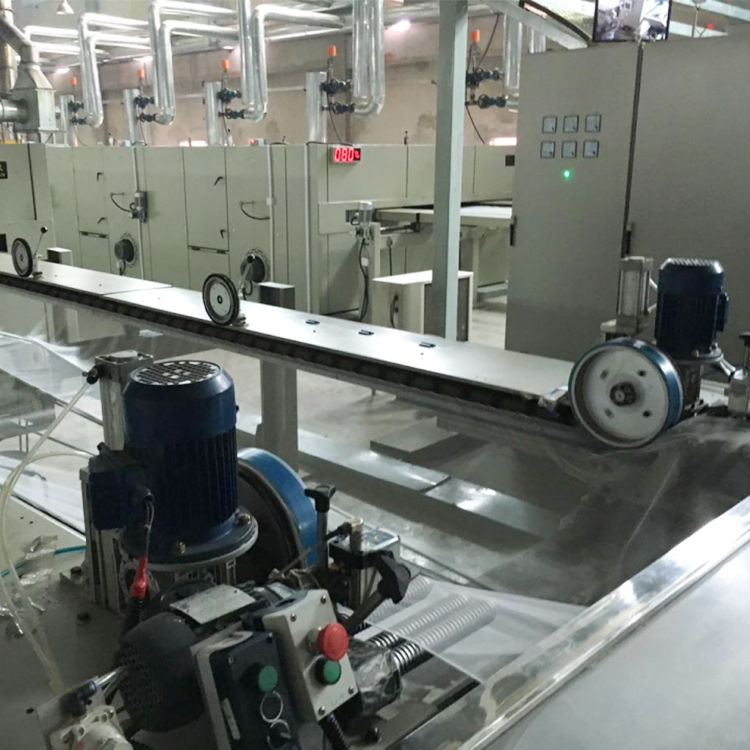
Physical crating protects the machine during shipping. Operational packaging protects the fabric during production. We define this operational package as the integrated technology bundle inside the machine. It combines sensors, software, and advanced mechanics. They work together to protect the working width dynamically.
Process control integration forms the brain of this package. Automated scanners align with rigorous industry standards, such as Mahlo frameworks. These scanners monitor web tension, shrinkage, and GSM in real-time. They send constant feedback to the central programmable logic controller (PLC). The PLC automatically adjusts the rail width motors to compensate for material shrinkage. You no longer rely on operator guesswork. The machine reacts to the fabric behavior instantly.
Mechanical edge protection serves as the physical hands of the system. Precision edge uncurlers use pressurized air or mechanical spirals. They flatten rolling selvedges just milliseconds before pinning. Overfeed rollers control the exact longitudinal tension delivered to the entry zone. Finally, pinning accuracy determines edge security. Specialized brushes press the fabric deep into the pin base. This prevents the material from slipping off the pins or over-stretching under high heat.
Table 1: Operational Packaging Components vs. Fabric Outcomes
System Component | Primary Function | Impact on Fabric Width |
|---|---|---|
Optical Web Scanners | Monitor real-time GSM and shrinkage | Triggers automatic rail adjustments to prevent narrowing |
Pneumatic Edge Uncurlers | Flatten tightly rolled selvedges | Ensures maximum pin engagement, reducing edge slip |
Precision Overfeed Rollers | Control linear material feed rate | Prevents longitudinal pulling that shrinks width |
Inverter-Driven Spindles | Execute micro-adjustments to rail joints | Maintains parallel rail alignment across heating zones |
Different textiles demand entirely different width protection strategies. You cannot apply a universal approach to delicate knits and rigid composites. High-stakes materials require specialized engineering packages.
Consider the requirements for delicate knitted meshes. Knitted mesh is highly susceptible to distortion and localized tearing. If tension spikes, the hexagonal structure deforms permanently. You require an open width tensionless stenter for mosquito net processing. This application demands an extreme tensionless feeding package. Driven spreading rollers open the fabric gently. Highly sensitive pinning mechanisms maintain the delicate working width. They secure the edges without stretching the net structure longitudinally.
Conversely, industrial composites present the opposite challenge. carbon fiber processing introduces massive physical stress. High heat and heavy mechanical loads act upon the rails constantly. Standard stenter rails will deflect or warp under this pressure. This application requires heavy-duty cast iron or reinforced steel rail construction. Specialized clip systems replace standard pins to grip the rigid fibers firmly. Zero-tolerance width tracking becomes mandatory. The machine must maintain the exact structural integrity of the advanced composites, as even a one-millimeter deviation ruins the aerospace or automotive grade material.
Best Practice: Always audit your primary fabric portfolio before selecting a rail and clip system. Over-specifying rail weight can reduce machine speed, while under-specifying leads to catastrophic rail deflection.
The transition from shipping crate to factory floor represents a critical vulnerability window. Even with perfect physical packaging, improper factory installation easily compromises the working width mechanics. The handoff process dictates future machine reliability.
You face several harsh installation realities. First, laser alignment for chain rails is an absolute necessity during assembly. Technicians cannot rely on traditional string lines or bubble levels. The entire length of the chamber requires optical laser calibration to ensure perfectly parallel rails. Second, static alignment is insufficient. Technicians must conduct thermal testing. They calibrate the width spindles at operating temperatures exceeding 200°C. Metal expands significantly at these temperatures. Calibrating cold rails leads to severe width drift once the burners ignite.
Risk mitigation requires proactive contract management. You must assign liability clearly before the machine ships. Ensure the commissioning contract mandates specific performance thresholds. The supplier must remain fully responsible for proving the stenter working width specifications on-site. Demand a live production load test. Do not sign the final acceptance certificate until the machine runs your most difficult fabric while maintaining the guaranteed width tolerance.
Selecting the right machinery partner requires objective, evidence-oriented criteria. You must separate reputable manufacturers from low-tier assemblers. Their approach to protecting width mechanisms reveals their overall engineering competence.
Use these specific questions during your procurement and negotiation stage:
Can you provide a documented export packaging protocol detailing how width mechanisms are secured? Look for engineering drawings of their shipping crates, not just verbal assurances.
What is the guaranteed mechanical tolerance (in mm) of the working width across the entire length of the chambers? Accept nothing less than a documented numerical guarantee under thermal load.
Which process control suites are standard versus optional? Clarify if automatic width tracking and GSM control require expensive software upgrades later.
How do you handle thermal expansion during the physical rail installation? Their technicians should utilize dynamic hot-calibration procedures.
Your immediate next steps should involve data collection. Request a detailed technical specification sheet covering the width adjustment motors. Furthermore, ask for a case study detailing their installation process for your specific fabric type. This evidence protects your investment.
Protecting stenter working width is not a single feature you check off on a procurement list. It represents a comprehensive, end-to-end approach. It begins the moment the manufacturer bolts the machine into a rigid transit crate. It continues through laser-guided installation and culminates in advanced, application-specific process controls. Mechanical deviations destroy product quality and erode your margins through excessive edge waste.
We advise you to prioritize suppliers who treat export packaging as a serious engineering discipline. Demand transparent, verifiable data regarding their machine's operational width tolerances. Implement rigorous commissioning contracts that enforce hot-calibration standards. By treating width protection as a dual strategy of physical crating and digital control, you secure consistent fabric quality for years to come.
A: Woven fabrics typically utilize standard width ranges between 1800mm and 3200mm due to their inherent structural stability. Knitted fabrics and specialized technical textiles often require wider configurations or highly customized adjustable ranges. Knits also demand specialized tensionless handling features to prevent structural deformation during the widening process.
A: Tensionless models utilize advanced overfeed mechanisms and driven spreading rollers. They feature precise speed synchronization between feeding zones. This controls the fabric width without applying linear tension. It proves crucial for stretch-sensitive materials like mosquito nets or elastane blends that deform under standard pulling forces.
A: Minor mechanical misalignments can sometimes be corrected via laser calibration during the factory installation. However, severely bent adjustment spindles or warped chamber rails typically require complete component replacement. This highlights the critical need for heavy-duty export packaging and vibration dampening provided by the original supplier.


