Manufacturing high-grade thermal insulation materials demands ultimate precision. One tiny flaw during thermal treatment can quickly ruin entire production batches. In
carbon fiber felt processing, the drying phase remains a critical bottleneck. Improper temperature control routinely causes high scrap rates. Uneven airflow introduces severe product inconsistencies. Poor handling of volatile binders creates dangerous factory conditions. These mistakes compromise material tensile strength. They also severely inflate daily energy bills. A successful procurement decision must balance thermal uniformity. You must match equipment capabilities to your specific throughput demands. You also need to ensure long-term equipment durability. Your chosen equipment must match the exact chemical realities of your materials. This comprehensive guide breaks down essential technical evaluation criteria. It covers the operational requirements you truly need. You will learn how to confidently select a reliable
soft felt drying furnace. We will show you exactly how to achieve consistent product yields. You will discover methods to ensure reliable daily performance without constant manual intervention.
Key Takeaways
- Right-Size for the Target Process: Avoid the "idle capacity penalty"—purchasing a furnace 30% larger than required drastically inflates energy costs. Focus on the constant temperature zone, not just the physical chamber size.
- Prioritize Chemical Defense: Carbon fiber felt processing releases corrosive binders and resins; an anti-corrosion drying furnace with concealed heating elements is mandatory to prevent premature equipment failure.
- Align with Production Flow: Choose between batch ovens for R&D and a continuous drying furnace for high-volume manufacturing, ensuring an adjustable speed drying furnace mechanism is present for precise residence time control.
- Safety & Compliance: Flammable off-gassing requires specialized exhaust protocols and explosion-proof redundancies that standard lab ovens do not provide.
1. Production Scale and Throughput: Continuous vs. Batch Processing
You must match furnace architecture directly to your production volume. Mismatched equipment causes severe energy waste. It also creates painful processing bottlenecks. You have two primary workflow options. Batch processing ovens work perfectly for R&D environments. They handle low-volume specialty runs exceptionally well. Engineers use them to test new profiles for a
carbon fiber soft felt furnace. These units require manual loading and unloading. Their physical footprint remains generally smaller. This makes them ideal for restricted floor spaces in laboratory settings. High-volume manufacturing demands a different approach. Roll-to-roll production requires a robust
continuous drying furnace. These systems automate material handling completely. You must look for one crucial mechanical feature. Ensure you buy an
adjustable speed drying furnace. A variable speed drive lets operators fine-tune residence time. They can control exact heat exposure durations. You adjust this timing based on specific felt thickness. You also adapt it to varying moisture content across different product grades. Avoid the dangerous overcapacity trap. Do not buy a significantly larger unit than you forecast. Heating empty chamber space wastes expensive electricity. It also heavily complicates temperature uniformity across the material load.
| Feature | Batch Processing Ovens | Continuous Drying Furnaces |
| Best Use Case | R&D, testing, low-volume specialty runs | High-volume, uninterrupted roll-to-roll processing |
| Material Handling | Manual loading and unloading required | Automated conveyor or roller mechanisms |
| Physical Footprint | Compact design, saves factory floor space | Large footprint, requires full line integration |
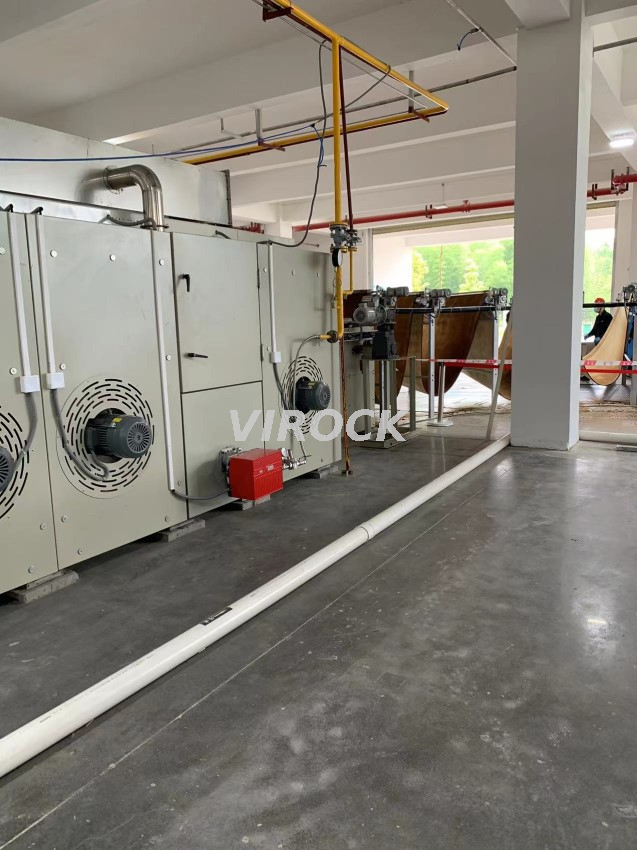
2. Thermal Uniformity and the "Constant Temperature Zone"
Thermal uniformity dictates your final product quality. Cold spots leave residual moisture behind. They also leave un-cured chemical binders deep inside the fibers. Hot spots degrade overall fiber integrity rapidly. You must demand guaranteed temperature uniformity from manufacturers. A standard of ±5°C works best for thermal felt curing. This closely mirrors AMS 2750D class aerospace standards. Never calculate capacity using external dimensions. Do not use total internal dimensions either. You must evaluate the "constant temperature zone". This specific interior volume strictly meets the tightest uniformity guarantees. Your material samples must fit entirely inside this protected zone. Assess the mechanical forced air design carefully. The heating system must penetrate highly porous soft felt structures. It must do this without causing physical distortion. You want to prevent any fiber shedding entirely. Proper internal baffle designs prevent damaging air turbulence. They push heat gently through the web. Always apply the simple "+20% Rule". Select equipment rated 20% higher than your operational requirement. This strategic buffer maximizes the lifespan of internal components. It keeps essential heating elements from burning out prematurely. Follow these guidelines to verify thermal stability:
- Request comprehensive thermal mapping data directly from the manufacturer.
- Identify the precise mathematical boundaries of the constant temperature zone.
- Verify mechanical baffle placements to ensure gentle, penetrating airflow.
- Confirm internal sensor calibration routines meet your exact industry standards.
3. Managing Off-Gassing: The Necessity of Anti-Corrosion Systems
Drying soft felt involves evaporating multiple complex chemicals. You evaporate sizing agents, water, solvents, and heavy resin binders. These volatile byproducts often form highly acidic vapors. They create deeply corrosive environments inside the heating chamber. You need precise
anti-corrosion drying furnace specifications. Standard laboratory ovens simply will not survive this aggressive process. First, mandate completely concealed heating elements. Exposed metallic resistance coils degrade rapidly. Corrosive off-gassing destroys them in weeks. Elements must remain fully shielded or encased. Manufacturers often construct them from specialized durable materials. Specific grades of Silicon Carbide work exceptionally well for extreme temperatures. Second, inspect the chamber metallurgy closely. Ensure the inner liner uses high-grade protective materials. Corrosion-resistant stainless steel represents the minimum acceptable standard. Specialized refractory alloys work even better for intense manufacturing applications. Never accept standard mild steel interiors. They will rust almost immediately upon exposure to binder off-gassing. Third, evaluate the active exhaust systems. Standard passive vents fail completely here. Integrated moisture extraction systems must actively remove saturated air. They must work rapidly to prevent internal condensation. Condensation on furnace walls accelerates equipment failure exponentially. Proper exhaust protects both the delicate product and the machine itself.
4. Insulation Materials and Energy Efficiency
Your choice of chamber insulation directly impacts daily performance. It dictates equipment ramp-up speed and exterior safety. It also heavily influences operational electricity consumption over the equipment's lifespan. Consider ceramic or alumina fiber insulation. It remains very lightweight and highly efficient. This material allows for rapid heating cycles. It cools down remarkably fast too. Use it for processes requiring frequent temperature profile changes or multiple daily recipe swaps. Refractory brick offers a completely different operational advantage. It is much heavier and slower to heat. However, it provides unmatched physical durability. It boasts incredible heat retention properties. It serves massive 24/7 continuous operations perfectly. It resists mechanical wear incredibly well. Always evaluate the thermal casing design. Check the anticipated external skin temperature. Advanced dual-wall designs incorporate active cooling fans. They ensure the exterior remains perfectly safe for operators to touch. This design also significantly reduces the ambient heat load. Your facility's HVAC system will operate much more efficiently. Here is a quick breakdown of popular insulation options:
- Ceramic Fiber: Fast cycling, extremely lightweight, lower thermal mass.
- Alumina Fiber: High chemical purity, excellent for elevated temperature clean-room setups.
- Refractory Brick: Heavy duty construction, maximum longevity, superior long-term heat retention.
5. A 4-Step Procurement and Evaluation Framework
Use this systematic approach to evaluate equipment vendors. It actively prevents costly procurement mistakes.
Step 1: Define the Application and Sample Requirements. Document your exact binder chemistry carefully. Note the required web width and felt thickness. Specify your absolute maximum temperature range. Do not forget to include your +20% thermal safety buffer.
Step 2: Map the Facility Constraints. Verify your available factory floor space accurately. Calculate required safety clearances around the unit. You typically need a 4–6 inch minimum gap on all sides. This ensures safe and proper heat dissipation. Verify your facility's exact input voltage capabilities before ordering a heavy-duty system.
Step 3: Audit Safety and Redundancy Protocols. Demand independent over-temperature protection systems. Insist on loud, programmable safety alarms. Request specific ventilation capabilities if you handle flammable solvents. Safety blowout panels remain non-negotiable for highly volatile processing environments. You must protect your machine operators at all costs.
Step 4: Assess Programmability and Control. Look for advanced PLC or SCADA interface systems. You need reliable multi-step programmable controllers. They allow automated temperature ramping seamlessly. They manage complex soaking and cooling phases automatically. This sophisticated control eliminates risky manual operator intervention entirely. It guarantees repeatable batch quality.
Conclusion
Selecting a reliable drying furnace requires careful technical analysis. It is never a standard lab equipment purchase. It represents an investment in a highly specialized thermal environment. You must align equipment design directly to your exact applied chemistry. Always verify the constant temperature zone dimensions before signing a purchase order. Do not rely on empty chamber volume measurements. Prioritize robust chemical defense using properly shielded heating elements. Take these actionable steps forward:
- Prioritize vendors supplying real thermal mapping data for their heating zones.
- Request custom internal dimensions based purely on the constant temperature zone.
- Seek manufacturers offering customizable heavy-duty exhaust and ventilation packages.
- Match interior anti-corrosion options directly to your specific binder chemistry.
FAQ
Q: Can a standard forced-air lab oven be used for carbon fiber felt processing?
A: Generally, no. Standard lab ovens lack necessary anti-corrosion interiors. They utilize exposed heating elements which fail quickly when exposed to resins. They also lack specialized exhaust systems. These advanced features are required to handle aggressive felt binder off-gassing. Using a standard oven leads to rapid equipment failure and severe safety hazards.
Q: Why is an adjustable speed mechanism critical for continuous drying?
A: Felt density and binder saturation vary between different production runs. Adjustable speed drives allow operators to dynamically change the "time-in-zone". This ensures complete chemical drying without any accidental overheating. This precise mechanical control directly improves final product yield and maintains optimal fiber tensile strength.
Q: How do I prevent combustible gas build-up during the drying phase?
A: You must ensure the furnace has powerful forced exhaust ventilation. You should also install inert gas purging options, like Nitrogen. Furthermore, you must include safety blowout panels if you process highly volatile solvent mixtures. These combined redundancies safely manage flammable off-gassing and prevent dangerous explosions.


