

Views: 0 Author: Site Editor Publish Time: 2026-08-30 Origin: Site


Procuring a finishing line requires immense capital expenditure (CapEx). It also dictates your factory's long-term operational costs. Buyers face incredibly high stakes when selecting equipment for their textile plants. A poorly constructed machine leads to frequent breakdowns and ruined fabric batches. You must look far beyond basic functionality. We recommend focusing on continuous uptime, daily energy consumption, and material durability. Superficial comparisons often result in inefficient operations down the line.
This article provides a comprehensive buyer's framework for your next investment. You will learn how to evaluate physical machine construction properly. We will guide you through complex technical documentation analysis. You will also discover proven methods to verify supplier credibility before signing a contract. By the end, you will possess the knowledge needed to make a highly confident, evidence-based purchasing decision.
The foundation of any reliable textile stenter machine lies in its physical construction. Manufacturers often cut corners on unseen materials. These shortcuts drastically reduce thermal efficiency. They also accelerate hardware degradation. You must closely examine the metallurgy and insulation materials used.
Heat retention directly impacts your daily energy consumption. Many budget-friendly machines utilize standard fiberglass insulation. Fiberglass settles over time and creates cold spots within the chamber walls. This settling forces your burners to work harder.
Conversely, premium models utilize high-density rock wool. We look for densities ranging between 120 and 150 kg/m³. Superior insulation blocks heat transfer. It keeps the exterior panels cool to the touch. This material choice reduces heat loss significantly. It lowers energy consumption during the intense heat-setting process.
| Material Type | Typical Density | Heat Retention | Long-Term Durability |
|---|---|---|---|
| Standard Fiberglass | 60 - 80 kg/m³ | Moderate | Prone to settling and degradation |
| High-Density Rock Wool | 120 - 150 kg/m³ | Excellent | Maintains structural integrity for decades |
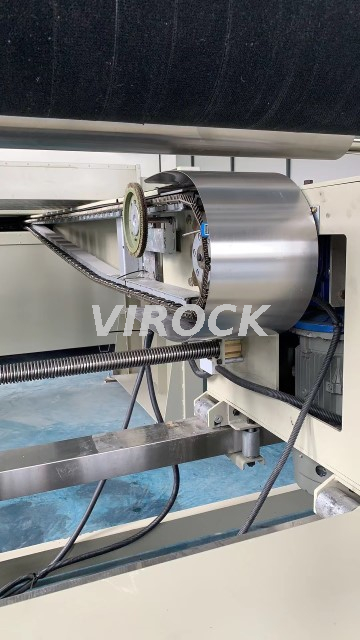
The transport mechanism carries your fabric through extreme heat. Cast iron tracks provide basic functionality but wear down quickly under high tension. They require constant lubrication. Excess oil easily drips onto the fabric. This contamination ruins entire production runs.
Specialized steel alloy tracks offer superior durability. They resist thermal expansion. You should calculate the return on investment (ROI) for lubrication-free chain systems. Low-lubrication tracks prevent fabric contamination entirely. They also reduce maintenance downtime. Your operators spend less time greasing tracks and more time processing textiles.
Your machine uses pins, clips, or a combination of both to grip the fabric. These components endure constant high-temperature and high-tension environments. Standard metals warp easily under these conditions. Warped clips drop the fabric mid-process.
Detail the metallurgy requirements before purchasing. Insist on corrosion-resistant stainless steel for pin plates. High-grade alloys prevent the pins from bending. Specialized clips must maintain their gripping force at 200°C. Robust hardware prevents costly edge damage to your textiles.
Common Mistake: Buyers often accept mixed-metal clip assemblies. Different metals expand at different rates. This thermal mismatch causes clips to jam during peak operation.
A machine might look perfect on paper but fail on your factory floor. You must align the equipment's mechanical capabilities with your actual textiles. Different fabrics demand radically different handling procedures. Tension control mechanisms are not universally compatible.
Highly elastic materials require extreme precision. Knits stretch easily and suffer from severe edge-curling. Processing them requires sophisticated overfeed systems. You need active edge decurling modules at the machine entrance. The tension must remain minimal to preserve fabric weight.
Rigid wovens present entirely different challenges. They do not stretch easily. Wovens demand higher linear tension to achieve dimensional stability. A versatile machine must switch between these modes seamlessly. Look for independent tension control sensors for both the warp and weft directions.
Niche textiles require purpose-built equipment. If you process ribbons, tapes, or lace, standard models will destroy the material. These lightweight items require specialized guiding requirements.
Sourcing a dedicated narrow fabrics textile stenter machine solves this problem. Narrow fabric machines feature miniaturized pin tracks. They utilize highly sensitive load cells. These components prevent edge damage effectively. They also ensure a strictly uniform width across the entire batch.
Many factories apply resins, softeners, or flame retardants before heat-setting. These chemicals vaporize inside the heated chambers. Standard exhaust fans cannot handle heavy chemical off-gassing. The vapor condenses and drips back onto the fabric.
Ensure the exhaust and extraction systems match your chemical usage. Acidic vapors require stainless steel exhaust ducts. Teflon-coated internal panels make cleaning sticky resins much easier. Proper extraction prevents dangerous vapor build-up. It protects both your workers and your final product quality.
Sales brochures often highlight vague benefits. You need verifiable data. Evaluating technical data sheets separates reliable equipment from poorly engineered alternatives. You must scrutinize the heating media, drive architectures, and energy recovery systems.
Your heating medium dictates operational costs. Plants typically choose between gas, thermal oil, or steam. Direct gas heating reaches target temperatures rapidly. Thermal oil provides exceptional temperature stability. Steam works best for low-temperature applications.
When reviewing the textile stenter machine specifications, locate the temperature tolerance figures. Verifiable data should show a temperature uniformity of ±1°C to ±2°C across all chambers. Uneven heating causes inconsistent dye fixation. It leads to shaded patches across your fabric.
| Heating Medium | Temperature Reach | Best For | Maintenance Level |
|---|---|---|---|
| Direct Gas | Up to 230°C+ | High-speed synthetic heat setting | Moderate (burner cleaning) |
| Thermal Oil | Up to 220°C | Consistent, uniform finishing | High (fluid replacement) |
| Steam | Up to 160°C | Delicate natural fibers | Low (boiler maintenance) |
Older machines utilize a central drive motor connected by long shafts. This outdated design causes mechanical lag. Modern equipment relies on individual chamber drive systems. Each section has its own synchronized motor.
Assess the integration of programmable logic controllers (PLC). Industry-standard controls from Siemens or Allen-Bradley are essential. They offer real-time monitoring capabilities. High-quality PLCs allow for predictable energy scaling. You can adjust blower speeds automatically based on fabric moisture levels.
Factories exhaust massive amounts of hot air into the atmosphere. This represents wasted money. Look closely at the EAHR options in the spec sheets. Some manufacturers include basic recovery units as standard. Others offer highly efficient modules as optional upgrades.
Evaluate the verifiable ROI timelines for these systems. A quality EAHR module captures hot exhaust air. It uses this air to pre-heat incoming fresh air or water. This process can reduce burner gas consumption by up to 30%. Ask the manufacturer for independent audit reports proving these energy savings.
Best Practice: Always request an EAHR calculation based on your specific daily production hours and local utility rates.
Standard models work well for general processing. However, high-volume or specialized factories often hit performance ceilings. Recognizing when off-the-shelf equipment fails is a crucial management skill. Sometimes, bespoke engineering offers the only viable path forward.
Start by mapping your current floor layout and production flow. Standard machines require massive amounts of linear space. If your factory has footprint constraints, an off-the-shelf model simply will not fit. You might need a vertical return chain or a stacked chamber design.
Evaluate your specialized finishing requirements. Extreme production speeds often cause fabric to exit the machine while still hot. This creates creases during winding. Standard cooling zones fail to drop the temperature fast enough. These bottlenecks signal the need for specialized engineering.
Purchasing a customized unit allows you to build exactly what you need. You can specify custom chamber lengths to match your desired line speed. Technical textiles often require hybrid heating systems. You might use infrared pre-heating followed by thermal oil chambers.
A custom textile stenter machine accommodates niche technical fabrics perfectly. You can request specialized cooling zones with chilled water cylinders. You can also add heavy-duty squeezing padders for high-viscosity chemical applications. Modular architecture lets you future-proof the production line.
Customization requires a higher initial investment. It also involves longer manufacturing lead times. You must conduct a transparent breakdown of these factors against long-term gains. Standardized machines arrive faster but might limit your yield.
Follow these numbered steps to analyze the cost-benefit ratio:
A payback period of under three years strongly justifies the custom route. Long-term operational gains in yield and efficiency quickly outpace the initial premium paid.
Excellent hardware means nothing without a reliable partner behind it. The industrial machinery market contains many unreliable vendors. You must implement a strict vetting process. Compare compliance records, installation capabilities, and contractual guarantees rigorously.
Do not take a salesperson's word regarding safety and quality. Demand physical documentation. You must verify CE marks if operating in or exporting to Europe. Check for valid ISO 9001 certifications to ensure consistent manufacturing processes.
Environmental compliance is equally critical. The textile stenter machine supplier must provide emission data. Ensure the exhaust filtration systems comply with your local environmental regulations. Failing to secure these documents can result in heavy government fines or factory closures.
Buying the machine is only the first step. Installing it disrupts your entire factory. Assess the supplier's proposed installation timeline carefully. Request a detailed site preparation document weeks in advance.
You need to know the exact requirements for foundational concrete, electrical drops, and gas lines. Evaluate how the new equipment integrates with your existing continuous dyeing or finishing lines. A competent supplier sends engineers to coordinate this integration phase personally.
Never accept delivery without rigorous testing. Contractual testing protocols protect your investment. You must outline these tests before transferring final payments.
Machinery breaks down eventually. Your supplier's response time dictates your financial losses during an outage. Evaluate the availability of local spare parts. A supplier with a regional warehouse prevents weeks of shipping delays.
Look for remote diagnostic capabilities. Modern PLCs allow the manufacturer's engineers to troubleshoot software issues from a different continent. Finally, assess the realism of their warranty clauses. Avoid suppliers offering "lifetime warranties" with hidden loopholes regarding wearable parts.
The optimal equipment investment requires balancing robust physical construction materials with precise fabric handling capabilities. Fiberglass insulation and cast iron tracks might lower the purchase price, but they erode your profitability through heat loss and maintenance. True efficiency stems from matching metallurgy and automated controls to your specific production reality.
We advise buyers to prioritize data-backed technical specifications. Rigorous supplier vetting always outperforms simply choosing the lowest-bid pricing. Look for guaranteed temperature tolerances, independent energy audits, and clear testing protocols.
Your next step is to shortlist two or three reputable suppliers. Request highly detailed technical proposals from each. Ask them to provide EAHR ROI calculations based exactly on your specialized daily output. Taking this evidence-based approach ensures your new finishing line drives long-term factory success.
A: A well-built machine typically lasts 15 to 20 years or more. This lifespan depends heavily on routine maintenance and initial build quality. Machines utilizing high-density rock wool, stainless steel pins, and specialized alloy tracks outlast budget models significantly. Regular chain cleaning and sensor calibration extend the equipment's operational life.
A: Never trust marketing brochures blindly. You must request independent audit reports or documented case studies from similar factories. Furthermore, insist on inserting guaranteed performance clauses regarding gas and electrical consumption into your purchasing contract. If the machine fails during the Site Acceptance Test (SAT), the supplier must optimize it.
A: Retrofitting is highly difficult and usually cost-prohibitive. Standard machines lack the sensitive load cells, specialized miniature pin tracks, and precise edge guiding required for narrow tapes or lace. Buying a purpose-built or highly modular machine upfront prevents material damage and saves money in the long run.
A: The most frequent failures include chain track wear, warped clips, and electronic sensor faults. Heating unevenness caused by clogged burners or degraded insulation also ruins fabric batches. You can mitigate these risks by comparing component metallurgy and choosing industrial-grade PLCs during the initial evaluation phase.


