

Views: 0 Author: Site Editor Publish Time: 2026-10-01 Origin: Site


In high-speed manufacturing, visual defects represent only a fraction of the problem when misalignment occurs. Marginal registration errors silently drain profitability. They drive up scrap rates, waste expensive inks, and compromise product functionality. This holds especially true in advanced manufacturing applications. We must define "registration" clearly in a continuous web process. It means the precise spatial alignment of sequential screens relative to the substrate and each other. Achieving this precision is rarely an accident. This guide dissects the mechanical, material, and operational factors dictating alignment quality. We will explore how different variables interact during production runs. You will learn to identify equipment bottlenecks and evaluate potential upgrades. By understanding these core principles, you can confidently tighten process tolerances and improve overall output yield.
Marginal misregistration impacts final product yield significantly. A variance of +/- 0.5mm might seem negligible to an untrained eye. However, comparing it against a tighter +/- 0.1mm tolerance reveals a stark contrast in quality. Loose tolerances cause overlapping colors, blurred edges, and structural failures in technical prints. Perfecting rotary screen printing accuracy prevents these cascading failures. You secure higher yields when consecutive screens land precisely where intended.
Poor accuracy creates several distinct cost centers across your production floor. These inefficiencies compound quickly during long runs.
You must establish baseline acceptable tolerances for different production grades to define success. Textile printing generally forgives minor shifts. Acceptable tolerances often range between 0.2mm and 0.5mm. Substrates stretch naturally, hiding microscopic errors. Packaging demands tighter control. You typically need tolerances around 0.1mm to ensure sharp text and clean branding. Printed electronics represent the extreme end of this spectrum. Producing functional circuits requires rigid dimensional control. Tolerances must frequently fall below 0.05mm to prevent short circuits or dead connections.
Common Mistake: Many production managers rely purely on visual checks at the end of the line. This reactive approach guarantees wasted material. You should implement inline sensor monitoring to catch deviations instantly.
The drive system dictates how well multiple print heads synchronize. We traditionally relied on mechanical line-shaft drives. A single main motor turned a long shaft. This shaft connected to individual print stations via gears and belts. These traditional systems suffer from inherent mechanical limitations. Gears wear down over time. Belts stretch under continuous tension. This creates backlash, which we define as mechanical play or slop between moving parts. Backlash introduces cumulative synchronization errors. Station four might lag slightly behind station one, destroying alignment.
Modern independent servo-motor drives solve these mechanical bottlenecks. Each print head features its own dedicated servo motor. A central computer synchronizes them electronically. Servo drives utilize closed-loop feedback. Encoders continuously read the exact rotational position of the screen. The system makes instant micro-adjustments if a screen drifts. This eliminates mechanical slop entirely. You gain exceptional repeat accuracy at maximum running speeds.
Table 1: Drive System Comparison| Feature | Mechanical Line-Shaft | Independent Servo-Driven |
|---|---|---|
| Synchronization | Physical gears and belts | Electronic closed-loop feedback |
| Backlash | High (increases over time) | Virtually eliminated |
| Micro-adjustments | Manual, requires stopping | Instant, automated while running |
| Maintenance | Frequent mechanical wear | Minimal, requires sensor calibration |
Web handling and tension control represent the second mechanical pillar. Substrate stretch or shrinkage between color stations destroys registration completely. You cannot align a rigid screen to a warping fabric. Operators must manage tension flawlessly. Modern machines deploy load cells and dancer rollers to measure web pull continuously. Closed-loop tension control systems adjust feed rollers instantly to maintain absolute web stability.
The printing blanket plays a critical role here. This continuous conveyor belt carries the substrate through the machine. Thermoplastic adhesives coat this blanket. They lock the substrate firmly in place during the print run. If the adhesive fails, the material slips. This lateral or longitudinal slip immediately voids alignment. Maintaining an even, consistent adhesive layer guarantees the substrate acts as a rigid surface.
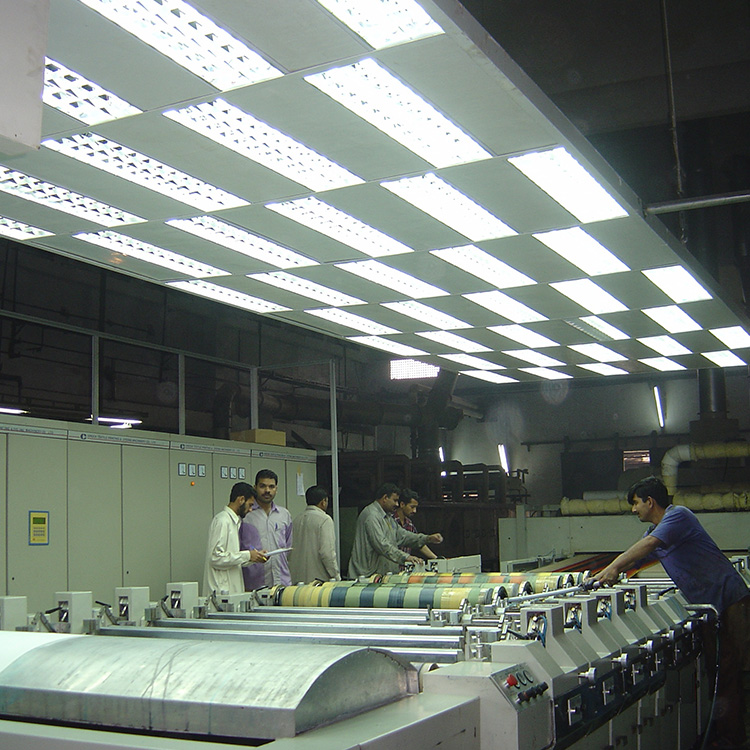
Registration accuracy actually starts in the pre-press room. Screen preparation establishes the baseline for success. If the design is not engraved onto the screen perfectly, machine adjustments cannot fix it. A distorted image on the mesh will print a distorted image on the web. You must ensure extreme precision during the laser engraving or exposure process.
The physical properties of the nickel mesh react significantly to stress. Mesh thickness, open area percentage, and metal ductility all influence dimensional stability. The squeegee applies intense downward pressure during printing. Rotational friction drags against the mesh simultaneously. Thin mesh with a high open area stretches easily under this combined force. Screen twisting or deformation causes progressive misregistration. The center of the pattern might align, but the edges bow outward.
Proper end-ring fitting prevents structural failures. End rings connect the fragile nickel mesh to the heavy drive heads. Misaligned end rings lead to a mechanical "wobble." This wobble causes lateral registration shifts on every rotation.
Best Practices for Screen Preparation:
Different industries manage registration challenges uniquely. Textile manufacturing deals with highly elastic, porous substrates. Cotton and synthetic blends stretch under tension. They absorb moisture and swell. Standard registration expectations remain relatively forgiving here. Software often compensates for predictable fabric stretch. Operators program slight image scaling into successive screens. The machine stretches the design slightly to match the stretched fabric. Advanced algorithms predict how different weaves behave under tension.
High-tech applications operate under drastically different rules. Flexible electronics and biosensors demand rigid control. Printing conductive inks requires perfection. Layers must overlap flawlessly to create working electrical circuits. A tiny shift breaks the conductivity path. The final product becomes useless scrap.
You need highly advanced registration features to succeed here. Camera-based optical alignment becomes mandatory. Cameras scan fiducial marks on the web continuously. They feed real-time positional data to the control unit. You must enforce extreme dimensional stability control. The web cannot stretch even a fraction of a millimeter. Facilities utilize controlled-environment printing to prevent thermal expansion. Temperature fluctuations cause the web or the machine frame to expand. Managing ambient temperature prevents these microscopic shifts. You must push your rotary screen printing accuracy to its absolute physical limits.
Technical buyers need a clear shortlisting logic. Evaluating a new rotary screen printing machine requires moving beyond basic marketing claims. Retrofitting an existing line requires similar scrutiny. You must examine three key dimensions deeply.
First, analyze repeatability specifications. Ask manufacturers for verifiable data on repeat accuracy at maximum running speeds. Static indexing data means very little. A machine might align perfectly while stopped. It could drift wildly at fifty meters per minute. Demand operational test data.
Second, evaluate the software integration. The Human-Machine Interface (HMI) controls your operators' daily experience. Look for automated pre-registration features. These systems align screens digitally before the machine even starts moving. Assess the real-time fault diagnostics. The HMI should warn operators immediately if a servo motor detects unexpected resistance or drift.
Third, assess the squeegee suspension. The squeegee system must apply uniform pressure across the entire printing width. Uneven pressure deflects the screen mesh. Deflection causes dynamic misregistration. Look for pneumatic or magnetic squeegee systems that guarantee consistent pressure profiles.
You must acknowledge implementation risks before upgrading. Transitioning to a highly accurate servo-driven system changes your operational culture. It requires extensive operator retraining. Mechanics used to turning wrenches must now understand digital interfaces. You must enforce stricter maintenance protocols. Sensor calibration becomes a weekly requirement. Servo tuning requires specialized knowledge. Your team must adapt to these new technological demands to reap the accuracy benefits.
Registration alignment represents a holistic system outcome. It relies entirely on the interplay between web tension, screen integrity, and drive precision. A failure in one area compromises the entire production run. Mechanical wear, sloppy screen preparation, and improper tension all degrade your final print quality.
You should audit your current scrap rates against your machine's stated tolerances immediately. Document how much material you waste during setup and run adjustments. Compare these losses against industry baselines. Use this data to determine your next action step. A mechanical upgrade might solve the issue. A servo retrofit could modernize your existing line. Sometimes, a rigorous pre-press overhaul offers the fastest path to improvement. Evaluate your weak points and take decisive action to reclaim your lost profitability.
A: Acceptable tolerances depend heavily on the application. Standard modern machines printing textiles generally operate within a +/- 0.2mm to +/- 0.5mm range. High-end equipment targeting packaging maintains tolerances around +/- 0.1mm. Specialized applications like printed electronics require extreme precision, often demanding tolerances tighter than +/- 0.05mm to ensure functionality.
A: Digital flatbed printing offers absolute pixel-perfect precision on a static bed. It eliminates mechanical screen stretch entirely. However, it runs much slower. Rotary systems trade that microscopic static precision for continuous, high-speed production. Modern servo-driven rotary systems bridge this gap, offering excellent accuracy at speeds digital systems cannot match.
A: Yes, improper screen tension frequently causes diagonal or non-linear misregistration. When high squeegee pressure combines with rotational friction, a poorly tensioned screen twists dynamically. The mesh deforms diagonally during the print stroke. This creates a shifting pattern where the center aligns but the outer edges skew out of register.


