


The textile manufacturing industry is undergoing a rapid transformation, driven by the need for higher efficiency, better sustainability, and superior fabric quality. At the heart of this evolution is the critical decision every textile plant manager must make: whether to invest in a fully integrated continuous production system or to build their capabilities using standalone, individual machines. This decision impacts everything from floor space utilization and energy consumption to labor costs and final product consistency.
As global demand for diverse, high-quality fabrics increases, understanding the nuances of your production equipment becomes paramount. The choice is rarely simple, as it involves analyzing current production bottlenecks, projecting future growth, and understanding the intricate mechanics of textile processing. In this detailed analysis, we will break down every aspect of this crucial equipment choice, providing you with the data and insights needed to optimize your manufacturing floor.
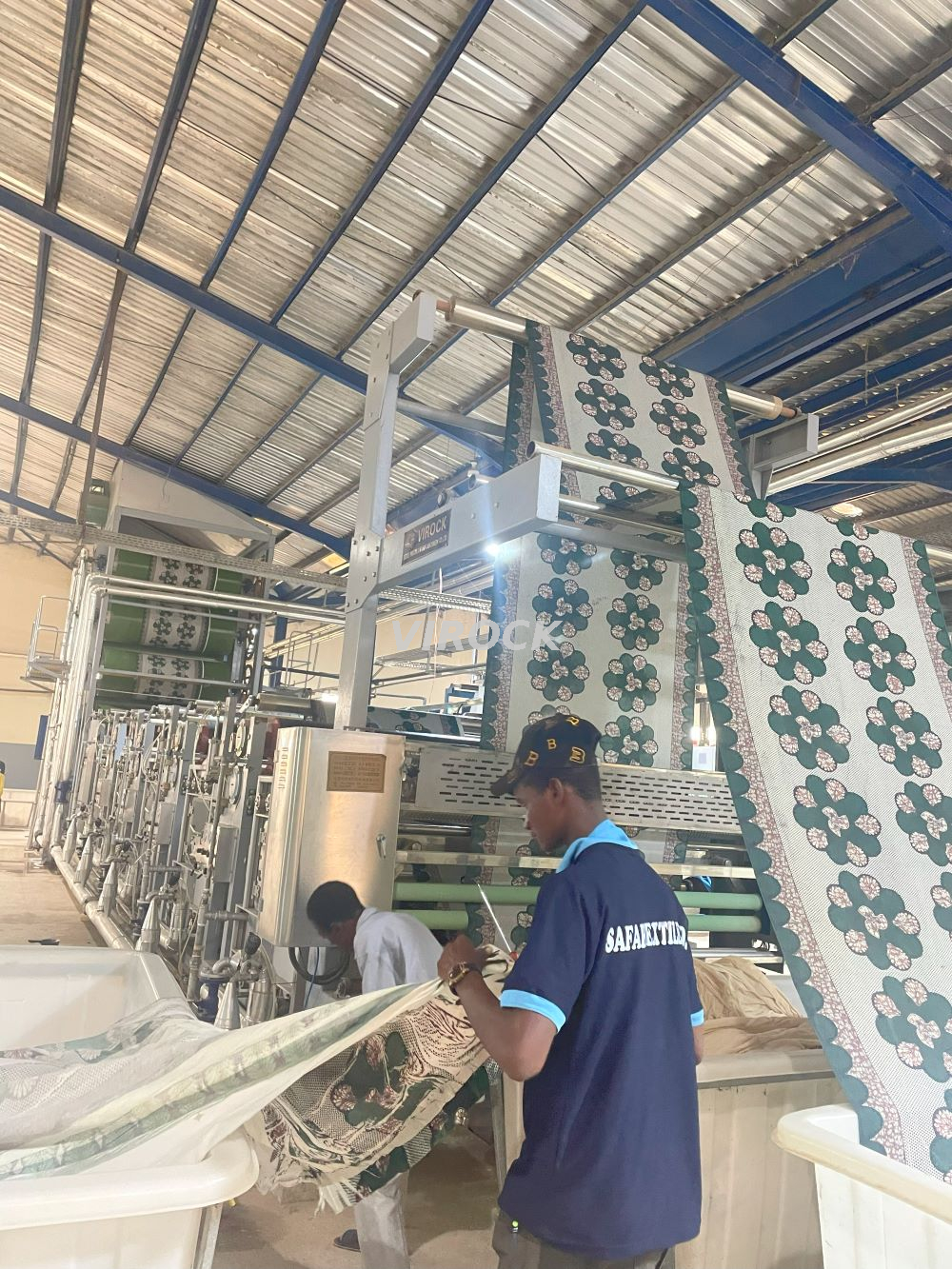
Understanding the Core Concept of a Printing and Finishing Line
Before diving into the comparative analysis, it is essential to establish a clear definition of what these systems entail. The terminology in textile manufacturing can sometimes be broad, but the distinction between continuous lines and batch-processing single machines is fundamental to plant engineering.
Defining the Printing and Finishing Line
A printing and finishing line is a synchronized, continuous sequence of machinery designed to process fabric from its raw, unprinted state through to the final, finished product without interruption. In this setup, fabric moves seamlessly from one processing station to the next. The entire system is electronically and mechanically linked, ensuring that tension, speed, and chemical application are uniform throughout the journey. This continuous flow eliminates the need to manually transport fabric rolls between different stages, drastically reducing handling time and the risk of contamination or damage.
Single Machines vs the Printing and Finishing Line
In contrast to a continuous printing and finishing line, single textile machines operate on a batch or semi-continuous basis. A facility using single machines might have a separate area for washing, another for printing, and yet another for stenter framing and drying. Fabric must be processed in one machine, offloaded, stored temporarily, and then manually transported to the next machine. While this offers high flexibility—allowing a plant to process small, diverse batches of different fabrics simultaneously—it introduces significant inefficiencies in material handling, increases the footprint required for work-in-progress (WIP) storage, and makes it harder to maintain absolute consistency across large orders.
Operational Efficiency: Printing and Finishing Line vs Standalone Units
Efficiency is arguably the most critical metric in modern textile manufacturing. The ability to produce more fabric in less time, with fewer resources, directly correlates to a company's bottom line. Here, we compare how these two approaches stack up.
Workflow Optimization in a Printing and Finishing Line
When you implement a complete textile finishing line, workflow optimization reaches its peak. Because the machines are integrated, the speed of the entire line is harmonized. Advanced programmable logic controllers (PLCs) and Human-Machine Interfaces (HMIs) monitor the fabric's progress in real-time. If the drying section needs more time due to fabric thickness, the preceding printing and washing sections automatically adjust their speeds to prevent fabric accumulation or excessive tension. This continuous synchronization means the line can run 24/7 with minimal human intervention, maximizing throughput and overall equipment effectiveness (OEE).
Labor and Energy Savings with a Printing and Finishing Line
Standalone machines require dedicated operators for each unit. You need personnel to load, monitor, and unload the fabric at every stage. Furthermore, every time fabric is moved between single machines, it often cools down and dries out, meaning the next machine must expend energy to reheat or re-wet the fabric. A continuous printing and finishing line drastically cuts these costs. A single team of skilled operators can manage the entire line from a centralized control room. Thermally, the line is highly efficient; the residual heat from one process (like steaming) can often be conserved as the fabric moves immediately into the next phase, resulting in energy savings of up to 30% compared to disjointed batch processing.
Core Components Integrated into a Printing and Finishing Line
To truly appreciate the power of a continuous system, one must understand the sophisticated machinery that comprises it. A modern line is not just a series of belts; it is a complex chemical and mechanical ecosystem.
The Role of Advanced Equipment in a Printing and Finishing Line
A high-performance setup relies on top-tier printing finishing equipment. This includes pre-treatment modules that prepare the fabric to absorb dyes evenly, precision color application units, and sophisticated curing ovens. In a continuous line, these components communicate seamlessly. For instance, the moisture sensors in the pre-treatment phase will send data downstream to the printing heads, ensuring that the exact right amount of ink is applied based on the fabric's real-time absorbency profile. This level of integration is impossible to achieve with isolated single machines.
Precision Application in the Printing and Finishing Line
At the heart of the visual output is the printing mechanism itself. Incorporating a state-of-the-art rotary printing machine into the continuous line guarantees high-speed, high-accuracy pattern application. Rotary screens allow for continuous, uninterrupted printing, which perfectly matches the continuous flow of the finishing line. When integrated, the rotary printer's tension control systems sync with the feeding and take-up rollers of the wider line, preventing fabric distortion—a common issue when transferring delicate fabrics between standalone batch printers and separate drying stenters.
Washing and Post-Processing in a Printing and Finishing Line
After printing and curing, the fabric must be washed to remove unfixed dyes and chemical residues. An integrated washing machine for textile within the continuous line ensures that the fabric transitions immediately from curing to washing while still at the optimal temperature. This immediate transition improves colorfastness and reduces water consumption, as counter-flow washing techniques can be employed continuously. Following the wash, the fabric moves seamlessly through post finishing equipment such as compactors, calenders, or stenter frames to achieve the final desired hand-feel and dimensional stability, all without ever leaving the line.
Cost-Benefit Analysis of a Printing and Finishing Line
Financial considerations are often the deciding factor for textile manufacturers. The capital expenditure (CAPEX) and operational expenditure (OPEX) profiles of continuous lines versus single machines are vastly different.
Initial Investment for a Printing and Finishing Line
There is no denying that the initial CAPEX for a complete printing and finishing line is substantial. It requires a significant upfront investment not just in the machinery itself, but in plant infrastructure, specialized foundation work, and advanced software integration. For small startups or boutique manufacturers producing limited runs of custom fabrics, this initial cost may be prohibitive, making single machines a more viable entry point into the market.
Long-term ROI of a Printing and Finishing Line
However, when evaluating the Total Cost of Ownership (TCO) over a 5 to 10-year period, the printing and finishing line almost always wins for medium to large-scale operations. The Return on Investment (ROI) is accelerated by massive reductions in labor costs, lower energy and water consumption per meter of fabric, and a drastic reduction in defective or "second-quality" products. Furthermore, the sheer volume of fabric a continuous line can process allows manufacturers to take on larger, more lucrative contracts that would be impossible to fulfill within strict deadlines using single batch machines.
Quality Control Within a Continuous Printing and Finishing Line
In today's competitive textile market, brands demand absolute consistency. A slight variation in color shade or fabric shrinkage between rolls can lead to entire orders being rejected.
Consistency Achieved by a Printing and Finishing Line
A continuous printing and finishing line provides unparalleled consistency. Because the fabric is subjected to the exact same tension, temperature, chemical concentration, and processing speed from the first meter to the ten-thousandth meter, the end product is uniform. Single machines, relying on operators to manually set parameters for each batch and physically move the fabric, introduce human error and environmental variables. A continuous line utilizes closed-loop feedback systems; if a sensor detects a drop in curing temperature, it automatically adjusts the heat input in milliseconds, ensuring the fabric quality remains pristine.
Handling Delicate Fabrics in a Printing and Finishing Line
Knitted fabrics and lightweight synthetics are notoriously difficult to handle because they stretch and curl easily. In a batch process, every time the fabric is picked up and fed into a new single machine, it undergoes mechanical stress. A continuous printing and finishing line minimizes this handling. Once the fabric is fed into the entry zone, it is held securely—often by edge-pinning systems—throughout the entire printing, drying, and finishing process. This continuous tension management prevents edge curling, bowing, and skewing, resulting in a dimensionally stable final product.
Case Study: Upgrading to a Fully Integrated Printing and Finishing Line
To illustrate the real-world impact of this technology, let us examine a simulated case study based on aggregate industry data from mid-sized textile manufacturers who transitioned from batch processing to continuous lines.
The Challenge Before Implementing a Printing and Finishing Line
"GlobalTex Solutions" (a representative model) was operating with five standalone rotary printers, separate batch washing units, and three independent stenter frames. They faced severe bottlenecks. WIP fabric rolls cluttered the factory floor, leading to dirt contamination. Their defect rate hovered around 4.5% due to tension variations during manual roll transfers, and their energy bills were astronomical because machines were constantly being heated up and cooled down between batches.
The Results After Installing the Printing and Finishing Line
Upon replacing their fragmented setup with a single, highly automated printing and finishing line, the transformation was immediate.
- Production Output: Increased by 140% due to the elimination of transit times between machines.
- Defect Rate: Dropped from 4.5% to 0.8%, saving hundreds of thousands of dollars in wasted raw materials.
- Energy Consumption: Reduced by 28% per kilogram of processed fabric, thanks to integrated heat recovery systems.
- Floor Space: Freed up 35% of the factory floor previously used for WIP storage, allowing for future expansion.
Maintenance and Upkeep of Your Printing and Finishing Line
A common concern when investing in a massive, interconnected system is the fear of a single point of failure. If one part of a continuous line breaks down, the whole line stops. Therefore, maintenance strategies must be proactive rather than reactive.
Daily Maintenance for a Printing and Finishing Line
Maintaining a printing and finishing line requires a disciplined, daily routine. Operators must ensure that lint and chemical residues are cleared from sensors and drive rollers. Fortunately, modern lines are equipped with self-cleaning mechanisms, particularly in the printing and washing sections. Daily maintenance also involves checking the HMI dashboards for any early warning signs, such as a motor drawing slightly more current than usual, which could indicate a bearing starting to wear out.
Long-term Servicing of a Printing and Finishing Line
Long-term maintenance relies heavily on the Industrial Internet of Things (IIoT). Today's continuous lines feature predictive maintenance software. Instead of replacing parts on a rigid chronological schedule, the system analyzes vibration, temperature, and performance data to alert technicians exactly when a component needs servicing before it fails. While a breakdown in a continuous line does halt production, the advanced diagnostics make troubleshooting incredibly fast compared to diagnosing issues on older, isolated single machines.
Future Trends Impacting the Printing and Finishing Line Industry
The textile industry is not standing still. Environmental regulations and technological advancements are shaping the future of how fabric is processed.
Automation and AI in the Printing and Finishing Line
Artificial Intelligence is becoming a standard feature in high-end continuous lines. AI algorithms can now analyze the incoming raw fabric using optical cameras and automatically adjust the entire line's parameters—from dye viscosity to stenter width—without human input. This "smart" printing and finishing line learns from past production runs, continuously optimizing itself for maximum yield and minimum waste.
Sustainability in the Printing and Finishing Line
With the textile industry under pressure to reduce its environmental footprint, continuous lines are leading the charge in sustainability. Integrated systems allow for the recycling of water from the washing stages back into the pre-treatment phases. Furthermore, new continuous lines are being designed to accommodate waterless printing technologies and bio-based finishing chemicals, ensuring that high-volume production does not come at the cost of environmental degradation.
Frequently Asked Questions About the Printing and Finishing Line
Q1: Is a printing and finishing line suitable for small batch orders?
While continuous lines are optimized for large, uninterrupted runs, modern systems feature quick-changeover technologies. However, if your business model relies entirely on very small, highly diverse custom batches (e.g., 50 meters per design), single digital printing machines might offer better flexibility and lower setup costs.
Q2: How much floor space does a complete printing and finishing line require?
A continuous line requires a long, linear footprint, often exceeding 50 to 100 meters in length depending on the specific modules included. However, because it eliminates the need for intermediate storage of fabric rolls between processes, the overall square footage required can sometimes be less than a disorganized layout of single machines.
Q3: Can I integrate my existing single machines into a new printing and finishing line?
In some cases, yes. If your existing equipment has compatible PLCs and drive systems, integrators can sometimes link them into a continuous flow. However, older mechanical machines usually cannot be synchronized accurately enough to maintain the required tension control for a continuous line.
Q4: What happens if the fabric tears inside a continuous printing and finishing line?
Modern lines are equipped with sensitive tension load cells and optical sensors. If a tear or excessive slack is detected, the entire line will automatically initiate an emergency stop within milliseconds to prevent further damage to the fabric or the machinery. Operators can then stitch the fabric and restart the line.
Q5: How long does it take to install and commission a full printing and finishing line?
Installation and commissioning are complex engineering projects. Depending on the size of the line and factory readiness, it can take anywhere from 4 to 12 weeks. This includes mechanical assembly, electrical wiring, software integration, and rigorous testing with actual fabric to calibrate all systems.
Conclusion: The Unmatched Advantages of Our Printing and Finishing Line
Deciding between standalone machines and a continuous system is a defining moment for any textile manufacturer. While single machines offer a lower barrier to entry and niche flexibility, the future of high-volume, high-quality textile production undeniably lies in integrated systems.
By choosing Virock's advanced continuous solutions, you are not just buying machinery; you are investing in a comprehensive production ecosystem. Our systems offer distinct product advantages designed to elevate your manufacturing capabilities:
- ✅ Unrivaled High Accuracy: Integrated HMI operations and closed-loop tension controls ensure that every meter of fabric meets strict international quality standards, eliminating bowing, skewing, and color inconsistencies.
- ✅ Maximum Energy and Resource Efficiency: Engineered with advanced heat recovery and water recycling systems, our lines drastically reduce your OPEX, making your operations more profitable and environmentally sustainable.
- ✅ Seamless Integration: From the initial fabric feed through the rotary printing phase, washing, and final post-processing, every module is designed to communicate flawlessly, reducing downtime and maximizing OEE (Overall Equipment Effectiveness).
- ✅ Robust Durability and Smart Maintenance: Built with premium industrial-grade materials and equipped with IIoT predictive maintenance sensors, our equipment guarantees decades of reliable service with minimal unexpected breakdowns.
- ✅ Comprehensive Support: We provide end-to-end service, from custom factory layout planning and installation to operator training and lifelong technical support, ensuring your transition to a continuous line is smooth and highly profitable.
Embrace the future of textile manufacturing. Upgrade to a system that works as hard and as smart as you do, and watch your production capacity and fabric quality soar to new heights.
