

Views: 0 Author: Site Editor Publish Time: 2026-10-16 Origin: Site


Moving from batch washing to continuous processing requires significant capital investment. This transition aims to eliminate permanent crease marks. It reduces fabric tension and lowers overall utility consumption. Delicate knits, elastane blends, and heavy wovens demand precise washing parameters. You must meet rigorous quality and sustainability standards. Poor parameter management is no longer acceptable in modern textile finishing. Unoptimized processes lead to wasted water and compromised fabrics.
This guide breaks down the critical process parameters of an open-width washing system. We provide a practical framework to evaluate equipment specifications. You can align these specifications against your facility's production goals. You will learn how tension, utility efficiency, and mechanical action directly influence fabric quality. We also cover implementation realities like floor space and integration. By mastering these variables, you can confidently upgrade your finishing plant and consistently deliver premium textiles.
Legacy processing methods often fail modern textile demands. Rope washing induces permanent creases on sensitive fabrics. The fabric twists and folds tightly during transport. This creates uneven stress distribution. High mechanical friction damages delicate surface fibers. Uneven chemical removal becomes a major quality control issue. Dyes wash out inconsistently across the fabric rope.
Open-width processing solves these critical flaws. It processes fabrics entirely flat from start to finish. This ensures uniform chemical treatment across the entire web. Every square inch receives the same water flow and temperature.
Unoptimized machines create severe bottlenecks. They lead to frequent re-washing cycles. You face high effluent volumes and excessive steam usage. Dimensional stability gets compromised under poor control. Fabrics shrink or stretch beyond acceptable margins.
A viable machine must demonstrate verifiable efficiency improvements. You should look for reductions in specific water consumption. We measure this in liters per kilogram of fabric. The equipment must also maintain strict color fastness. Predictable parameter control protects your fabric margins.
Process Comparison Matrix
| Evaluation Metric | Rope Washing | Open-Width Processing |
|---|---|---|
| Fabric State | Twisted and bundled | Flat and spread out |
| Crease Risk | High (permanent thermal creases) | Negligible |
| Mechanical Friction | Aggressive fabric-to-fabric rubbing | Controlled fabric-to-roller contact |
| Ideal Fabric Types | Basic cottons, robust synthetics | Elastane blends, fine knits, wovens |
Wet fabric becomes highly vulnerable during processing. Moving it through multiple wash boxes presents a massive technical challenge. The fabric tends to sag between rollers. Edge curling becomes a persistent issue for single-jersey knits. Overstretching ruins the dimensional stability of the final garment.
A modern open width washing machine prevents edge curling and sagging. It utilizes sophisticated transport mechanisms. Buyers must evaluate these systems meticulously before investing.
Evaluate these three core transport criteria:
Common mistakes include ignoring tension zones. Different wash boxes operate at different temperatures. Fabric stretches differently at 90°C compared to 40°C. Your tension control system must segment these zones independently.
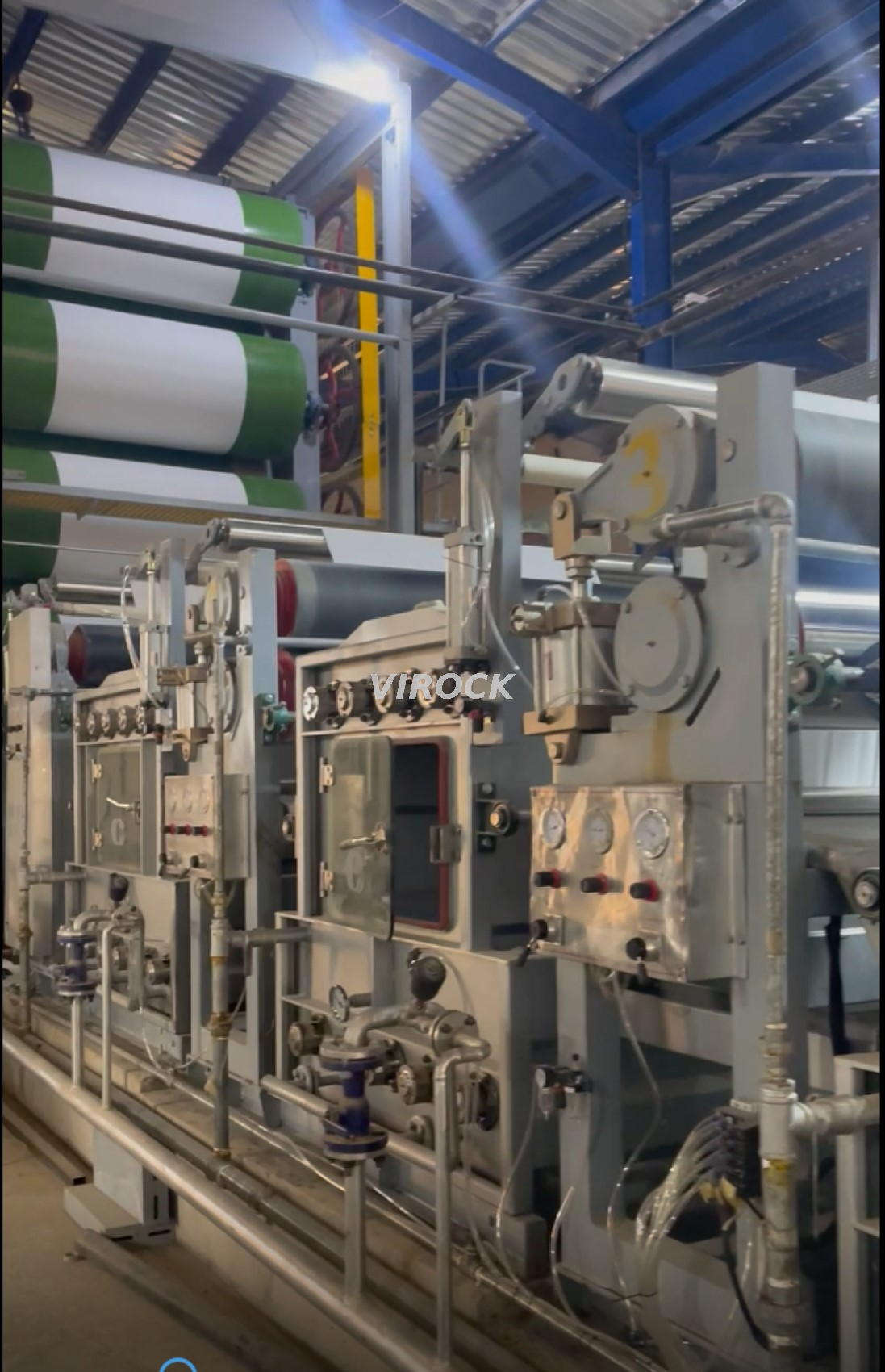
Water management defines the operational success of your finishing plant. Counter-current flow systems represent the industry standard. Fresh water enters at the final wash box exclusively. It then flows in reverse against the fabric direction. The dirtiest fabric meets the dirtiest water first. The cleanest fabric receives the fresh water rinse.
This method reduces water consumption by up to 40%. It outperforms parallel flow systems drastically. You achieve higher dilution rates using significantly less water.
Temperature gradients need careful, compartmentalized control. Independent steam heating controls for each compartment are vital. You must maintain optimal wash temperatures for specific chemicals. For example, reactive dye soaping requires 90-95°C. You must cool down the fabric gradually in final baths. Sudden temperature drops cause thermal shock. Thermal shock locks permanent creases into synthetic fibers.
Scalability relies heavily on thermal recovery. Verify the built-in heat exchanger efficiency. Good systems recover heat from the outgoing wastewater. They use this thermal energy to pre-heat incoming fresh water. This simple exchange slashes boiler fuel requirements.
Best practices dictate monitoring flow meters continuously. Operators should track specific water consumption per batch. Any sudden spike indicates a leaking valve or failed squeezer.
Chemicals do not leave the fabric simply by soaking. Every open-width textile washing machine relies heavily on intermediate squeezing systems. Mechanical action physically forces unfixed dyes out of the yarn core.
Intermediate squeezers sit directly between wash boxes. They prevent the cross-contamination of adjacent baths. We call this phenomenon "carry-over." Dirty liquor must stay in its designated zone. Effective squeezing acts as a physical barrier.
Evaluate your nip pressure metrics carefully. Assess the pneumatic or hydraulic control cylinders. Rubber-coated squeeze rollers need precise camber profiles. You need consistent linear pressure across the entire fabric width. Industry experts measure this in kilograms per centimeter (kg/cm). Uneven pressure creates uneven moisture profiles. This leads to patchy drying and inconsistent dye shades later.
Spray and turbulence configurations provide additional mechanical action. Traditional dipping methods are too slow. Look for submerged vacuum slots inside the wash box. They pull water forcefully through the fabric web. High-impact spray nozzles blast away surface chemicals. Rotor-driven turbulence agitators help penetrate dense woven fabrics. They force liquor through the fabric structure. They achieve this without relying on aggressive fabric-to-metal friction. This protects delicate yarn filaments from abrasion.
Upgrading your washing range involves significant facility disruptions. Evaluating an open width washing machine requires analyzing your existing floor space. These continuous ranges require significantly more linear footprint than rope washers.
Facility layout modifications are almost always necessary. You may need to pour new concrete foundations. The water-filled wash boxes are incredibly heavy. Ensure your flooring supports the static and dynamic loads.
Maintenance downtime represents a major adoption risk. Continuous ranges feature hundreds of moving parts. You have multiple guide rollers and specialized bearings. Spray nozzles add continuous maintenance complexity. Assess the machine design for accessible bearing housings. Mechanics need easy access for routine lubrication. Self-cleaning filter systems are mandatory. They prevent lint buildup and save hours of manual labor.
Monitor these crucial maintenance areas:
Compliance limits strictly dictate your effluent discharge. Ensure the machine's water discharge parameters align perfectly. Local environmental regulations continuously grow stricter. Review the ZDHC (Zero Discharge of Hazardous Chemicals) guidelines. Your new equipment must meet or exceed these wastewater volume targets.
Selecting a vendor requires strict, data-backed validation. Do not rely on generic marketing brochures. Request detailed OEM case studies from existing installations. You need specific water and steam consumption data. Ensure the vendor provides data matching your specific fabric weights. A machine processing 150 GSM knits performs differently than one handling 400 GSM denim.
Focus deeply on advanced sensor capabilities. Cheaper machines often lack advanced heat recovery modules. They frequently omit high-resolution tension sensors. These omissions lead to higher operational costs later. They also cause unacceptable fabric downgrade rates. Investing in superior process control technology yields better long-term stability.
The next-step action involves empirical testing. Initiate a pilot trial using your most sensitive fabric blend. Send a standardized fabric roll to the vendor's testing facility. Process it under your exact production parameters.
Evaluate the resulting fabric meticulously. Check the dimensional stability metrics (shrinkage and skewing). Run standard lab tests like ISO 105-C06 for wash fastness. Verify the final color match against your standard targets. Complete this exhaustive physical evaluation before committing to any vendor agreement.
Selecting the right processing equipment is a delicate balancing act. You must align tension management, utility efficiency, and mechanical washing action perfectly. Ignoring any of these pillars results in fabric degradation and wasted resources. Advanced drive systems protect your elastane blends from stretching. Counter-current flow systems protect your utility budgets.
We recommend prioritizing vendors offering transparent data solutions. Look for comprehensive PLC data logging capabilities. Demand proven counter-current water savings from existing customer references. Insist on verifiable tension control demonstrations for your sensitive textiles.
Take immediate action by auditing your current utility costs. Consult a specialized textile machinery engineer. Map the potential return of an open-width range upgrade. Analyze your facility layout and prepare for the required footprint changes. Careful planning ensures a smooth transition to continuous, high-quality textile finishing.
A: Rope washing processes fabric in a twisted, rope-like form. It saves space but can cause permanent thermal creases. Open-width washing keeps the fabric completely flat. This prevents tension damage and creases. It remains essential for woven goods and sensitive elastane knits.
A: High-efficiency machines utilize counter-current washing flow. Fresh water flows in the opposite direction of the fabric travel. The cleanest water is only used in the final rinse. Intermediate squeezing also prevents contaminated water from moving between wash boxes. This prevents carry-over and saves massive amounts of water.
A: Fabrics prone to edge curling or dimensional distortion need this processing method. High-elastane blends, heavy denim, and sensitive wovens rely heavily on it. Fine knits also require flat, low-tension processing. It eliminates the aggressive friction and twisting associated with rope forms.
A: They act as physical barriers between different chemical or temperature zones. They squeeze dirty liquor out of the fabric web. This happens before the fabric enters the next cleaner wash bath. It prevents cross-contamination and maximizes washing efficiency across the entire continuous range.


