

Views: 0 Author: Site Editor Publish Time: 2026-06-08 Origin: Site


Investing in a fiber manufacturing facility requires precise balance. You must weigh massive capital expenditure against highly localized market demands. Overestimating capacity leaves machinery idle. It drains utility budgets quickly and damages operational cash flow. Conversely, underestimating your output limits profitability in a low-margin, high-volume industrial sector. Plant managers face intense pressure to get these calculations right before pouring concrete.
We provide an evidence-based framework to size, configure, and specify your facility. You will learn to match raw material realities against realistic downstream product specifications. We explore the distinct differences between virgin and recycled feedstock pathways. Furthermore, we reveal hidden utility bottlenecks you must overcome to maintain steady production.
End-user requirements strictly dictate baseline equipment capabilities. You cannot spin high-tenacity industrial threads on machinery built for standard bedding fill. Mapping target applications to specific hardware needs ensures reliable product quality.
Input materials strictly dictate the front-end configuration of your PSF production line. You must choose between virgin chemicals and collected recycled flakes. Each pathway carries unique operational demands.
The Virgin Pathway relies on purified terephthalic acid (PTA) and monoethylene glycol (MEG). You need Continuous Polymerization (CP) reactors operating near 290°C. This route suits massive, commodity-scale operations. It works best when global chemical supply chains remain rock-solid and predictable.
The Recycled Pathway utilizes rPET flakes sourced from post-consumer bottles. This pathway drives the market for ESG-compliant fibers. It effectively reduces the carbon footprint by up to 70%. However, capacity planning must account for impurity rates. You need robust drying units and advanced crystallization stages. Aggressive melt-filtration modules protect the delicate spinnerets from physical debris.
Implementation Risk: Consider flake inconsistency carefully. A line rated for 50 tons per day may yield significantly less output. Poor input flake quality causes frequent filter blockages. Filament breakage halts continuous production runs. Always test local flake purity before finalizing extruder specifications.
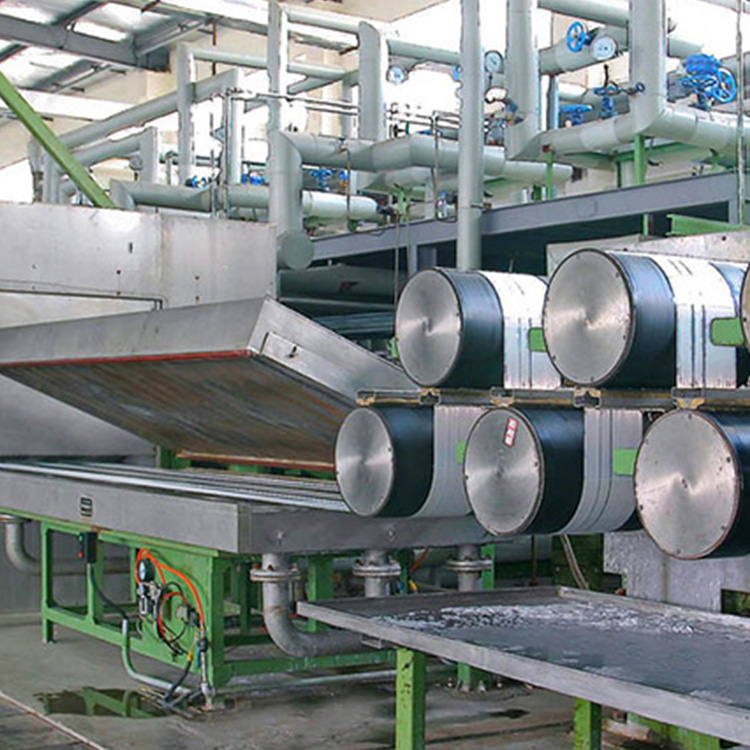
Choosing the right factory layout impacts your daily operations fundamentally. You must select appropriate fiber production equipment based on capacity targets and expected changeover frequencies. Manufacturers typically choose between two primary operational architectures.
Translating annual tonnage targets into daily operational specifications requires careful math. Let us break down the sizing logic for typical polyester staple fiber machinery.
Planning for small to mid-scale production means targeting 3,000 to 15,000 tons per year. This output translates roughly to 10–50 tons per day. This scale perfectly fits a localized automatic polyester fiber line. You can efficiently process locally sourced recycled PET bottles. This localized strategy heavily limits your exposure to global supply chain shocks.
Scaling up to a massive 3000 to 30000 tons fiber line demands entirely different infrastructure. Daily output jumps to 50–100+ tons. You will require multi-spinneret configurations. Extrusion speeds must push up to 1500 meters per minute. You must also install heavy-duty annealers for intense thermal setting.
Capacity calculations require a harsh reality check. Never specify a line solely using the extruder’s theoretical maximum output. Calculate true capacity realistically. Assume a 95-98% first-class fiber yield. You must also deduct scheduled maintenance downtime. Routine spinneret cleaning and standard cutter blade replacements eat into daily running hours.
Factory infrastructure often bottlenecks actual machine output. The hidden demands of housing a complete polyester staple fiber production line extend far beyond the main extruders. You must plan for intense utility loads from day one.
Extruders and polymer pipelines need continuous, intense heat. You will likely use Dowtherm or biphenyl heating systems operating continuously at 300°C. Cooling systems are equally critical. Quenching cabinets solidify the liquid filaments immediately after extrusion. They require massive volumes of precisely controlled air. A typical quenching setup pushes 19°C cross-flow air constantly to ensure uniform solidification.
Drawing lines consume extensive linear factory space. They house hot water baths, multi-stage steam-heated draw rolls, crimpers, and massive baling presses. You must secure a long, unobstructed building span.
| Utility / Infrastructure Area | Key Operational Requirement | Quality Impact |
|---|---|---|
| Thermal Heating Systems | 300°C continuous Dowtherm/biphenyl circulation | Prevents polymer degradation and ensures smooth melt flow. |
| Quenching Air | 19°C cross-flow, high-volume capacity | Dictates initial filament solidification and denier uniformity. |
| Linear Floor Space | Unobstructed length for baths, rolls, and crimpers | Allows proper multi-stage drawing without tangling. |
| Laboratory QA | Tensile testers, denier scales, boil-shrinkage tanks | Ensures strict adherence to target specifications. |
A reliable line must pair with rigorous laboratory equipment. QA teams measure Denier variance tightly (±5%). They test Tenacity strictly to ensure 3.5-7.0 cN/dtex ranges. They also measure crimp stability after boiling water shrinkage (>75%). If you fail these tests, downstream textile mills will reject your bales.
Smart procurement ensures long-term operational safety. Do not just buy heavy metal; buy a verified, repeatable process. Proper shortlisting criteria separate reliable partners from simple hardware brokers.
Prioritize vendors offering turnkey installation. Continuous lifecycle support matters far more than low initial hardware pricing. If your programmable logic controllers fail, you need fast engineering intervention.
Scrutinize specific machine components carefully. Check the structural durability of the crimper stuffer box. Demand precision from the vertical cutters. Exceptional vertical cutters achieve precise cuts down to 1.5mm without leaving frustrating double-cut defects.
Ask for verifiable energy efficiency data. Request exact steam, water, and power consumption metrics per ton of fiber produced. You need accurate figures to model your operating expenses correctly. Reputable vendors supply empirical data from existing installations.
Capacity planning functions as a complex matrix decision. It requires absolute alignment between raw material supply limits, intended product applications, and available utility infrastructure. A mismatch in any category creates devastating production bottlenecks.
Take these actionable steps before issuing Requests for Quotation (RFQs) to machinery vendors. Careful preparation guarantees a smoother installation and faster time-to-profit.
A: Commercial viability typically starts at 10 to 20 tons per day for recycled lines. This threshold depends heavily on local labor costs and steady PET bottle availability. Smaller capacities struggle to absorb high fixed utility overheads.
A: Expect a 2-5% overall material loss during conversion. This loss stems from moisture evaporation during drying, physical impurities removed by melt filtration, and minor edge-trim waste generated during the spinning and drawing phases.
A: Mechanical crimping uses a stuffer box to force fibers into a 2D zig-zag shape. It suits standard textiles. Conjugate crimping uses bi-component spinning. Different polymer shrinkage rates naturally twist the fiber into a 3D spiral. This creates high-bounce filling material.
