

Views: 0 Author: Site Editor Publish Time: 2026-05-28 Origin: Site


Fabric dimensional instability directly erodes profit margins. Unpredictable shrinkage and inconsistent width cause rejected batches. They waste valuable raw materials. You cannot afford to ignore these variables in modern textile production. Poor dimensional control leads to unhappy apparel brands. It ultimately destroys your factory's reputation.
Achieving a consistent 3–5% residual shrinkage rate requires precise mechanical control. Operators must balance this metric while hitting target Grams per Square Meter (GSM). This daily reality demands expert thermal intervention. It is never a simple guessing game.
For textile mill operators and equipment buyers, this guide breaks down the operational physics of a stenter machine. We explore the critical GSM-width-overfeed balancing act. You will also learn technical criteria for evaluating a high-performance fabric finishing stenter. This ensures compliance, superior quality, and long-term scalability.
Dimensional Control Matrix: Fabric width, GSM, and shrinkage are locked in a dynamic balance; prioritizing one (e.g., maximizing width) mathematically compromises another (e.g., decreasing GSM).
Overfeed Physics: Vertical tension control (overfeed) is the primary mechanism for mitigating warp-wise (length) shrinkage by deliberately introducing micro-ripples before heat setting.
Thermal Precision: Modern machines require 8–10 independent temperature zones (typically 150°C–180°C) to break and reset fiber hydrogen bonds without inducing thermal shock.
Equipment forces dimensional stability through precise mechanical and thermal actions. You must understand these underlying principles to optimize production. Fiber alignment requires more than brute force. It requires applied physics.
Machines utilize parallel pin chains or heavy-duty clips. These mechanisms grip fabric edges securely. Gradual horizontal stretching eliminates edge-curling effectively. This stretching proves especially critical when an open-width stenter processes lightweight single jersey fabrics. The horizontal tension sets the target width accurately. You can typically adjust this working width anywhere between 60 cm and 360 cm depending on your specific production requirements.
Continuous feeding pushes materials through enclosed high-temperature chambers. These zones apply intense convective heat. The high temperatures break internal cellulose or polymer bonds. Heat forces the stressed fibers to relax into their newly stretched dimensions. Cotton and synthetic fibers contain complex molecular networks. These networks hold the physical shape permanently once reorganized. The process requires precise temperature mapping.
Freshly heated materials need immediate stabilization. If fabric exits hot and hits a collection bin, it creases permanently. Immediate exposure to cold ambient air at the exit locks the reorganized molecular structure instantly. This rapid cooling permanently sets the chosen width. It also maintains proper yarn alignment for downstream cutting.
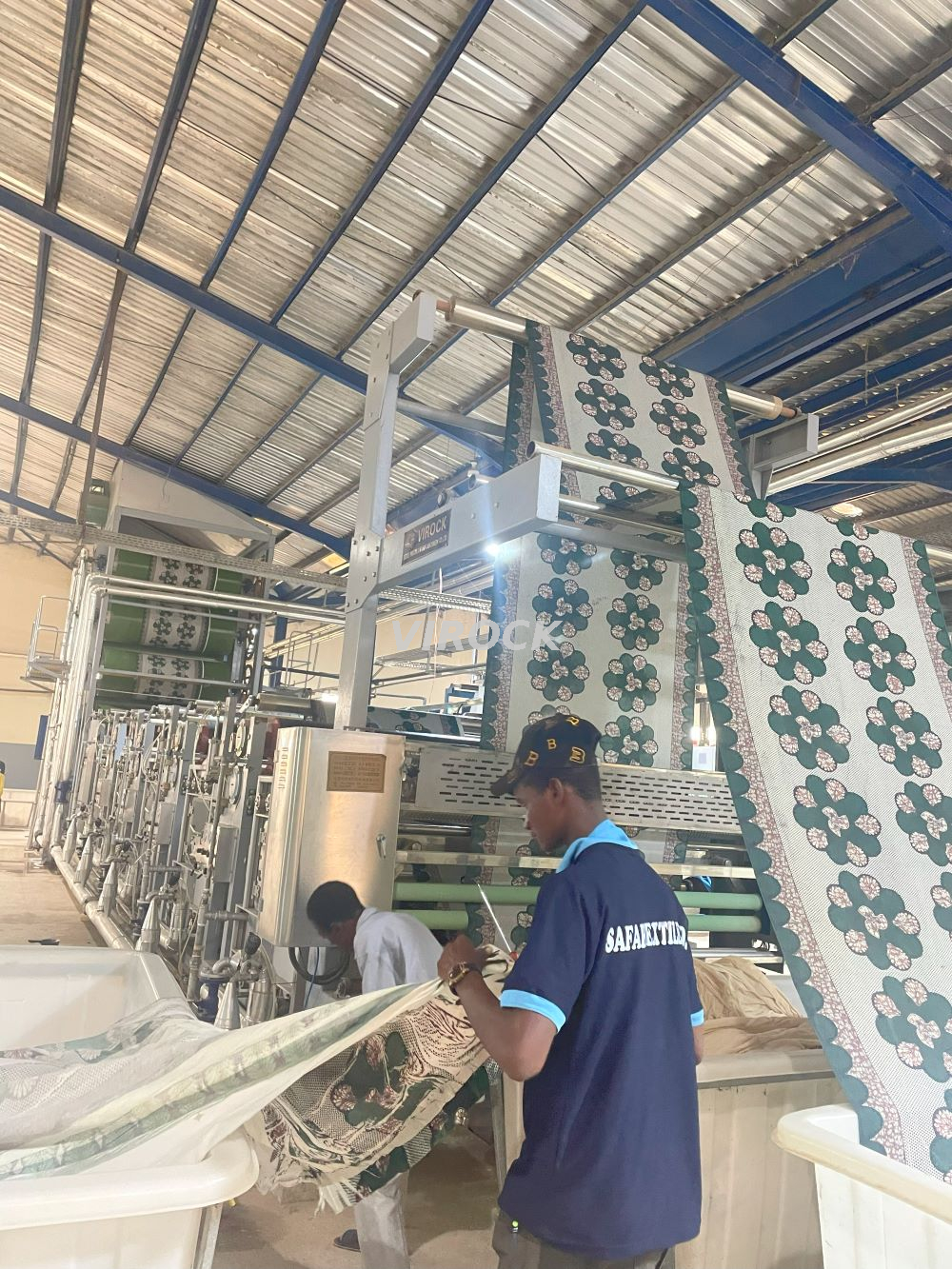
Operators face daily trade-offs on the production floor. Achieving perfection requires a transparent framework for making evidence-oriented decisions. The process is a mathematical balancing act.
Intense weaving and knitting tension causes warp-wise length shrinkage. The yarns stretch heavily during primary manufacturing. Operators mitigate this tension by overfeeding. They deliberately run fabric into the heating oven faster than the pin chain moves. This speed difference allows the fabric to pre-shrink safely under heat. Conversely, physical stretching from the divergent pin chains manages weft-wise width shrinkage.
A dynamic mathematical correlation dictates your final product quality. Stretching fabric wider thins out the material. This action drops the GSM. Pushing more fabric in lengthwise increases the GSM. Let us review how operational adjustments shift the final outcome.
Operational Adjustment | Impact on Final Shrinkage | Impact on Final GSM |
|---|---|---|
Increasing Overfeed Percentage | Significantly reduces warp shrinkage | Increases overall GSM |
Increasing Target Width (Dia) | Increases weft shrinkage risk | Decreases overall GSM |
Decreasing Overfeed Percentage | Increases warp shrinkage risk | Decreases overall GSM |
Operational Takeaway: Sometimes a finished batch fails minimum GSM requirements. Operators must respond mechanically to salvage the production run. Follow these sequential steps:
Stop the current finishing batch immediately.
Check the current GSM against the client specification sheet.
Marginally reduce the horizontal pin chain target width by 2 to 3 inches.
Increase the vertical overfeed percentage slightly.
Run a short test yardage and re-weigh the sample accurately.
Dropping the width mechanically forces the GSM back up. It restores the necessary material weight quickly.
Technical evaluation dimensions matter deeply when shortlisting equipment. A modern heat setting stenter must feature specific advanced systems. These systems guarantee quality and repeatability.
Look for systems offering 8 to 10 independent temperature zones. Stepped heating prevents sudden thermal shock. Fabric often enters wet. Early zones evaporate water gently. Middle zones raise the fiber temperature gradually. Final zones hit the critical setting temperature. Blasting wet fabric with 180°C heat immediately degrades fibers. It also causes uneven dye migration across the material surface.
Advanced optical sensors detect bowed or skewed weft yarns. They correct yarn alignment automatically before heat setting begins. Motorized rollers tilt to straighten the fabric structure. This critical step eliminates structural spirality in the final stitched garment.
Evaluating pin versus clip mechanisms remains crucial for buyers. Heavy woven denims demand rigid clips. Clips hold unyielding fabrics tightly. Conversely, a warp knitting stenter processing delicate synthetics requires specialized pin plates. Pins puncture the edge softly. These pins prevent edge tearing while accommodating high-tension stretching required for spandex blends.
Over-drying wastes massive electrical and thermal energy. It also damages delicate cellulosic fabrics. Modern units integrate internal humidity sensors to prevent over-drying. Variable frequency drives (VFDs) provide precise airflow control throughout the individual chambers.
Real-world implementation brings specific operational risks. We must highlight common failures and sustainable cost controls. Proactive management saves thousands of dollars in rejected materials.
Risk: Overexposure to high heat scorches the fabric. This often happens during unexpected machine slowdowns. Amines in chemical softeners oxidize under high heat. This turns white fabrics yellow permanently.
Mitigation: Implement automated speed-to-temperature synchronization. The burners must reduce heat immediately if the chain slows down. Use anti-yellowing chemical pads before materials enter the heating chambers.
Risk: Over-aggressive horizontal tension causes large pinholes. Operators must trim these damaged edges off entirely. You might lose 5 centimeters on each side instead of 1 centimeter. This severely impacts overall fabric yield.
Mitigation: Enforce strict horizontal tension limits. Evaluate systems handling 2–2000 N tension ranges smoothly. Ensure appropriate brush-wheel calibration pushes the fabric onto the pins gently.
Heating represents the single largest operational expense for textile mills. High-tier machines must include robust exhaust gas heat recovery systems. Standard industry data shows these systems reduce total energy consumption by approximately 25%. Outgoing hot exhaust air pre-heats the incoming fresh air. This mechanism reduces the primary burner workload significantly. It creates a highly sustainable finishing line.
Buyers often harbor misconceptions regarding two critical finishing stages. You cannot replace one machine with the other. They are distinct partners. Let us clarify their separate roles in the workflow.
This machine acts as the functional foundation. It manages initial wet drying. It pre-heat sets the required width perfectly. It also applies chemical finishes via a front padding mangle. Silicones, softeners, and resins bond here. This phase establishes the baseline dimensions and chemical hand-feel.
Compactors sit downstream from the initial setting process. They handle completely dry fabric. Compactors use physical blanket pressure and steam. This intense mechanical pressure forces residual lengthwise shrinkage down to the strict 3-5% standard. It simultaneously removes surface creases entirely.
A mill applying wet chemicals and defining exact width needs a stenter. A mill struggling strictly concerning final residual length shrinkage on pre-set knits needs a compactor. Most commercial setups require both machines arranged in sequence for optimal export quality.
Controlling width and shrinkage requires strategic mathematics, not mere physical force. You must balance overfeed, horizontal tension, and separate thermal zones continuously. This dynamic interaction achieves the desired GSM and dimensional stability efficiently.
When evaluating a textile stenter machine, prioritize specific advanced features. Thermal zone independence matters far more than baseline running speed. Exhaust heat recovery systems also remain crucial for sustainable factory operations.
Your next steps involve strict compliance verification. Ensure your chosen equipment manufacturer complies strictly regarding international safety and environmental standards. Look for CE marks and Oeko-Tex Standard 100 compatibility. REACH compliance remains mandatory for exporting finished textiles successfully into European and North American consumer markets.
A: In commercial textile manufacturing, operators aim to control residual shrinkage tightly. They keep it under 3–5%. The exact target depends heavily upon the specific fabric structure. Single jersey knits behave differently than rigid interlock knits.
A: Yes, but they require entirely different configurations. Knitted fabrics generally require pin chains and high overfeed. This specialized setup prevents severe edge curling. Heavy woven fabrics often utilize heavy-duty clip chains. Clips provide the rigid width control required for stiff denims.
A: It aligns the warp and weft yarns evenly under strict tension and intense heat. The machine smooths out microscopic surface irregularities. This process subsequently improves ambient light reflection. It gives the finished fabric a more uniform gloss and a significantly smoother hand-feel.


