

Views: 0 Author: Site Editor Publish Time: 2026-06-26 Origin: Site


TL;DR: Selecting the right industrial machinery is a critical decision that directly impacts the quality, tensile strength, and overall performance of advanced composite materials. This comprehensive guide explores the essential factors, technological features, and operational considerations required to make an informed decision when investing in carbon fiber washing and drying equipment. From understanding the core mechanics of impurity removal to evaluating thermal efficiency and automation capabilities, this article provides a deep dive into optimizing your production line for maximum yield and superior material integrity.
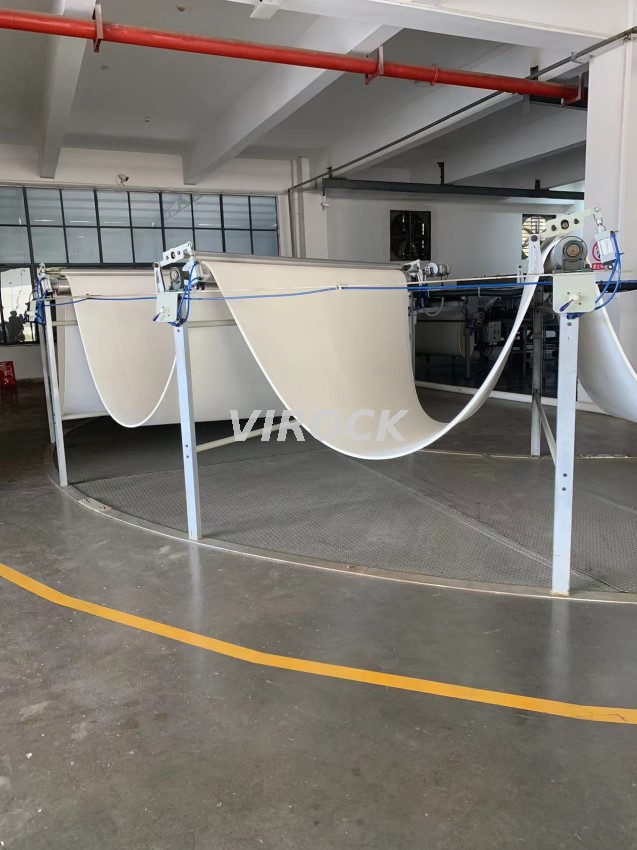
In the rapidly evolving landscape of advanced manufacturing, the demand for lightweight, high-strength materials has skyrocketed. Industries ranging from aerospace and automotive to renewable energy and sporting goods rely heavily on the exceptional properties of carbon fibers. However, the journey from raw precursor materials to finished, high-performance filaments is complex and highly sensitive to environmental and mechanical variables. One of the most crucial stages in this manufacturing process is the thorough cleaning and moisture removal of the filaments. This is where specialized machinery comes into play, ensuring that every single strand meets rigorous industry standards. As the sector of new material processing continues to expand, understanding the nuances of these industrial systems becomes indispensable for plant managers, engineers, and procurement specialists.
Before diving into the selection criteria, it is vital to establish a foundational understanding of what these machines do and why they are non-negotiable in a modern manufacturing facility. The production of carbon fibers involves several chemical and thermal treatments, including spinning, stabilization, and carbonization. Throughout these stages, the fibers can accumulate residues, unreacted chemicals, and surface impurities that can drastically degrade the final product's mechanical properties and matrix adhesion capabilities.
At its most fundamental level, carbon fiber washing and drying equipment refers to a highly engineered sequence of machinery designed to continuously process delicate fiber tows. The primary objective is twofold: first, to meticulously remove any residual sizing agents, chemical byproducts, or particulate matter from the fiber surface using aqueous or solvent-based solutions; and second, to completely eradicate all moisture from the fiber bundle without causing thermal degradation, oxidation, or mechanical damage. This equipment must handle thousands of individual microscopic filaments simultaneously, maintaining precise tension and temperature control throughout the entire continuous process.
The importance of investing in top-tier machinery cannot be overstated. If the washing process is inadequate, residual chemicals can interfere with the subsequent sizing application or the final resin infusion process, leading to delamination and catastrophic failure of the composite part under stress. Conversely, if the drying process is uneven or excessively harsh, the fibers can become brittle, lose their tensile strength, or suffer from surface oxidation. High-quality carbon fiber washing and drying equipment ensures absolute consistency, uniform surface energy, and optimal moisture content, which translates directly to higher product grades, reduced waste, and increased profitability for the manufacturer. Incorporating a dedicated carbon fiber washing line is often the first step in guaranteeing that the surface chemistry of the filaments is perfectly prepped for downstream applications.
To evaluate and choose the best machinery for your specific production needs, you must first understand the anatomy of these complex systems. A standard setup is not merely a single machine, but rather a synchronized line of distinct modules, each engineered to perform a highly specific physical or thermodynamic function.
The washing module is the first line of defense against surface contamination. This section typically consists of a series of multi-stage immersion baths, spray nozzles, and ultrasonic cleaning transducers. As the fiber tow passes through these baths, it is subjected to carefully controlled fluid dynamics. The water or solvent is continuously circulated, filtered, and heated to specific temperatures to maximize the solubility of the impurities. Advanced systems utilize counter-current flow designs, where the cleanest water meets the cleanest fiber at the end of the washing stage, ensuring maximum efficiency and minimizing water consumption. Tension control rollers within the baths are critical; they must guide the wet, fragile fibers without causing friction-induced fraying or filament breakage.
Once the fibers exit the washing stage, they carry a significant amount of surface and interstitial moisture. The drying module is responsible for removing this water rapidly yet gently. This is typically achieved through a combination of mechanical dewatering (such as air knives or nip rollers) followed by thermal drying. The thermal section often employs a sophisticated carbon fiber drying machine that utilizes hot air circulation, infrared (IR) heating, or a combination of both. Hot air ovens must have meticulously designed airflow patterns to ensure that the heat penetrates the dense fiber bundle evenly, preventing the outer filaments from overheating while the inner filaments remain damp. Precise temperature zoning and exhaust management are essential features of this module to maintain an optimal thermodynamic environment.
Selecting the appropriate machinery requires a comprehensive analysis of your current production capabilities, future growth projections, and the specific technical requirements of your end products. It is not a one-size-fits-all scenario. Buyers must evaluate multiple engineering parameters to ensure a high return on investment and seamless integration into existing production lines.
The first and most critical factor is aligning the equipment's throughput capacity with your production targets. You must consider the line speed (measured in meters per minute), the number of tows the machine can handle simultaneously, and the specific tow sizes (e.g., 3K, 12K, 24K, or 50K+). High-volume manufacturers often require a robust continuous washing drying line that can operate 24/7 with minimal downtime for maintenance. When evaluating capacity, also look at the residence time—the exact amount of time the fiber spends in the washing and drying zones. If the machine runs too fast without adequate zone length, the fibers will remain contaminated or wet. Therefore, the physical footprint of the machine must be proportional to your desired line speed and the required residence time for optimal processing.
Industrial heating and water circulation are incredibly energy-intensive processes. In an era of rising energy costs and strict environmental regulations, the thermal efficiency of your chosen machinery will heavily impact your operational expenditures. When evaluating carbon fiber washing and drying equipment, look for advanced insulation materials that minimize heat loss from the drying ovens. Investigate whether the system includes heat recovery units that capture exhaust heat and use it to pre-heat incoming fresh air or washing water. Furthermore, the efficiency of the mechanical dewatering systems (like air knives) plays a massive role; the more water you can remove mechanically before the thermal drying stage, the less electrical or gas energy you will consume in the ovens. State-of-the-art systems utilize variable frequency drives (VFDs) on all pumps and blowers to ensure energy is only consumed precisely when and where it is needed.
Modern manufacturing demands precision that manual operation simply cannot provide. The integration of advanced automation is a hallmark of premium carbon fiber processing equipment. A superior system will feature a centralized Programmable Logic Controller (PLC) with an intuitive Human-Machine Interface (HMI). This allows operators to monitor and adjust critical parameters in real-time, including water temperature, flow rates, oven zone temperatures, exhaust humidity, and, most importantly, line tension. Look for equipment that offers data logging capabilities, recipe management (allowing quick switchovers between different product grades), and predictive maintenance alerts. Closed-loop control systems that automatically adjust heating elements based on real-time moisture sensor feedback are highly desirable for maintaining absolute product consistency.
Even with the best machinery, operators can face challenges that threaten production efficiency and material quality. Understanding these potential pitfalls during the procurement phase allows you to choose equipment specifically designed to mitigate these exact issues.
Carbon fibers, especially before final sizing, are highly susceptible to abrasion and shear forces. One of the most common challenges is filament breakage or "fuzz" generation caused by improper tension control or rough roller surfaces. When selecting carbon fiber washing and drying equipment, pay close attention to the material and finish of the guide rollers. They should be ultra-smooth, often coated with specialized polymers or polished stainless steel, and perfectly aligned. The drive systems must offer ultra-precise, synchronized tension control across the entire line to prevent stretching or slackening of the tow, which can lead to catastrophic tangles or breaks within the enclosed ovens or baths.
Thermal inconsistency is the enemy of quality composite manufacturing. If the drying oven has cold spots, the fiber will retain moisture, leading to voids in the final composite matrix. If it has hot spots, the fiber surface can oxidize, destroying its ability to bond with resins. High-quality carbon fiber washing and drying equipment combats this through advanced computational fluid dynamics (CFD) designed airflow plenums. These ensure that hot air is distributed evenly across the entire width of the fiber web. Additionally, the use of multi-zone temperature controls allows for a gradual, stepped heating profile, preventing the thermal shock that can occur if wet fibers are suddenly blasted with maximum heat.
The machinery landscape is not static. As the demands for higher performance and lower costs drive the industry forward, manufacturers of carbon fiber washing and drying equipment are continuously innovating. Staying abreast of these trends ensures that your investment remains future-proof.
The integration of Industry 4.0 technologies is transforming how these machines operate. Future iterations of carbon fiber washing and drying equipment will rely heavily on the Industrial Internet of Things (IIoT). Sensors embedded throughout the washing baths and drying ovens will continuously stream data to cloud-based analytics platforms. Artificial Intelligence (AI) algorithms will analyze this data to optimize process parameters in real-time, compensating for minute variations in ambient humidity or precursor quality without human intervention. This level of smart integration will drastically reduce scrap rates and enable true predictive maintenance, where the machine alerts technicians to replace a bearing or clean a nozzle long before a failure impacts production.
Sustainability is becoming a primary focus in industrial manufacturing. Next-generation carbon fiber washing and drying equipment is being designed with a closed-loop philosophy. This includes advanced water purification and recycling modules integrated directly into the washing line, drastically reducing fresh water consumption and wastewater discharge. On the drying side, innovations in microwave and radio-frequency (RF) drying technologies are being explored as highly efficient alternatives to traditional convective hot air, potentially offering faster drying times with a fraction of the energy footprint. Choosing equipment from manufacturers committed to these green technologies will be crucial for companies looking to meet strict environmental, social, and governance (ESG) targets.
Q: What is the typical footprint required for industrial carbon fiber washing and drying equipment?
A: The required floor space varies significantly based on production capacity and line speed. A standard pilot line might require 10 to 15 meters in length, while a high-capacity, commercial-scale continuous line can easily exceed 30 to 50 meters to accommodate the necessary residence time in the washing baths and drying ovens.
Q: Can the same carbon fiber washing and drying equipment handle different tow sizes (e.g., 12K and 50K)?
A: Yes, premium equipment is designed with versatility in mind. Through the use of adjustable tension control systems, variable speed drives, and programmable recipes in the PLC, operators can switch between different tow sizes. However, the physical spacing of the guide rollers and the overall width of the machine must be originally specified to accommodate the widest expected fiber web.
Q: How often does carbon fiber washing and drying equipment require maintenance?
A: Routine maintenance is critical. Daily checks should include inspecting water quality, cleaning air filters, and monitoring tension sensors. Weekly or monthly maintenance typically involves deep cleaning of the washing baths, inspecting the condition of guide rollers for wear, and calibrating temperature probes. High-end machines with predictive maintenance software will automatically alert operators when specific components require attention based on actual usage hours and sensor data.
Q: What type of water is used in the washing module of carbon fiber washing and drying equipment?
A: To prevent the introduction of new impurities, the washing process typically utilizes highly purified water, such as Deionized (DI) or Reverse Osmosis (RO) water. The purity of the water is continuously monitored for conductivity; if the water becomes too saturated with removed sizing or chemicals, it is automatically drained and replenished or sent through an integrated filtration and recycling system.
Q: Why is precise tension control so critical in carbon fiber washing and drying equipment?
A: Carbon fibers have incredibly high tensile strength but very low shear strength. If the tension is too high, the fibers can snap. If the tension is too low, the fibers can sag, tangle, or wrap around the drive rollers. Furthermore, consistent tension ensures that the fiber bundle spreads out uniformly, allowing the washing water and drying air to penetrate the entire tow, ensuring consistent treatment of every single filament.
Investing in state-of-the-art carbon fiber washing and drying equipment is not merely a capital expenditure; it is a strategic commitment to product excellence and operational superiority. The advantages of selecting the right machinery are profound and directly impact the bottom line of any advanced materials manufacturer.
First and foremost, premium equipment guarantees uncompromising material quality. By ensuring the absolute removal of surface impurities and achieving perfectly uniform moisture extraction, the resulting carbon fibers exhibit superior tensile strength, optimal surface energy, and flawless matrix adhesion in downstream composite manufacturing. This eliminates weak points in the final product, satisfying the stringent demands of aerospace, automotive, and high-end sporting goods industries.
Secondly, high-quality systems offer exceptional operational efficiency and cost savings. Advanced thermal insulation, heat recovery systems, and highly efficient mechanical dewatering mechanisms drastically reduce energy consumption. Coupled with intelligent water recycling systems, these machines lower utility costs and minimize environmental impact. The integration of robust automation and PLC controls reduces the reliance on manual labor, minimizes human error, and allows for rapid, seamless transitions between different product grades.
Finally, the best carbon fiber washing and drying equipment provides long-term reliability and scalability. Built with heavy-duty, corrosion-resistant materials (such as high-grade stainless steel) and featuring ultra-smooth, precision-engineered rollers, these machines are designed to withstand the harsh realities of 24/7 continuous operation. With predictive maintenance capabilities and modular designs, they not only prevent costly unplanned downtime but also allow manufacturers to scale their operations efficiently as market demands grow. Ultimately, choosing the right washing and drying technology is the cornerstone of a profitable, high-yield, and world-class carbon fiber production facility.
