

Views: 0 Author: Site Editor Publish Time: 2026-06-24 Origin: Site


The textile manufacturing industry is a complex ecosystem where precision, efficiency, and technological advancement dictate the quality of the final product. Among the various fabric forming techniques, warp knitting stands out for its ability to produce highly durable, run-resistant, and versatile fabrics. From delicate lingerie and sportswear to heavy-duty automotive textiles and geotextiles, warp-knitted fabrics are ubiquitous. However, the inherent structure of these fabrics—often incorporating synthetic fibers like polyester, nylon, and elastane (spandex)—makes them highly susceptible to dimensional instability, edge curling, and shrinkage during subsequent processing or consumer use. This is where the finishing process becomes the most critical phase of production, and at the heart of this phase is the heat setting process.
Choosing the right equipment to handle this delicate yet demanding process is a paramount decision for any textile manufacturer. The investment in finishing machinery directly impacts the fabric's final weight, width, hand feel, and overall market value. Navigating the myriad of options available in the market requires a deep understanding of both the fabric's behavior and the machinery's capabilities. This comprehensive guide is designed to walk you through everything you need to know about selecting the optimal equipment for your production line, ensuring that your warp-knitted fabrics meet the highest global standards of quality and performance.
To fully appreciate the selection process, one must first understand the fundamental physics and chemistry of what happens during the finishing of synthetic textiles. Warp-knitted fabrics are constructed by forming loops in a vertical direction, which gives them their unique stretch and recovery properties. When these fabrics are made from thermoplastic fibers, they possess a "glass transition temperature" and a "melting temperature." The goal of finishing is to heat the fabric to a specific point between these two temperatures—a point where the molecular bonds within the fibers become pliable.
A heat setting stenter machine is specifically engineered to achieve this delicate balance. By applying precisely controlled heat while simultaneously holding the fabric under specific width and length tensions, the machine allows the internal molecular stresses of the fibers (created during the knitting process) to relax. Once the fabric is in this relaxed, heated state, it is rapidly cooled. This sudden drop in temperature locks the molecular structure into its new, flat, and dimensionally stable configuration. Without this crucial step, a warp-knitted fabric would shrink dramatically upon its first wash, its edges would curl uncontrollably, and it would be virtually impossible to cut and sew into garments.
Because warp knits are structurally different from woven fabrics or circular weft knits, they require specialized handling. The tension applied must be exact; too much tension will permanently stretch and thin out the fabric, ruining its elasticity, while too little will fail to remove the wrinkles and curling. Therefore, integrating a specialized warp knitting stenter into your production line is not merely an option, but a strict necessity for achieving premium, export-quality textiles.
A modern finishing line is a massive, highly synchronized piece of engineering, often stretching tens of meters in length. Understanding its core components will help you evaluate which features are most important for your specific production needs. A standard heat setting stenter machine can be broken down into several distinct operational zones, each playing a vital role in the final outcome of the fabric.
1. The Infeed and Centering Zone: The process begins as the raw, often wet fabric is fed into the machine. Warp knits are notorious for their tendency to curl at the selvedges (edges). The infeed zone is equipped with sophisticated uncurling devices—often pneumatic or mechanical scroll rollers—that flatten the edges before they are gripped by the machine. Advanced centering devices use optical sensors to ensure the fabric is fed perfectly straight, preventing skewing and bowing.
2. The Padder (Mangle): Before entering the heating chambers, the fabric often passes through a chemical padder. Here, finishing agents such as softeners, antistatic chemicals, water repellents, or stiffening agents are applied. The padder uses heavy rollers to squeeze the fabric, ensuring uniform chemical penetration and removing excess moisture, which significantly reduces the energy required for drying in the subsequent steps.
3. The Overfeed System: This is arguably one of the most critical components for warp knits. The overfeed system controls the speed at which the fabric is fed onto the pins compared to the speed of the pins themselves. By feeding more fabric than the machine's linear speed (positive overfeed), manufacturers can control the fabric's final weight (Grams per Square Meter, or GSM) and allow for natural shrinkage, ensuring the fabric won't shrink later when washed by the consumer.
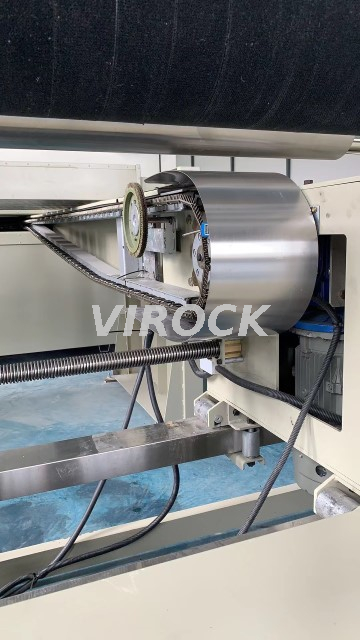
4. The Tenter Frame and Chain System: The fabric is held at its edges by chains equipped with either pins or clips. For warp knitting, pin chains are almost exclusively used because they can securely hold the delicate loops without crushing them, allowing for maximum stretch and recovery. The design of the rail system that guides these chains is crucial for high-speed stability. Investing in a machine with a robust vertical rail stenter configuration ensures smooth, vibration-free operation even at maximum production speeds, which drastically reduces maintenance costs and prolongs the life of the chain components.
5. The Heating Chambers: This is the heart of the operation. The fabric passes through a series of insulated chambers where hot air is blasted onto both the top and bottom surfaces via specially designed nozzles. The uniformity of this airflow is what guarantees consistent fabric heat setting. If the temperature fluctuates even by a few degrees across the width of the fabric, it can result in uneven dye uptake in later stages, leading to disastrous color shading issues.
6. The Cooling and Plaiting Zone: Immediately after exiting the final heating chamber, the fabric must be rapidly cooled to "freeze" the molecular structure into place. This is typically achieved using chilled air blowers or water-cooled cylinders. Finally, the fabric is either rolled onto a batcher or folded (plaited) into a trolley, ready for dispatch or further processing.
When you are in the market to purchase this equipment, you will be bombarded with technical specifications. Knowing which specs matter most for warp-knitted fabrics will save you from costly mistakes and ensure your investment yields the highest possible return.
The heating medium you choose will depend largely on your local energy costs and infrastructure. The most common heating systems are thermal oil, direct natural gas, and indirect gas. Thermal oil systems use a central boiler to heat oil, which is then pumped through radiators inside the machine. This provides incredibly stable and uniform heat, which is ideal for sensitive warp knits containing high percentages of spandex. Direct gas heating is highly efficient and allows for rapid temperature adjustments, making it suitable for factories that frequently change fabric types. Regardless of the heating medium, the heat setting stenter machine must feature advanced PID (Proportional-Integral-Derivative) controllers to maintain temperature accuracy within ±1°C across all chambers.
Warp-knitted fabrics come in a variety of widths. Standard apparel fabrics might require a working width of 2400mm, while home textiles or technical fabrics might require 3200mm or more. Your machine must have a reliable, motorized width adjustment system. Each chamber should ideally have independent width control to accommodate the natural widening or narrowing of the fabric as it reacts to the heat. Furthermore, if your production focuses on specialized items like lace, ribbons, or specific technical bands, you might need to look for a narrow width stenter design that provides the same level of precision and control but in a much more compact footprint, preventing energy waste on excessively wide chambers.
The way hot air is delivered to the fabric dictates the efficiency of the drying and setting process. Modern machines utilize variable frequency drives (VFDs) on their circulation fans. This allows the operator to precisely control the volume and velocity of the air. For lightweight, delicate warp knits (like tulle or fine lingerie fabrics), a lower airflow prevents the fabric from being blown off the pins or distorted. Conversely, heavy fabrics require high-velocity air to penetrate the dense loop structure. The nozzle design should also feature a bypass system; if the machine stops unexpectedly, the hot air must be instantly diverted away from the fabric to prevent scorching or burning.
Purchasing a machine is not a one-size-fits-all endeavor. You must carefully audit your current production capacity and your future growth projections. Consider the following parameters:
Production Speed: How many meters of fabric do you need to process per day? The number of heating chambers directly correlates to the machine's speed. A standard machine might have 6 to 8 chambers, allowing speeds of 40 to 80 meters per minute depending on the fabric weight. High-capacity operations might require 10 or 12 chambers.
Fabric Composition: If you process a lot of elastane (Lycra/Spandex), your machine needs superior tension control. Elastane is highly sensitive to heat and tension; improper handling will kill the stretch. Ensure the machine has highly sensitive load cells and synchronized drive systems.
Energy Efficiency: Textile finishing is incredibly energy-intensive. Look for a machine equipped with an integrated heat recovery system. These systems capture the hot exhaust air and use it to pre-heat the incoming fresh air, potentially reducing your energy consumption by 15% to 30%.
Exhaust Air Filtration: As synthetic fabrics are heated, they release knitting oils and volatile organic compounds (VOCs). Environmental regulations are becoming stricter globally. A high-quality machine will feature an advanced electrostatic precipitator or scrubber system to clean the exhaust air before it is released into the atmosphere, ensuring compliance and a safer working environment.
Operators of older or poorly designed finishing equipment often face a daily battle against fabric defects. Upgrading to a state-of-the-art heat setting stenter machine can eliminate these headaches and drastically reduce your defect rate.
1. Eliminating Edge Curling: As mentioned, warp knits naturally want to roll at the edges. Advanced machines use a combination of mechanical uncurlers, steam injection at the selvedge, and precise pinning wheels to ensure the edge is caught perfectly flat. This reduces selvedge waste, allowing you to sell a wider usable width to your customers.
2. Correcting Bowing and Skewing: During the knitting and dyeing processes, the courses and wales (the horizontal and vertical loops) of the fabric can become distorted. An advanced machine integrates optical weft straighteners before the fabric enters the pins. These cameras detect the distortion and automatically adjust a series of bowed and skewed rollers to realign the fabric structure perfectly before it is locked in place by the heat.
3. Preventing Yellowing: White or pastel-colored synthetic fabrics can easily turn yellow if exposed to excessive heat or if the exhaust gases (which contain vaporized oils) are not efficiently removed from the chamber. Modern machines feature optimized exhaust fan placement and precise temperature sensors to ensure the fabric is heated just enough to set the memory, without causing thermal degradation to the fibers.
It is crucial to view this machinery not just as a standalone step, but as the cornerstone of your entire finishing department. The quality of the heat setting dictates the success of all subsequent operations. If a fabric is not properly stabilized, it will cause massive problems during printing—patterns will distort as the fabric stretches on the printing blanket. If it is not properly set before dyeing, it can lead to severe crease marks that cannot be removed.
Therefore, investing in a high-caliber textile finishing stenter elevates your entire product portfolio. It gives you the capability to handle complex, high-value fabrics like technical textiles used in automotive interiors, medical textiles, and high-performance activewear, opening up new, lucrative markets for your business.
To ensure your investment continues to operate at peak efficiency for decades, a rigorous maintenance schedule is mandatory. The harsh environment of high temperatures, chemical vapors, and continuous mechanical movement takes a toll on the equipment.
Chain and Rail Lubrication: The pin chains and rails are the most mechanically stressed components. They must be lubricated regularly with high-temperature synthetic oils. Many modern machines feature automatic lubrication systems, but these must be monitored to ensure the oil lines are not clogged.
Filter Cleaning: The lint generated by the fabric, combined with vaporized knitting oils, will quickly clog the air filters inside the heating chambers. Clogged filters reduce airflow, leading to uneven heating and wasted energy. Filters should be inspected daily and cleaned regularly.
Nozzle Inspection: The hot air nozzles must be kept clear of debris. If a nozzle becomes blocked, it will create a cold spot on the fabric, resulting in inconsistent width and weight.
Sensor Calibration: The temperature sensors, load cells, and optical weft straighteners must be calibrated periodically by qualified technicians to ensure the machine's "brain" is receiving accurate data.
In conclusion, the decision to invest in a premium heat setting stenter machine is one of the most consequential choices a warp knitting manufacturer can make. The right equipment transforms raw, unstable knitted loops into refined, high-performance textiles ready for the global market. By carefully evaluating the core mechanisms, heating efficiency, rail designs, and automation capabilities, you can select a machine that perfectly aligns with your production goals.
The advantages of making the correct choice are profound. You will achieve unparalleled dimensional stability, ensuring your fabrics never shrink or distort in the hands of the consumer. You will gain exact control over fabric weight and width, maximizing your yield and profitability. Advanced automation and heat recovery systems will drastically reduce your energy consumption and operational costs. Furthermore, the ability to consistently produce flawless, high-quality fabrics will enhance your brand's reputation, allowing you to command premium prices and secure long-term partnerships with top-tier garment manufacturers and technical textile brands. Ultimately, a state-of-the-art heat setting stenter machine is not just a piece of equipment; it is the engine of your factory's growth, quality assurance, and future success in the competitive textile industry.


