

Views: 0 Author: Site Editor Publish Time: 2026-09-23 Origin: Site


Textile manufacturers face intense margin pressures today. Volatile energy costs and strict fabric quality standards demand absolute precision. Traditional fixed-speed cylinder dryers force facilities into a difficult corner. Operators often make inefficient compromises between production speed and thermal energy waste. You either run fast and risk under-drying, or run slow and burn profits.
This article provides an objective, engineering-focused evaluation of inverter technology. We explore how Variable Frequency Drives (VFDs) fundamentally change the thermodynamic and economic equations for drying operations. You will learn the mechanics behind dynamic speed control, the impact on mechanical wear, and how to evaluate retrofit viability. By understanding these systems, you can stop wasting energy and start protecting your bottom line.
The industry constantly debates drying methods. Should you use short and hot cycles, or long and low cycles? The answer depends entirely on the fabric. Different textiles require entirely different evaporation curves. Heavy cottons hold moisture deep inside their fibers. They need extended dwell times at moderate temperatures. This allows core moisture to migrate to the surface. Conversely, synthetic blends hold water on the surface. They flash off moisture quickly and cannot tolerate prolonged heat. You cannot treat them the same way.
Standard alternating current (AC) motors ignore these thermodynamic realities. They lock the dryer into a single operational speed. This forces operators into a corner. To maintain overall line speeds, teams often over-dry lighter fabrics. They pump excess steam into the cylinders to guarantee dryness at a fast pace. This approach wastes massive amounts of thermal energy. It also severely degrades the fabric hand-feel. Yarns become brittle, shrinking and losing their natural elasticity. You sacrifice quality simply to keep the machine moving.
Fixed-speed systems also fail mechanically. When you start a standard multi-cylinder machine, the motor draws a massive energy spike. We call this inrush current. It can exceed six times the normal running current. This abrupt startup places violent mechanical stress on the equipment. Belts stretch or snap. Gears grind. Steam rotary joints suffer shock loads, leading to premature leaks. These harsh transitions destroy your hardware over time.
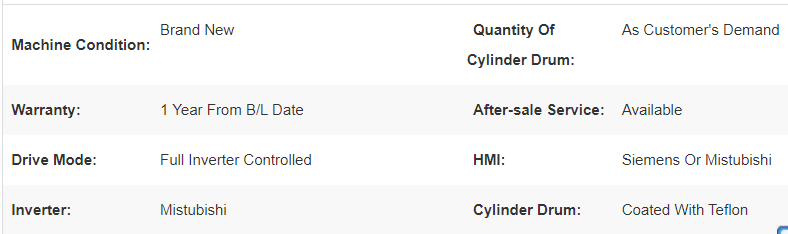
A modern inverter-controlled cylinder dryer fundamentally alters motor operation. Inverters, or VFDs, do not simply turn power on and off. They adjust the motor frequency (Hz) and voltage in real-time. This provides infinite speed variability. You can precisely synchronize the cylinder rotation speed to match the exact fabric moisture levels. If a batch runs slightly wetter than normal, the inverter slows the cylinders seamlessly. This allows more dwell time without stopping the line.
Drying fabric changes dimensions. As textiles lose moisture, they inherently shrink. If all drying cylinders rotate at the exact same fixed speed, tension spikes. The fabric pulls taut against the steel drums. VFDs solve this problem by managing torque. They adjust the speed of individual cylinder groups in micro-increments. This maintains consistent fabric tension across multiple drying zones. You actively prevent unwanted shrinkage, stretching, or tearing. The fabric glides through the machine.
Inverters do not operate in a vacuum. They form the brain of a closed-loop feedback system. Here is how they integrate:
This autonomous loop removes human guesswork. The machine self-corrects before defects occur.
Running motors at partial speeds generates incredible savings. We can attribute this to the Affinity Laws, which govern associated blowers and exhaust fans. If you reduce fan speed by 20%, electrical consumption drops by nearly 50%. Even for the main drive motors, running at 80% speed slashes electrical draw. Furthermore, optimized speed control impacts your steam usage. When you slow the machine to dry heavy fabrics, you extract maximum thermal transfer from the existing steam. You stop venting excess, unused steam into the atmosphere. This dual action defines true textile cylinder dryer efficiency.
Better control directly increases your first-quality yield. Fixed-speed dryers routinely produce over-baked or under-dried batches. Under-dried fabric requires a second pass through the machine. This doubles your energy cost for that batch. Over-baked fabric often requires chemical re-finishing to restore hand-feel. Inverter technology eliminates these extremes. By hitting exact moisture targets every time, you drastically reduce fabric rework and reject rates. Your throughput becomes reliable and predictable.
Mechanical preservation equals financial savings. VFDs feature built-in "soft starting" capabilities. Instead of slamming the motor with full power, the drive ramps up the voltage gradually. This eliminates mechanical shock loads. The gentle acceleration extends the lifespan of bearings, rotary steam joints, and drive chains.
| Component | Fixed-Speed Impact | Inverter-Controlled Impact |
|---|---|---|
| Drive Belts | High stretching and snapping risk during startup. | Gradual tensioning; extends belt life by years. |
| Rotary Steam Joints | Shock loads cause premature seal failure and leaks. | Smooth rotation preserves internal carbon seals. |
| Bearings | Experience heavy initial torque and vibration. | Smooth acceleration minimizes friction and heat. |
| Motor Windings | Degrade quickly due to massive inrush current heat. | Stay cool due to controlled, low-amperage starts. |
Many facilities want to add inverters to existing machines. This is often viable, but it requires strict evaluation. You cannot simply attach a VFD to any old motor. First, inspect the structural integrity of your current cylinders. Are they warped or unbalanced? If so, variable speeds will amplify vibration. Next, evaluate the age of your steam infrastructure. Your rotary joints must remain sealed across a wide range of rotational speeds. Finally, check your existing motors. They must carry an "inverter-duty" insulation rating. Standard motors will overheat when run at low speeds because their internal cooling fans also slow down.
When calculating the payback for an inverter upgrade, you must use accurate variables. Do not rely on generic manufacturer claims. Build your model using the following plant-specific inputs:
Combining these factors gives a realistic picture of your potential textile cylinder dryer efficiency gains.
Inverters solve mechanical problems but can create electrical ones. VFDs chop up the incoming AC power to create variable frequencies. This process introduces electrical noise, known as harmonics, back into your facility's grid. High harmonic distortion can overheat transformers and cause sensitive electronics to malfunction. You must anticipate this during installation. We highly recommend installing line reactors or harmonic filters alongside your new drives. These relatively inexpensive components clean the power supply and protect your plant grid.
A fast drive paired with a slow sensor creates chaos. Legacy moisture sensors often take several seconds to register changes. VFDs, however, react in milliseconds. If you pair them, the system falls out of sync. The sensor reads old data and tells the drive to speed up. The drive speeds up, over-dries the fabric, and the sensor eventually catches up. It then tells the drive to slam on the brakes. We call this erratic speed hunting or oscillation. Upgrading to inverters usually requires upgrading your moisture sensors simultaneously.
Technology only works if people use it. Maximizing efficiency requires your operators to trust the automated PLC parameters. For decades, operators have manually overridden speeds based on outdated "rule-of-thumb" habits. They might feel the machine is running too slowly and switch it to manual override. This instantly destroys your energy savings. You must train your teams. Show them the data. Explain how the automated system protects the fabric and the machine. Culture change is just as important as the hardware upgrade.
Inverter technology transforms the basic cylinder dryer into an intelligent, adaptive machine. While the upfront cost of VFD integration is higher, the results justify the investment. Verifiable gains in thermal energy reduction, electrical savings, and fabric yield make this technology a standard requirement. You can no longer afford to bake fabrics at a single, rigid speed. The mechanical preservation alone often pays for the upgrade within a few years.
Your next step should be data collection. We recommend that technical buyers initiate a baseline energy audit of their current fixed-speed lines. Measure your current inrush currents, track your steam waste, and log your fabric rework rates. Once you have a clear baseline, you can confidently request vendor quotes for VFD integration or entirely new equipment.
A: The payback period typically ranges between 12 and 24 months. This timeline depends heavily on your local electrical utility rates and daily operating hours. Facilities running continuous 24/7 operations will see a much faster return on investment than those running single shifts. Savings on steam and reduced mechanical downtime also accelerate the payback.
A: Yes, it indirectly affects how you manage steam. Slower cylinder speeds increase the fabric's retention time on the heated surface. Because the fabric spends more time absorbing heat, you can often lower the internal steam pressure to achieve the same drying result. This prevents surface scorching on delicate textiles.
A: Yes, in a group-drive configuration, one larger inverter controls a single motor that turns multiple cylinders via chains or belts. This is cheaper but offers limited tension control. Individual-drive configurations use a smaller inverter for each cylinder. This costs more but provides absolute precision over fabric tension and shrinkage.


