

Views: 0 Author: Site Editor Publish Time: 2026-08-22 Origin: Site


In carbon composite manufacturing, the stakes run incredibly high. Improper moisture and volatile removal during the preliminary drying phase leads directly to cracking, uneven density, and catastrophic failures during high-temperature graphitization. These early defects compound exponentially, ruining entire batches of expensive precursors.
A specialized drying furnace stabilizes soft felt precursors, such as polyacrylonitrile (PAN) or rayon, before carbonization begins. It extracts lingering solvents and moisture uniformly across the material. Without this critical step, trapped volatiles expand violently during later heating cycles.
Selecting the right industrial drying equipment requires balancing thermal precision, operational scale, and energy efficiency. You must weigh various design features to match your specific precursor materials. This guide breaks down the evaluation criteria for upgrading your production line. We will explore airflow dynamics, zone controls, and supplier vetting strategies.
Substandard drying creates severe structural vulnerabilities within carbon composites. When you fail to extract moisture completely, trapped water turns into steam during the carbonization phase. This steam forces its way out of the precursor matrix. It leaves behind micro-voids and weakens the final structural integrity. Uneven resin or binder curing also creates soft spots. These weak points inevitably fail under the extreme mechanical stress of high-temperature graphitization.
A successful drying stage must hit strict metric targets. You need to achieve uniform moisture reduction to less than 1%. You must accomplish this without triggering premature cross-linking. Furthermore, you cannot cause thermal degradation of the precursor fibers. If the heating ramps up too aggressively, the outer layers of the felt dry too fast. This traps internal moisture and blocks volatile escape routes.
Financially, drying inefficiencies cause massive downstream losses. When you scrap a soft felt batch at the graphitization stage, you lose more than just raw material. You waste immense amounts of electricity and production time. A highly optimized carbon fiber drying furnace eliminates these bottlenecks. By securing baseline stability early, you prevent cascading defects. Plant managers see immediate reductions in material waste and energy overruns.
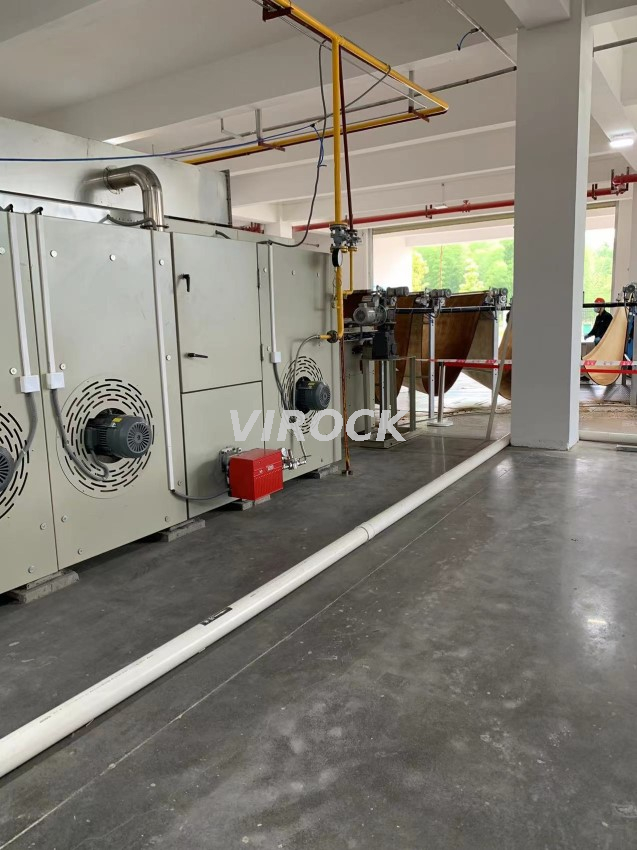
A specialized soft felt processing carbon fiber drying furnace tackles precursor instability through precise thermal engineering. It relies on advanced atmospheric controls and mechanical handling systems. These components work together to safeguard delicate webs during the critical moisture extraction phase.
Multi-zone heating profiles form the backbone of this process. Engineers design these furnaces to feature sequential temperature zones. A typical setup ranges from 100°C in the entry zone up to 300°C near the exit. You need this gradual escalation to safely drive off different volatiles at their specific evaporation points. The lower temperature removes surface water. Mid-range zones extract bound solvents. The final, hottest zones cure the binders without initiating carbonization.
Controlled airflow prevents volatile re-condensation. You must manage evaporation efficiently. Blowers push controlled laminar airflow across the felt surface. This airflow sweeps away evaporated solvents and water vapor instantly. Exhaust fans then pull these gases out of the chamber. If you rely on turbulent air, you risk disturbing the soft felt fibers. Smooth, continuous sweeping ensures no chemical residue settles back onto the material.
Mechanical integration also matters immensely for continuous production lines. Soft felt precursors possess very low tensile strength before carbonization. Therefore, you must use precise tension control systems. Synchronized drive rollers and tension-sensing dancer rolls guide the web through the thermal zones safely. This prevents the delicate soft felt from stretching, necking, or tearing during its transit.
Procurement and engineering teams need a pragmatic checklist when comparing vendor spec sheets. Not all industrial ovens possess the nuance required for carbon precursor handling. You must carefully assess the following carbon fiber drying furnace specifications before making a capital investment.
Thermal uniformity dictates final quality. You should demand verifiable claims of ±3°C to ±5°C across the entire width of the belt or chamber. Micro-level temperature deviations cause uneven binder migration. This ruins the density profile of the felt. Always ask suppliers for thermal mapping reports from prior installations.
Heating medium selection impacts both operational expenses and ramp-up times. Your choice depends heavily on local utility costs and infrastructure. We recommend evaluating the options carefully based on your plant's energy realities.
| Heating Medium | Ramp-Up Speed | Thermal Precision | Ideal Operational Use Case |
|---|---|---|---|
| Electric Infrared (IR) | Very Fast | High (Direct surface heating) | Facilities requiring rapid response and strict emission control. |
| Natural Gas Convection | Moderate | Excellent (Deep penetration) | Large-scale continuous lines seeking lower utility costs. |
| Thermal Oil Systems | Slow | Outstanding (Highly stable) | Operations needing massive, continuous heat without fluctuations. |
You must also scrutinize exhaust and Volatile Organic Compound (VOC) handling. Soft felt binders off-gas heavily. Your furnace requires seamless integration with thermal oxidizers to manage this output safely. Ensure the exhaust ducting uses corrosion-resistant alloys. It must comply with strict industrial emission standards to avoid regulatory fines.
Finally, evaluate insulation and energy efficiency. High-quality insulation prevents thermal bridging. Check the expected outer skin temperatures. If the exterior runs too hot, you waste energy heating your factory floor. Robust thermal barriers guarantee lower operational expenditures over a standard 10-year equipment lifecycle.
Equipment buyers constantly face the decision between standard footprint models and engineered-to-order systems. You must match your capital expenditure to your actual production realities. Over-engineering wastes money, while under-engineering cripples throughput.
Standard models excel in specific, limited environments. When you operate a pilot facility, an off-the-shelf oven provides sufficient capability. They also work well for batch processing small, precut soft felt sheets. If your facility has highly flexible floor space and frequently changes product runs, standard models offer cost-effective agility.
However, industrial-scale manufacturing usually dictates a different approach. A custom carbon fiber drying furnace becomes strictly necessary under the following conditions:
You must mitigate the risks associated with custom builds. Acknowledge the longer lead times involved. Engineered-to-order units often take 6 to 12 months to design, fabricate, and install. They also demand higher initial capital expenditure. However, you balance this against the immense return on investment generated by uninterrupted, automated production. Reduced scrap rates quickly justify the initial expense.
Moving beyond glossy brochures is essential when selecting a manufacturing partner. You need robust vendor verification to protect your production timeline. Any reliable carbon fiber drying furnace supplier will gladly subject their designs to rigorous technical scrutiny.
First, demand computational fluid dynamics (CFD) modeling. The supplier should provide airflow and thermal mapping reports before you sign a contract. These models prove their engineering team understands how air behaves inside the chamber. If they cannot show CFD data, they are likely guessing on fan placement and duct sizing.
Second, insist on Factory Acceptance Testing (FAT). Ensure your chosen vendor allows rigorous FAT using your specific soft felt materials. You must run actual production samples through the furnace before it leaves their facility. This testing reveals minor mechanical flaws or thermal imbalances early. Fixing these issues at the supplier's factory costs significantly less than fixing them on your floor.
Finally, evaluate their aftermarket support network. Downtime destroys profitability in continuous carbon fiber processing. Scrutinize their Service Level Agreement (SLA) carefully. Check their inventory of critical spare parts, such as heaters, blowers, and thermal sensors. You need guaranteed response times to minimize unplanned outages. A supplier who abandons you after commissioning is a liability.
The drying furnace is never a generic oven. It remains a high-precision instrument dictating the structural integrity of the final carbon or graphite felt. Proper thermal management during the initial drying phase eliminates micro-voids, stabilizes binders, and prevents catastrophic failures downstream.
To upgrade your facility effectively, focus on verifiable performance metrics. Keep these crucial next steps in mind as you begin your procurement journey:
A: The temperature typically ranges from 100°C to 300°C. Engineers divide this range into distinct heating zones. This setup sequentially removes surface moisture, deeper solvents, and volatile binders. The gradual increase prevents thermal shock and ensures you do not burn or prematurely carbonize the delicate precursor materials.
A: Improper airflow causes severe physical defects like edge-curling or uneven binder distribution. You need balanced, top-and-bottom convection to sweep away evaporated solvents quickly. Laminar airflow ensures these vapors exit the chamber before they can condense and settle back onto the felt web.
A: You should expect a lead time of 24 to 40 weeks for a custom system. This timeframe factors in detailed engineering, bespoke fabrication, rigorous Factory Acceptance Testing (FAT), and final on-site commissioning. Complex atmospheric controls or ultra-wide belt requirements can extend this timeline further.
A: Generally, no. Standard industrial ovens lack the precise VOC exhaust management necessary for precursor off-gassing. They also fail to provide the micro-level temperature uniformity (±3°C) required. Using a generic oven often leads to uneven curing and defect cascading throughout the entire soft felt batch.


