

Views: 0 Author: Site Editor Publish Time: 2026-08-30 Origin: Site


Procuring a reliable textile stenter machine stands as a high-stakes capital expenditure. It directly impacts your production bottlenecks, daily energy overhead, and final fabric quality. You cannot treat this procurement casually. A poorly matched system creates immediate operational friction and financial strain. In modern textile industries, this decision extends far beyond basic stretching and drying processes. You must align specific machine configurations with unique fabric behaviors. Key factors include shrinkage rates and GSM control. Your facility also operates under strict energy limits. We built this evidence-based framework to guide your investment safely. You will learn how to evaluate critical textile stenter machine specifications effectively. We will show you how to assess supplier credibility systematically. Finally, you will discover proven methods to mitigate implementation downtime and ensure a smooth operational rollout.
You cannot buy a one-size-fits-all finishing system. Different fabrics behave differently under heat and tension. You must map your specific fabric applications directly to the mechanical capabilities of the equipment. If you ignore this step, you risk severe quality defects and wasted raw materials.
Woven fabrics demand strict dimensional stability. They require heavy tension during the drying and heat-setting phases. We strongly recommend focusing on clip chain systems for these materials. Clip chains grab the fabric edges securely. They hold the material tight across the width of the chamber. This prevents the fabric from bowing or skewing. When processing heavy twills or denims, your system must handle extreme lateral forces. Always verify the maximum tension rating of the rail system before purchasing.
Knit fabrics stretch easily and lose their shape quickly. They require a completely different handling approach. You must specify pin chain systems for knits. Pins gently hold the fabric without crushing the edges. Knits also curl at the edges naturally. You need precise mechanical edge uncurlers installed at the entry zone. Furthermore, advanced overfeed mechanisms are mandatory. Overfeeding pushes slightly more fabric onto the pins than the machine pulls out. This allows the knit loops to relax and shrink naturally during drying. It helps you control the final Grams per Square Meter (GSM) perfectly.
Technical textiles and pure synthetics pose unique thermal challenges. They demand exact temperature uniformity across all chambers. If the left side of the chamber is two degrees hotter than the right side, the synthetic fibers will shrink unevenly. This inconsistency leads to severe fiber degradation and rejected batches. You need high-velocity airflow systems. These systems ensure consistent heat setting. They lock the molecular structure of the synthetic fibers in place securely.
Once you understand your fabric requirements, you must evaluate the technical hardware. The specifications you choose dictate your daily operational reality. They determine your production speed, your utility bills, and your maintenance schedules.
The heating system acts as the heart of your finishing line. You must compare different heating mediums based on your local utility costs and existing facility infrastructure. Do not simply copy what another factory uses. Your regional energy prices dictate the most efficient choice.
| Heating Type | Optimal Application | Operational Characteristics |
|---|---|---|
| Thermal Oil | High-temperature heat setting | Provides excellent temperature stability. Requires a separate boiler. |
| Direct Gas | Fast heat-up times and high speeds | Highly efficient. Burns cleanly. Requires reliable local gas lines. |
| Steam | Gentle drying, natural fibers | Lower maximum temperatures. Very safe. Uses existing factory steam. |
You must also assess the burner positioning and airflow distribution. Look closely at the nozzle design. Symmetrical nozzles blow hot air evenly onto the top and bottom of the fabric. This symmetry guarantees temperature consistency across the entire fabric width. Asymmetrical airflow causes color shading and uneven shrinkage.
You must choose between horizontal and vertical rail configurations. Horizontal rails support higher operational speeds. They handle heavier fabrics easily. They also offer much better maintenance access. Mechanics can reach the chains and lubrication points safely. Vertical rails save floor space. However, they limit your top speed and make maintenance highly frustrating.
Heat retention matters just as much as layout. You should actively look for good insulation horizontal rail textile finishing designs. Poorly insulated rails bleed heat into your factory. This heat dissipation increases your energy expenditure massively. It also causes thermal warping of the metal rails over time. Warped rails lead to chain jams and catastrophic downtime. Robust insulation protects the mechanical integrity of the rail while keeping your energy bills low.
You cannot guess the size of your machine. You must calculate the exact number of drying and setting chambers required. We call these chambers "fields." To calculate this, determine your target daily output. Next, identify the specific dwell-time requirements for your primary fabrics. Dwell time is the duration the fabric must remain inside the heated chamber to dry or set properly.
Common mistakes occur here frequently. Many buyers purchase too few chambers to save money upfront. Consequently, they have to slow down the machine drastically to achieve the required dwell time. This bottleneck destroys factory throughput. Always size the machine for your peak production targets.
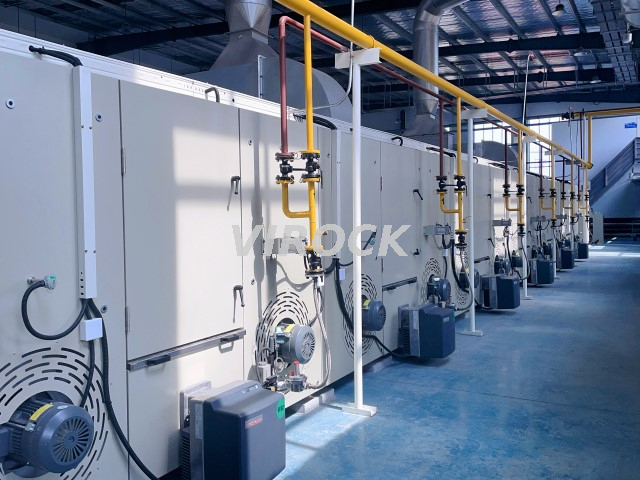
Energy consumption dominates the daily running costs of textile finishing. You must evaluate the system based on its ability to reclaim and reuse heat. Modern machines offer advanced systems to slash fuel usage and minimize waste.
You should never operate a finishing line without a Heat Recovery System. These systems capture the hot, polluted exhaust air leaving the chambers. They use heat exchangers to transfer this thermal energy into the incoming fresh air. This pre-heats the fresh air before it reaches the burners.
Demand empirical data on heat recovery efficiency from the manufacturer. A verifiable HRS should reclaim enough exhaust heat to cut your fuel usage by 15-30%. If the vendor cannot provide case studies proving these savings, walk away. You need hard data, not vague promises.
Environmental regulations grow stricter every year. Your system must meet regional environmental compliance laws out of the box. Processing synthetics often involves knitting oils and spinning lubricants. When these oils hit the high temperatures of the setting chambers, they vaporize. They create thick, toxic exhaust smoke.
You must integrate electrostatic precipitators (ESPs) into your exhaust system if you process heavily oiled synthetics. ESPs use high-voltage electrical fields to trap vaporized oil particles. They clean the exhaust air before it hits the atmosphere. They also allow you to recover and recycle the condensed oils, providing an additional economic benefit.
Manual machine setup wastes time and ruins fabric. You need robust automation. Look for systems featuring advanced Programmable Logic Controllers (PLC). These controls offer precise recipe management.
Recipe management allows operators to save parameters for specific fabrics. When a new batch arrives, the operator selects the recipe on the screen. The machine automatically adjusts the tension, overfeed, temperature, and airflow to the exact saved settings. This minimizes manual setup time. It drastically reduces fabric waste during changeovers. Consistency improves, and human error drops to near zero.
Buying the equipment represents only half the battle. Installing it and getting it running presents massive logistical challenges. You must plan for the physical footprint, the downtime, and the human element.
Finishing lines occupy massive amounts of factory floor space. You must verify exact dimensions before signing a contract. Measure your available space meticulously.
Do not just measure the chambers. You must account for the space required for fabric entry and exit equipment. The entry zone requires padders for chemical application and weft straighteners for alignment. The exit zone needs extensive space for cooling zones, plaiters, and large A-frame batchers. A common mistake is forgetting to leave wide aisles for forklifts to deliver and remove fabric rolls.
Installation halts production in that zone of your factory. You must assess realistic timelines for this phase. Moving heavy machinery takes weeks. Assembling the rails, connecting the exhaust ducts, and wiring the PLCs takes precision.
Ask vendors for their average commissioning timeline. Add a 20% buffer to their estimate to account for unforeseen delays.
Your machine is only as good as the operators running it. A new Human-Machine Interface (HMI) creates a steep learning curve. Veteran operators often resist new touchscreens and automated recipes. They prefer the old manual dials they used for decades.
You must factor in this learning curve. Require structured, on-site training from the manufacturer in your purchasing contract. The vendor’s technicians must stay on-site for at least a week after commissioning. They need to train your shifts on emergency stops, recipe creation, and basic troubleshooting.
The vendor you choose becomes a long-term operational partner. If they fail to support you, your factory stops running. You must evaluate them critically using objective metrics.
Do not trust marketing brochures blindly. Request verifiable case studies. Ask to speak with current customers running similar fabric applications. Even better, arrange site visits to facilities operating the exact model you plan to buy.
When you speak to these factory managers, ask about machine stability. Disregard exaggerated "zero-maintenance" claims from sales reps. Every heavy industrial machine requires maintenance. A trustworthy textile stenter machine supplier admits this and provides clear preventative maintenance schedules.
Equipment breaks down. It is inevitable. When it happens, the clock starts ticking on your profitability. You must check the guaranteed response times outlined in the Service Level Agreements.
Ask specific questions. How fast will they dispatch a technician? Do they offer 24/7 remote software troubleshooting? Many modern issues stem from PLC glitches. Remote diagnostics allow the vendor to log into your machine securely and fix software bugs within minutes.
Waiting a month for a proprietary part shipped from overseas equals catastrophic downtime. You must ensure critical wear parts remain stocked regionally. Ask the vendor where their nearest parts depot sits.
If the vendor cannot guarantee rapid delivery of these specific items, you carry too much operational risk. Seek a partner with robust local inventory.
Choosing the right finishing equipment requires balancing fabric-specific technical needs with your facility's energy infrastructure. You must look past the initial price tag and focus on daily operational efficiency. By prioritizing features like robust insulation and heat recovery, you protect your profit margins from rising utility costs. Always ensure the chain systems match your primary materials, whether handling rigid wovens or delicate knits.
As your next step, compile all your fabric processing data. Gather your typical widths, weights, and required processing speeds. Use this data to draft a comprehensive Request for Proposal (RFP). Force vendors to provide customized energy and efficiency models rather than handing you generic spec sheets. Hold them accountable for performance metrics before you sign the purchase order.
A: A commercial finishing line generally lasts 15 to 20 years. However, this expected longevity remains entirely contingent on strict maintenance schedules. You must perform daily rail lubrication, regular lint filter cleaning, and annual burner calibrations. Neglecting the chain systems or ignoring thermal warping will drastically reduce the machine's functional lifespan.
A: You determine chamber count using a specific formula. You must link the fabric weight (GSM), initial moisture retention, and your target operational speed. Heavier fabrics holding more water require longer dwell times to dry. If you want high speeds for heavy fabrics, you must add more chambers to increase the total heating zone length.
A: Pin chains use sharp needles to hold the fabric gently. They are essential for knits because they allow shrinkage control and overfeeding without crushing the fabric. Clip chains use metal clamps to grip the fabric edge tightly. They are necessary for woven fabrics that require extreme lateral tension for dimensional stability.
A: A high-quality heat recovery system typically yields a 15-30% reduction in thermal energy consumption. The system captures hot exhaust to pre-heat incoming fresh air. Depending on local fuel costs and daily operational hours, the return on investment (ROI) usually takes 1 to 3 years.


