

Views: 0 Author: Site Editor Publish Time: 2026-06-04 Origin: Site


In high-performance composite manufacturing, fiber surface integrity stands as the primary bottleneck for resin adhesion. Residual precursors, incompatible sizing, and manufacturing contaminants actively block optimal bonding. If you ignore these barrier layers, they directly cause delamination and catastrophic structural failures. The problem often stems from outdated batch processing or inadequate surface preparation. These manual methods lead to inconsistent tension, uneven chemical etching, and rapid thermal degradation across the fiber tow. Such defects inevitably inflate scrap rates. They also severely compromise strict mechanical evaluations, including critical burst or shear tests.
The solution lies in standardizing your surface modification process. Implementing an automated, continuous carbon fiber washing and drying line solves these surface inconsistencies. This technology ensures reliable sizing removal and precise surface preparation. You will learn how modern continuous systems dictate the ultimate predictability of your composite matrix. We will explore the chemical mechanics, thermal controls, and integration factors necessary to achieve absolute reliability in composite production.
Continuous processing dictates yield: Transitioning to a continuous washing line eliminates batch-to-batch variations, maintaining uniform tension and chemical exposure across the entire tow.
Material compatibility is non-negotiable: High-grade stainless steel washing equipment is required to withstand the aggressive acidic/alkaline baths necessary for thorough sizing and contaminant removal.
Drying precision prevents thermal degradation: An optimized carbon fiber drying machine removes residual moisture without altering the fiber’s micro-roughness or causing thermal oxidation.
Integration determines ROI: Upgrading this segment of the carbon fiber processing line reduces downstream defects, directly improving matrix bonding and lowering Total Cost of Ownership (TCO).
Poor matrix adhesion rarely points to a fundamental resin failure. Instead, it is almost exclusively a fiber surface failure. Microscopic barrier layers severely inhibit chemical bonding. Residual sizing, machining oils, or trapped moisture act as physical walls between the filament and the epoxy matrix. When structural loads apply stress to the composite, these weakened interfaces simply separate. This separation creates a critical delamination risk. You cannot fix a poorly prepped surface simply by applying more expensive resin.
Standard industrial carbon fiber requires protection during transit and handling. Manufacturers coat the raw tow with proprietary polymer sizing. This coating prevents fraying during high-speed weaving and spooling. However, modifying or removing this protective layer demands highly controlled wet-chemical processes. You must utilize specific solvent, acidic, or alkaline baths to strip the polymer. A basic solvent wipe is never enough. The chemical process must actively dissolve the sizing without eating into the underlying graphite lattice. Controlling this delicate chemical reality separates high-yield facilities from struggling ones.
Manufacturers must rigorously evaluate their current failure rates. You should examine the results from your latest peel or shear tests. Look closely at the failure modes under a microscope. If the resin cleanly strips away from the fiber, you have an adhesive failure. This directly tracks back to inadequate fiber preparation. When you notice these inconsistencies, manual or batch-washing methods are no longer scalable. Batch washing inevitably leaves dead zones where chemicals pool or dry unevenly. Upgrading to automated systems becomes an engineering necessity rather than a luxury.
Analyze Failure Modes: Always determine if test failures are adhesive (surface prep) or cohesive (resin limits).
Audit Chemical Lifespans: Regularly test the pH and concentration of your etching baths.
Blaming the Matrix: Engineers often switch resin systems before auditing their fiber preparation workflows.
Ignoring Residual Oils: Failing to account for oils introduced by handling equipment prior to the washing stage.
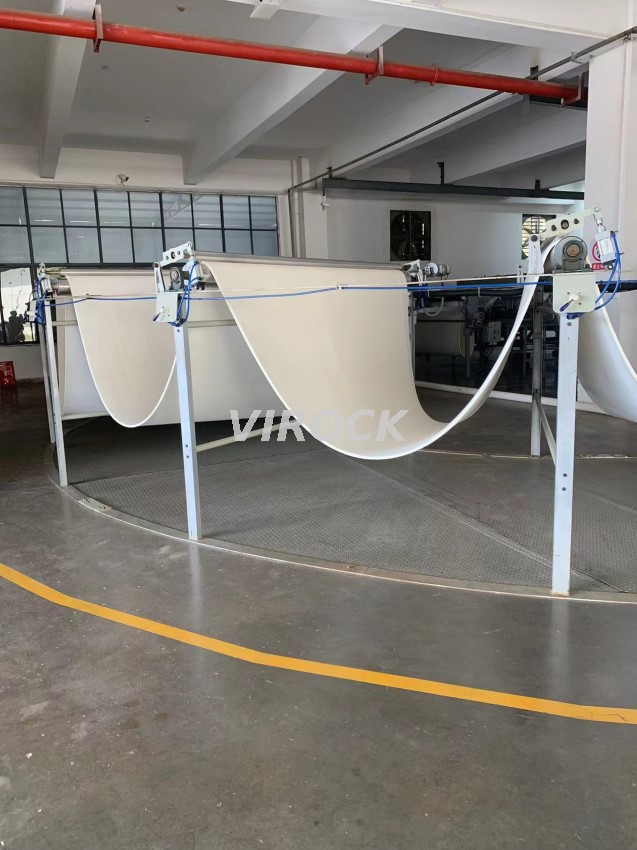
Processing raw fiber tow fundamentally differs from handling woven dry cloth. You must maintain exact tensioning at all times. A continuous washing line masters this tension control. The system pulls the delicate tow through multiple chemical baths safely. It prevents mechanical stress, fraying, or filament breakage. If tension drops, the tow tangles. If tension spikes, the micro-filaments snap. Automated drive systems calculate this delicate balance constantly, ensuring structural integrity remains perfectly intact from start to finish.
Effective surface modification requires a phased chemical approach. Premium carbon fiber washing equipment divides the process into distinct functional stages. Each stage targets a specific barrier layer.
Processing Stage | Primary Function | Chemical Mechanism |
|---|---|---|
Pre-wash / Wetting | Breaking surface tension | Utilizes mild surfactants to penetrate the tightly bundled tow, allowing subsequent chemicals to reach inner filaments. |
Active Etching / Cleaning | Stripping sizing & increasing roughness | Applies targeted solvents, acids, or bases. This stage modifies the graphite structure's micro-roughness, which is vital for mechanical interlocking with resins. |
High-Efficiency Rinsing | Halting chemical reactions | Deploys neutralized water jets. It thoroughly strips active chemicals away to prevent uncontrolled, continuous etching of the carbon lattice. |
Locking in the exact dwell time is paramount. Consistency is only achieved when every millimeter of fiber sits in the bath for the identical duration. Fast line speeds result in under-etched fibers that reject resin. Slow line speeds over-etch the filaments, causing brittle, degraded structures. Achieving perfect flow rate synchronization is impossible outside of automated processing. Modern systems adjust roller speeds dynamically. They ensure the tow experiences uniform chemical exposure, guaranteeing a predictable surface profile.
Once you wash the fiber, you must eliminate all residual moisture. The moisture trap is a severe threat to composite integrity. Even microscopic water retention reacts aggressively with high-performance epoxy or vinyl ester resins. As the resin heats up during the curing phase, trapped moisture vaporizes. This sudden vaporization creates expanding micro-voids inside the matrix. These voids act as stress concentrators, drastically reducing the structural load capacity of the final part. Absolute moisture removal is mandatory.
Achieving total evaporation without damaging the fiber requires strict thermal governance. A dedicated carbon fiber drying machine manages this balance perfectly. Heat application must remain uniform.
Apply Uniform Heat: Utilize infrared panels or forced convection air streams. This ensures heat penetrates the entire tow evenly.
Govern Temperature Thresholds: Set maximum temperature limits below the oxidation point of the carbon lattice.
Monitor Vapor Extraction: Actively vent the evaporated moisture to prevent humidity from settling back onto the cooling fiber.
Risk mitigation relies on this precise control. If temperatures spike too high, thermal degradation occurs. The outer surface of the carbon lattice begins to oxidize, destroying the micro-roughness achieved in the washing phase. A properly calibrated machine ensures 100% vaporization safely.
A thoroughly dried, chemically stabilized fiber is now primed for advanced secondary processing. Many high-end applications require proprietary wearcoats or bondcoats. These coatings protect the fiber during downstream handling or enhance specific chemical compatibility profiles. When you apply secondary coatings to a perfectly dry, etched surface, they adhere flawlessly. This maximizes the protective benefits and ensures your final composite achieves top-tier mechanical ratings.
Choosing the right machinery dictates your production ceiling for the next decade. You must evaluate a carbon fiber processing line on its metallurgical integrity, expansion potential, and drive logic.
The aggressive nature of chemical baths destroys standard metals quickly. You absolutely need stainless steel washing equipment. Procurement teams should insist on 316L grade stainless steel or equivalent alloys. These materials resist severe chemical degradation over a 10+ year lifecycle. If you compromise on metallurgy, the acid baths will corrode the machine walls. This corrosion releases heavy metal particles directly into the fiber path. Heavy metal contamination ruins the electrical and mechanical properties of aerospace-grade carbon fiber.
Production requirements shift constantly. You must ask if the line handles varied tow counts effectively. Delicate 3K tows behave very differently from heavy 50K industrial tows. Buyers should prioritize modular designs. A modular line allows you to retrofit additional washing troughs seamlessly. You can also append extra drying zones as your line speeds increase. This flexibility prevents you from needing a completely new machine when your output volume doubles.
The drive system acts as the nervous system of the entire line. You must specify PLC-controlled multi-drive synchronized systems. These systems utilize advanced sensors to monitor roller speeds continuously. If even one roller lags by a fraction of a second, it creates massive friction. This friction will immediately snap or severely fray the carbon filaments. Synchronized drives adjust tension in milliseconds. They accommodate the natural stretching and shrinking of the tow as it moves between wet baths and hot drying zones.
Installing continuous machinery introduces unique facility challenges. You must proactively manage spatial planning, power requirements, and maintenance schedules to ensure smooth operational integration.
You must rigorously assess your plant floor space. A continuous line demands a significant linear footprint. Unlike compact batch-washing stations, you cannot bend or twist the fiber excessively to save space. The tow must travel in a relatively straight, continuous path through the washing troughs and drying chambers. Engineers need to map the factory layout carefully, accounting for loading creels at the front and large take-up winders at the back.
Drying machines fundamentally consume high amounts of energy. The physics of vaporizing water at high speeds demands substantial power. You must evaluate the thermal efficiency of your selected dryer. Look closely at the chamber insulation quality. Investigate the implementation of heat recovery systems. Capturing exhaust heat and routing it back into the pre-heating stages cuts daily energy requirements drastically. Efficient thermal management dictates long-term operational viability.
Chemical environments accelerate physical wear. Rollers, bearings, and seals submerged in aggressive baths will eventually degrade. Procurement teams must assess the vendor’s parts availability critically. You need to verify the engineering simplicity of roller replacement. If a seal fails, maintenance crews must be able to swap it out in hours, not days. Simple, accessible machine designs prevent minor component wear from causing massive production bottlenecks.
You must approach line integration with transparent assumptions. A continuous line does not hit peak efficiency on day one. Models should assume a 3-6 month calibration period. During this window, your engineers will dial in exact line speeds. They will optimize tension curves and adjust chemical concentrations for specific fiber grades. Recognizing this learning curve allows you to plan production schedules realistically.
Fiber consistency never happens by accident. It is the direct, engineered result of precise chemical modification and strict thermal control. When you depend on manual processes, you surrender control over surface integrity. Investing in a dedicated continuous line shifts surface preparation from a variable risk into a highly controlled, repeatable asset. Every filament receives the exact identical treatment, eliminating the delamination risks associated with sizing and moisture.
Engineers and procurement teams must take immediate action. Begin by auditing your current composite scrap rates. Identify exactly where surface-level failure points occur in your testing data. Once you isolate the weak links, consult with equipment manufacturers regarding custom line integration. Focus on modular designs and robust tension-control capabilities to future-proof your composite manufacturing yields.
A: It removes processing contaminants, residual oils, and incompatible sizing through controlled chemical baths. This targeted wet-chemistry prepares the fiber's surface, ensuring optimal mechanical interlocking and resin adhesion in the final composite matrix.
A: A continuous washing line guarantees that every millimeter of the fiber tow experiences the exact same chemical dwell time and physical tension. This automation eliminates the structural inconsistencies, dry spots, and pooling chemicals inherent in manual batch handling.
A: Stainless steel washing equipment is absolutely necessary to withstand the highly corrosive acids, bases, or specialized solvents used in sizing removal and etching. It prevents structural machine degradation and stops heavy metal contamination from ruining the fiber.
A: It utilizes precise, uniform thermal controls, such as infrared panels or forced air convection. These controls completely evaporate trapped moisture without ever reaching the high-temperature thresholds that would cause dangerous thermal oxidation or degradation of the carbon lattice.
A: Yes, a well-engineered carbon fiber processing line features highly adjustable, PLC-controlled tension and speed systems. This flexibility allows operators to safely and effectively process everything from delicate 1K aerospace tows to heavy industrial 50K+ tows.


