

Views: 0 Author: Site Editor Publish Time: 2026-06-28 Origin: Site


TL;DR: In the highly specialized field of advanced materials manufacturing, the thermal processing of carbon precursors is a critical step that dictates the ultimate tensile strength, modulus, and overall quality of the final composite material. Choosing between a standalone thermal unit and a fully integrated processing line requires a deep understanding of production volume, facility space, and specific material requirements. This comprehensive guide explores the intricate engineering, operational workflows, and strategic benefits of these systems, providing manufacturers with the necessary insights to optimize their production facilities.
The production of high-performance carbon materials is a complex orchestration of chemical engineering and precise mechanical control. At the heart of this process lies the critical phase of moisture removal and thermal stabilization. Whether you are processing polyacrylonitrile (PAN) precursors, pitch-based fibers, or specialized non-woven materials, the method by which you extract moisture and apply heat will fundamentally alter the molecular structure of the product. Manufacturers constantly face the engineering dilemma of whether to deploy isolated thermal processing units or to invest in comprehensive, end-to-end automated lines. Understanding the nuanced differences in airflow dynamics, tension control, and thermodynamic efficiency between these two approaches is paramount for achieving aerospace-grade or automotive-grade material certifications.
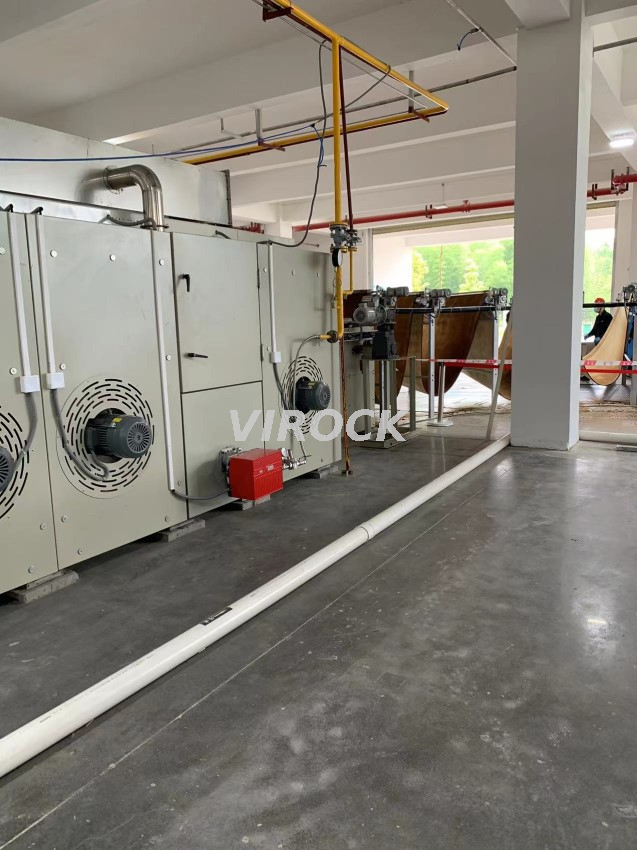
To fully appreciate the complexities of modern material synthesis, one must first understand the fundamental engineering principles that govern a carbon fiber drying furnace. Unlike conventional industrial ovens that simply blast hot air into a chamber, this specialized equipment is designed to execute highly controlled thermodynamic profiles. When precursor fibers or carbonized felts enter the thermal chamber, they carry varying degrees of moisture and residual solvents from previous chemical baths. The primary objective of the furnace is to eradicate this moisture without inducing thermal shock, which could lead to micro-fractures, surface defects, or uneven shrinkage across the fiber tow.
The architecture of a high-end carbon fiber drying furnace typically involves multiple distinct heating zones. As the material traverses through the furnace, it encounters a carefully calibrated temperature gradient. The initial zones are usually set to lower temperatures to facilitate gentle evaporation, preventing the rapid boiling of internal moisture that could rupture the fiber's delicate microstructure. As the material progresses, the temperature gradually increases to ensure complete desiccation and to prepare the molecular structure for subsequent high-temperature oxidation or carbonization phases. For manufacturers working with delicate non-woven structures, implementing a specialized soft felt drying furnace is often necessary, as these units utilize specialized airflow patterns that prevent the displacement or distortion of the felt matrix during the drying process.
Furthermore, the internal atmosphere of the furnace is meticulously managed. Advanced systems utilize sophisticated exhaust and recirculation fans to maintain optimal humidity levels within the chamber. If the expelled moisture is not efficiently evacuated, the drying rate plummets, leading to production bottlenecks and inconsistent material properties. The integration of variable frequency drives (VFDs) on the blower motors allows operators to fine-tune the convective heat transfer coefficient, ensuring that the boundary layer of moisture surrounding each individual filament is continuously stripped away and replaced with dry, heated air.
When evaluating thermal processing equipment, it is crucial to distinguish a dedicated carbon fiber drying furnace from generic industrial drying solutions. Generic ovens often suffer from temperature stratification, where heat rises and creates uneven thermal zones. In contrast, equipment designed specifically for carbon materials utilizes engineered plenums and precisely machined nozzles to deliver uniform airflow across the entire width of the material web. This uniformity is non-negotiable; even a temperature variance of a few degrees across a one-meter-wide tow band can result in uneven tension, causing filament breakage and significant material waste.
Additionally, the conveyance mechanisms within these specialized furnaces are vastly superior. Standard ovens might use basic mesh belts or simple rollers, which can snag or abrade delicate fibers. A purpose-built carbon fiber drying furnace employs highly polished, precision-aligned rollers, often coated with specialized non-stick, high-temperature materials like PTFE or advanced ceramics. These rollers are driven by synchronized servo motors that maintain exact tension profiles, preventing the fibers from sagging or stretching excessively as they undergo thermal expansion and contraction.
While a standalone thermal unit is powerful, its true potential is often realized when integrated into a comprehensive processing ecosystem. The transition from isolated batch processing to continuous manufacturing is a significant leap for any facility. When a carbon fiber drying furnace is coupled with upstream washing mechanisms, it forms a continuous loop of material refinement. This integration eliminates the need for manual handling between the washing and drying stages, drastically reducing the risk of contamination, physical damage, and labor costs.
In a fully integrated setup, the material flows seamlessly from the chemical treatment baths directly into the thermal chamber. This immediate transition is critical because allowing wet fibers to sit exposed to ambient air can lead to uneven partial drying, airborne contamination, and the re-crystallization of residual chemicals on the fiber surface. By implementing a complete carbon fiber drying line, manufacturers ensure a strictly controlled environment from the moment the material enters the wash bath until it emerges perfectly dry and ready for spooling or further high-temperature carbonization.
The synchronization between the washing section and the carbon fiber drying furnace requires advanced programmable logic controllers (PLCs) and a network of sensors. The speed of the conveyance system must be perfectly matched; if the furnace pulls the material faster than the washing section releases it, the resulting tension spike will snap the fibers. Conversely, if the furnace runs too slowly, the material will accumulate, tangle, and potentially cause a catastrophic jam within the high-temperature environment. Modern integrated lines utilize sophisticated dancer rollers and load cells to provide real-time tension feedback, allowing the drive systems to make micro-adjustments continuously.
The efficiency and output quality of a carbon fiber drying furnace are heavily dependent on the effectiveness of the preceding washing stages. During the synthesis of precursor materials, various solvents, spinning dopes, and surface sizing agents are applied. Before the material can be effectively dried and subsequently carbonized, these unreacted chemicals and surface impurities must be rigorously removed. If impurities are carried into the high-temperature drying phase, they can bake onto the fiber surface, creating a barrier that inhibits proper oxidation and significantly degrades the mechanical properties of the final composite.
This is where the deployment of high-efficiency carbon fiber washing equipment becomes indispensable. These washing units typically employ multiple cascades of deionized water, sometimes combined with ultrasonic agitation, to penetrate the dense fiber bundles and flush out contaminants at the microscopic level. The washing process is often staged in counter-current configurations, where the cleanest water meets the cleanest fiber at the end of the wash cycle, maximizing the concentration gradient and ensuring the highest possible purity before the wet material is fed into the drying furnace.
For plant managers and production engineers, the decision to procure a standalone carbon fiber drying furnace versus an integrated washing and drying line is a complex calculation involving capital expenditure, floor space, production volume, and material specifications. Both approaches offer distinct advantages and present unique challenges. To facilitate a clear understanding, we must dissect the operational paradigms of both configurations.
A standalone carbon fiber drying furnace offers unparalleled flexibility. Facilities that process a wide variety of materials—such as different grades of PAN, pitch, or various thicknesses of carbon felts—often prefer standalone units because they can be easily reconfigured. Operators can adjust temperature profiles, residence times, and airflow dynamics without having to worry about synchronizing these changes with an attached washing section. Standalone units are also ideal for research and development laboratories or pilot-scale production facilities where batch processing is the norm and continuous throughput is not the primary objective.
Conversely, for high-volume, commercial-scale production, the integrated approach reigns supreme. When a facility upgrades to a continuous drying furnace that is mechanically and electronically mated to a washing system, the economies of scale become highly favorable. The continuous line minimizes human intervention, thereby reducing labor costs and mitigating the risk of human error. Furthermore, the thermal efficiency of an integrated line is often superior; the heat generated by the furnace can sometimes be recaptured and utilized to pre-heat the water in the washing section, creating a highly energy-efficient closed-loop system.
| Feature / Metric | Standalone Carbon Fiber Drying Furnace | Integrated Washing & Drying Line |
|---|---|---|
| Capital Expenditure (CAPEX) | Lower initial investment; ideal for phased facility expansion. | High initial investment; requires significant capital allocation. |
| Footprint & Space Requirements | Compact; can be retrofitted into existing facility layouts easily. | Large footprint; requires extensive linear floor space and planning. |
| Production Throughput | Moderate; subject to bottlenecks during material transfer phases. | Extremely high; continuous operation maximizes daily yield. |
| Operational Flexibility | High; easy to switch between different material types and batches. | Low to Moderate; optimized for long runs of consistent material. |
| Labor & Handling | Requires manual or semi-automated transfer of wet materials. | Fully automated; minimal operator intervention required. |
When conducting a return on investment (ROI) analysis for a carbon fiber drying furnace, procurement teams must look beyond the sticker price of the equipment. The total cost of ownership (TCO) includes installation, commissioning, energy consumption, maintenance, and the cost of potential downtime. A standalone furnace, while cheaper upfront, may incur higher labor costs over a five-year period due to the manual handling required to load and unload the material. Additionally, if the standalone unit is not properly synchronized with upstream processes, the resulting material waste from inconsistent drying can quickly erode the initial capital savings.
On the other hand, investing in a fully integrated line demands rigorous financial justification. The installation process is significantly more complex, often requiring specialized rigging, extensive electrical infrastructure upgrades, and comprehensive software integration. However, the dramatic reduction in labor costs, the near-elimination of handling-induced material defects, and the massive increase in continuous throughput typically result in a highly favorable ROI for large-scale manufacturers. The decision ultimately hinges on the facility's projected production volumes and the strictness of the quality standards demanded by their end-clients in the aerospace, automotive, or sporting goods sectors.
To ensure optimal performance and longevity, an industrial-grade carbon fiber drying furnace must be engineered with uncompromising attention to detail. The specifications of the internal components dictate the machine's ability to maintain tight thermal tolerances and operate reliably under continuous, heavy-duty conditions. One of the most critical aspects is the heating element technology. Modern furnaces utilize advanced electric resistance heaters, infrared emitters, or indirect gas-fired heat exchangers. Electric resistance heating, often utilizing specialized alloy elements, provides the most precise control and the cleanest internal atmosphere, which is vital for preventing contamination of the carbon precursor.
Thermal insulation is another paramount specification. A high-quality carbon fiber drying furnace operates at elevated temperatures, and any heat loss through the furnace walls not only wastes expensive energy but also creates an uncomfortable and potentially hazardous environment for operators on the factory floor. Leading manufacturers employ multi-layered insulation strategies, utilizing high-density ceramic fiber boards, microporous silica insulation, and reflective thermal barriers. This advanced insulation ensures that the exterior skin of the furnace remains cool to the touch while the internal chamber maintains a perfectly stable temperature profile, even in the face of fluctuating ambient conditions.
The conveyance and drive system within the furnace must be robust yet incredibly precise. As the carbon fibers or felts dry, they undergo dimensional changes. If the drive system cannot accommodate these changes, the material will either snap under excessive tension or bunch up and tangle. Therefore, the integration of a sophisticated carbon fiber processing machine control system is essential. These systems utilize highly sensitive load cells and ultra-precise servo motors to monitor and adjust the web tension in real-time, ensuring that the material is transported through the thermal zones with zero mechanical stress.
In today's manufacturing landscape, energy consumption is not just an operational cost; it is a critical environmental metric. A state-of-the-art carbon fiber drying furnace is designed with energy conservation at its core. One of the primary methods for improving efficiency is the implementation of advanced heat recovery systems. As the furnace exhausts moisture-laden hot air, heat exchangers capture the thermal energy from the exhaust stream and use it to pre-heat the incoming fresh air. This process significantly reduces the workload on the primary heating elements, resulting in substantial electrical or gas savings over the operational lifespan of the equipment.
Furthermore, the use of intelligent PID (Proportional-Integral-Derivative) controllers and solid-state relays (SSRs) allows the furnace to modulate its power consumption precisely. Instead of simple on/off heating cycles that cause temperature spikes and waste energy, these intelligent systems supply exactly the amount of power needed to maintain the setpoint temperature. Combined with optimized aerodynamic internal designs that reduce the required fan motor power, a modern carbon fiber drying furnace represents a highly sustainable approach to high-temperature material processing.
The reliability and consistency of a carbon fiber drying furnace are directly proportional to the rigor of its maintenance program. Operating at high temperatures and dealing with moisture and chemical off-gassing, these furnaces endure significant stress. A proactive maintenance strategy is essential to prevent unexpected downtime and to ensure that the equipment continues to produce aerospace-grade materials. Daily maintenance should include a thorough visual inspection of the conveyance rollers, checking for any buildup of sizing agents or broken filaments that could snag the material web.
Weekly and monthly maintenance routines must delve deeper into the mechanical and electrical systems of the carbon fiber drying furnace. Technicians should verify the calibration of all thermocouples and temperature sensors; a sensor drifting by even a few degrees can compromise an entire production run. The exhaust and recirculation fans must be inspected for bearing wear and impeller balance, as excessive vibration can lead to catastrophic mechanical failure. Additionally, the thermal insulation should be periodically checked for any degradation or settling, which could lead to hot spots on the furnace exterior and internal temperature inconsistencies.
Safety systems are an integral part of the maintenance protocol. The carbon fiber drying furnace is equipped with numerous safety interlocks, over-temperature alarms, and emergency stop mechanisms. These systems must be tested regularly to ensure they function flawlessly in the event of a thermal runaway or a mechanical jam. Proper lubrication of the external drive components, using high-temperature synthetic greases, will also significantly extend the lifespan of the motors and gearboxes, ensuring smooth and consistent tension control throughout the drying process.
A: The operating temperature depends heavily on the specific precursor material and the moisture content. Generally, a carbon fiber drying furnace operates between 100°C and 250°C. The process usually starts at a lower temperature to gently evaporate surface moisture and gradually ramps up to remove internal moisture without causing the fiber structure to blister or crack.
A: Yes, many high-quality standalone units are designed with modularity in mind. However, upgrading requires careful engineering to ensure that the conveyance heights, speeds, and control systems (PLCs) of the new washing equipment seamlessly integrate with the existing carbon fiber drying furnace. It is often more cost-effective to plan for integration during the initial purchase.
A: A properly engineered carbon fiber drying furnace features a robust exhaust system designed to handle volatile organic compounds (VOCs) and moisture. The exhaust is typically routed through a thermal oxidizer or a specialized scrubber system to neutralize harmful emissions before they are released into the atmosphere, ensuring compliance with strict environmental regulations.
A: As carbon precursor fibers dry and heat up, they undergo structural changes that can cause them to shrink or expand. If the carbon fiber drying furnace does not maintain precise tension, the fibers will either sag and tangle (if tension is too low) or stretch and break (if tension is too high). Precise tension ensures uniform molecular alignment, which is critical for the final strength of the carbon fiber.
A: The timeline varies based on the complexity of the system. A standalone carbon fiber drying furnace can typically be installed and commissioned within 2 to 4 weeks. However, a fully integrated washing and drying line, requiring extensive mechanical alignment, electrical integration, and software programming, may take 6 to 12 weeks from delivery to full operational readiness.
In the exacting world of advanced composites, the carbon fiber drying furnace stands as a cornerstone of quality and efficiency. Whether deployed as a highly flexible standalone unit or as the critical thermal engine of a fully automated washing and drying line, this equipment delivers indispensable advantages to material manufacturers. The primary advantage lies in its unparalleled thermodynamic precision; by offering multi-zone temperature control and engineered airflow dynamics, the furnace ensures the absolute uniform drying of delicate precursors, thereby eliminating structural defects and maximizing the tensile strength of the final product.
Furthermore, modern iterations of the carbon fiber drying furnace provide exceptional operational efficiency. Through the integration of advanced heat recovery systems, intelligent PID power modulation, and superior ceramic insulation, these furnaces drastically reduce energy consumption and lower the overall carbon footprint of the manufacturing facility. Coupled with ultra-precise servo-driven tension control systems that prevent material breakage and waste, the furnace guarantees high-yield, continuous production. Ultimately, investing in a high-quality drying furnace is not merely an equipment purchase; it is a strategic commitment to producing world-class, aerospace-grade carbon materials with unmatched consistency, reliability, and economic efficiency.
