


TL;DR: The processing of mosquito nets requires extreme precision to maintain mesh integrity, dimensional stability, and fabric softness. An open-width stenter machine is the ultimate solution for these challenges. By utilizing advanced pin chains, precise temperature control, and tensionless feeding mechanisms, this equipment ensures that delicate warp-knitted fabrics are heat-set flawlessly. This comprehensive guide explores the technical mechanics, operational benefits, step-by-step processing, and maintenance protocols of the open-width stenter machine, highlighting why it is an indispensable asset for modern textile finishing facilities.
In the highly specialized world of textile manufacturing, the production and finishing of mosquito nets present a unique set of challenges. Unlike standard woven or heavily knitted apparel fabrics, mosquito nets are typically constructed from lightweight, warp-knitted polyester or nylon. These materials feature a delicate mesh structure designed to provide maximum airflow while keeping microscopic insects at bay. However, this open mesh structure makes the fabric highly susceptible to distortion, shrinkage, and structural damage during the dyeing and finishing processes. To overcome these inherent vulnerabilities, textile manufacturers rely heavily on advanced finishing technology. At the heart of this technological ecosystem is the open-width stenter machine, an engineering marvel designed specifically to handle, stretch, dry, and heat-set delicate fabrics with unparalleled precision.
The journey of a mosquito net from raw yarn to a finished, durable product is fraught with potential quality pitfalls. If the fabric is subjected to excessive longitudinal tension, the mesh holes will elongate, compromising the net's protective capabilities. If the heat setting is uneven, the fabric will shrink unpredictably when washed by the end consumer. Therefore, achieving the perfect balance of width control, tension regulation, and thermal consistency is not just a preference; it is an absolute necessity. This article delves deep into the myriad benefits, technical specifications, and operational best practices associated with utilizing an open-width stenter machine for mosquito net processing.
Understanding the Core Concept of the Open-Width Stenter Machine
To fully appreciate the value of this equipment, we must first define what an open-width stenter machine actually is. In textile finishing, "stentering" (or tentering) refers to the process of stretching a fabric to its desired width and holding it under tension while it is dried and heat-set. The term "open-width" signifies that the fabric is processed in a flat, unrolled, and uncreased state, as opposed to being processed in a tubular or rope form.
An open-width stenter machine achieves this by gripping the edges of the fabric (the selvedges) using a continuous chain of pins or clips. As the fabric moves through the machine's long heating chambers, the chains gently pull the fabric to the exact specified width. Simultaneously, high-velocity hot air is directed onto the top and bottom surfaces of the fabric. For synthetic materials like the polyester used in mosquito nets, this combination of physical stretching and high heat (often between 180°C and 210°C) causes the polymer molecules to realign and lock into place. This process, known as heat setting, gives the fabric its final "memory," ensuring it will not shrink or distort during subsequent use or washing.
The modern open-width stenter machine is a highly complex system comprising multiple zones: a feeding and overfeeding section, a chemical padding mangle, a weft straightening unit, multiple heating chambers (bays), a cooling zone, and a final batching or plaiting section. Each of these components works in perfect harmony to transform a raw, unstable mesh into a high-quality, dimensionally stable mosquito net.
The Critical Role of the Open-Width Stenter Machine in Mosquito Net Production
Mosquito nets are critical public health tools, especially in regions prone to malaria and dengue fever. The World Health Organization (WHO) has strict guidelines regarding the mesh size, bursting strength, and dimensional stability of Long-Lasting Insecticidal Nets (LLINs). Meeting these stringent international standards is impossible without the precise control offered by an open-width stenter machine.
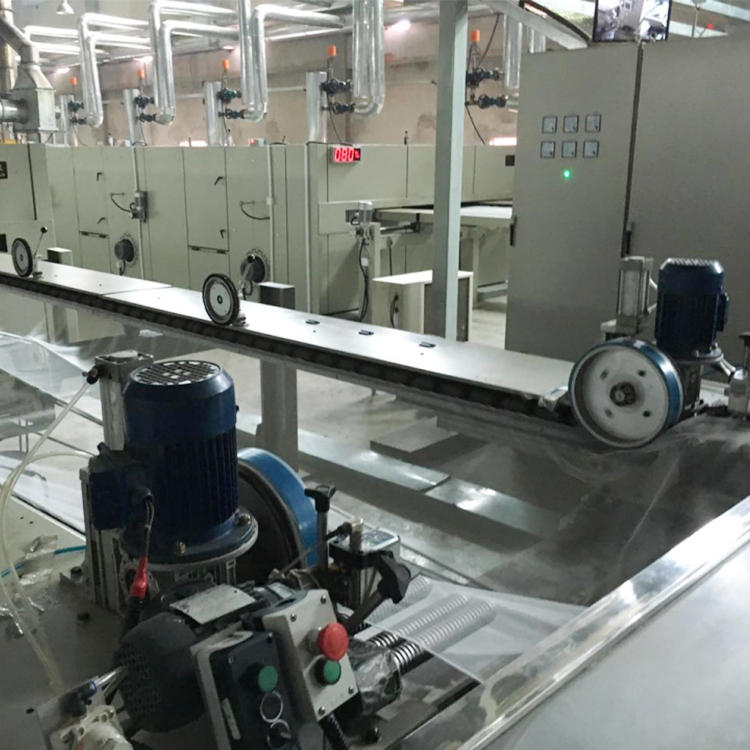
When warp-knitted mosquito netting comes out of the dyeing machine, it is often rope-like, wrinkled, and narrower than its required final width. If it were dried in this state, the mesh would be permanently distorted. By utilizing a specialized mosquito net stenter, manufacturers can carefully uncurl the edges, apply the exact amount of chemical finishes (such as insecticides or softening agents), and stretch the fabric to its optimal width. The machine ensures that the hexagonal or diamond-shaped holes of the mesh are perfectly uniform across the entire width of the fabric roll. This uniformity is what guarantees the net will effectively block mosquitoes while allowing breathable airflow.
Key Benefits of Using an Open-Width Stenter Machine
The adoption of an open-width stenter machine in a textile finishing plant brings a multitude of operational, financial, and quality-related benefits. Below, we break down these advantages into specific technical categories to illustrate why this machine is the gold standard for mesh fabric processing.
Exceptional Dimensional Stability Achieved by the Open-Width Stenter Machine
The primary function of any finishing process for synthetic fabrics is to impart dimensional stability. Mosquito nets are subjected to repeated washing and stretching during their lifespan. If the fabric is not properly heat-set, it will shrink, rendering the net useless as it will no longer fit over a bed properly. The open-width stenter machine excels in this area by providing absolute control over both the warp (lengthwise) and weft (widthwise) tension.
Through a sophisticated overfeeding mechanism, the machine can feed more fabric into the pin chains than the actual speed of the machine. This allows the fabric to shrink naturally in the lengthwise direction while being stretched in the widthwise direction inside the heating chambers. The result is a perfectly balanced fabric that boasts a residual shrinkage rate of less than 3%, easily meeting international quality standards. The precision of the width adjustment spindles in the open-width stenter machine ensures that the fabric width is consistent from the first meter to the last meter of the roll.
Enhanced Fabric Feel and Tension Control in the Open-Width Stenter Machine
Mosquito nets must be soft to the touch, as they often come into contact with human skin, particularly in the case of baby crib nets or indoor bed canopies. Traditional drying methods can leave synthetic mesh feeling harsh, stiff, and abrasive. However, by operating as a tensionless stenter, this advanced equipment prevents the rigid locking of fibers that causes stiffness.
The tensionless operation is achieved through variable frequency drives (VFDs) and highly sensitive load cells that constantly monitor and adjust the tension of the fabric as it moves from the padding mangle to the pinning section. By minimizing the longitudinal pull, the open-width stenter machine preserves the natural loft and softness of the yarn. Furthermore, the machine allows for the precise application of chemical softeners through its integrated padder, ensuring that the softening agents are evenly distributed and deeply cured into the fibers during the heating phase.
Energy Efficiency and Heat Distribution in the Open-Width Stenter Machine
Textile finishing is an energy-intensive industry, and the stenter is traditionally one of the largest consumers of thermal and electrical energy in a factory. However, modern engineering has transformed the open-width stenter machine into a highly efficient system. The process of open width heat setting requires precise thermodynamics to ensure that every square inch of the fabric receives the exact same amount of heat.
Advanced open-width stenter machines feature aerodynamically designed nozzles that direct hot air evenly across the top and bottom of the fabric. This balanced airflow prevents the lightweight mosquito net from fluttering or blowing off the pin chains. Additionally, these machines are equipped with state-of-the-art heat recovery systems. These systems capture the hot exhaust air laden with moisture and volatile organic compounds (VOCs), filter it, and use a heat exchanger to pre-heat the incoming fresh air. This innovation alone can reduce thermal energy consumption by up to 30%, significantly lowering the operational costs and carbon footprint of the mosquito net production process.
High-Speed Production Capabilities of the Open-Width Stenter Machine
In the competitive global textile market, production speed directly correlates with profitability. The open-width stenter machine is designed for high-volume, continuous processing. Depending on the number of heating chambers (which can range from 4 to 12 or more), these machines can process lightweight mosquito netting at staggering speeds, often exceeding 80 to 100 meters per minute.
This high-speed capability does not come at the expense of quality. The integration of automated weft straighteners equipped with optical sensors ensures that any skew or bow in the fabric mesh is detected and corrected in milliseconds before the fabric enters the heating zones. This automation eliminates the need to slow down the machine for manual adjustments, ensuring a continuous, high-yield production run that maximizes the return on investment for the manufacturer.
Technical Features of a Modern Open-Width Stenter Machine
To fully grasp why this machine is so effective, it is helpful to look under the hood at the specific technical components that make up a modern open-width stenter machine. Functioning as a comprehensive fabric finishing machine, it incorporates several critical subsystems:
- Center Guiding and Selvedge Uncurling: Mosquito net fabrics naturally curl at the edges. The machine utilizes pneumatic or motorized selvedge uncurlers to flatten the edges perfectly before they are pressed onto the pins.
- Pin Chain System: For mesh fabrics, pins are exclusively used instead of clips. The pins gently pierce the selvedge of the mesh, holding it securely without crushing the delicate structure. The chains themselves are self-lubricating and designed to withstand extreme temperatures without expanding or jamming.
- Advanced Padding Mangle: Before heating, the fabric passes through a chemical trough and two heavy rubber rollers. This padding mangle applies finishing chemicals (like anti-mosquito treatments or stiffening agents) evenly, squeezing out excess moisture to reduce the drying burden on the heating chambers.
- Multi-Zone Heating Chambers: The machine is divided into distinct temperature zones. The first few zones focus on evaporating the moisture, while the final zones reach the critical glass transition temperature of the polyester (around 190°C - 210°C) to permanently heat-set the mesh structure.
- Intelligent Exhaust and Moisture Control: Built-in sensors constantly monitor the humidity inside the chambers. The exhaust fans automatically adjust their speed to maintain the optimal moisture level, ensuring the fabric dries efficiently without being scorched.
Step-by-Step: How an Open-Width Stenter Machine Processes Mosquito Nets
Understanding the workflow of the open-width stenter machine provides insight into its complexity and efficiency. Every successful textile stenter application relies on a strict adherence to these sequential processing steps:
- Fabric Feeding and Centering: The wet, rope-form or loosely rolled mosquito net fabric is fed into the machine. Tension bars and center-guiding sensors ensure the fabric enters the machine perfectly aligned in the middle.
- Chemical Padding (Optional but Common): The fabric dips into a chemical bath. For mosquito nets, this is often where long-lasting insecticides (for LLINs) or specific resins are applied. The mangle rollers squeeze the fabric to a specific pick-up rate (usually 60-70% moisture retention).
- Weft Straightening: Optical scanners detect the alignment of the mesh holes. If the mesh is distorted (bowed or skewed), motorized rollers instantly pivot to realign the structural geometry of the fabric before it is locked into place.
- Overfeeding and Pinning: Brush wheels press the flattened edges of the fabric onto the moving pin chains. The overfeed mechanism pushes a slightly higher length of fabric onto the pins than the chain speed, allowing for natural warp shrinkage during drying.
- Drying and Heat Setting: The fabric travels through the heated chambers. The high-velocity hot air evaporates the water and raises the fabric temperature to the precise heat-setting point. The width of the chains gradually expands to stretch the fabric to its final required width.
- Cooling Zone: Immediately after exiting the hot chambers, the fabric passes over chilled water rollers or is blasted with cold air. This rapid cooling "freezes" the polymer molecules in their new, stable configuration, locking in the dimensional stability.
- Batching and Winding: Finally, the fabric is removed from the pins and neatly wound onto a large A-frame roll or plaited into a trolley, ready for cutting and sewing into final mosquito net products.
Comparing the Open-Width Stenter Machine with Traditional Alternatives
To truly understand the superiority of the open-width stenter machine for mosquito net processing, it is helpful to compare it against older or alternative methods, such as tubular drying or simple cylinder drying.
| Feature / Capability | Open-Width Stenter Machine | Traditional Cylinder / Tubular Dryer |
|---|---|---|
| Dimensional Stability | Excellent. Precise control over both warp and weft tension. | Poor. Cannot control widthwise tension effectively. |
| Mesh Uniformity | Perfectly uniform holes across the entire fabric width. | Inconsistent. Edges often differ from the center. |
| Edge Curling Prevention | Advanced uncurlers and pin chains completely eliminate edge curling. | High risk of edge curling and permanent creasing. |
| Heat Setting Capability | High-temperature capability (up to 220°C) for perfect synthetic heat setting. | Primarily for drying; inadequate for true molecular heat setting. |
| Chemical Application | Integrated padding mangle allows for precise, even chemical distribution. | Requires separate, standalone padding processes. |
As the table demonstrates, attempting to process delicate mosquito netting without an open-width stenter machine results in inferior quality, higher defect rates, and ultimately, a product that fails to meet consumer and health organization standards.
Maintenance and Troubleshooting for Your Open-Width Stenter Machine
An open-width stenter machine is a massive capital investment. To ensure it continues to deliver the benefits outlined above, a rigorous maintenance schedule is mandatory. Proper maintenance not only extends the lifespan of the machine but also prevents costly downtime and fabric defects.
Daily Maintenance Tasks: Operators must clean the filter screens in the exhaust system daily. Because mosquito nets are lightweight, lint and chemical residues can quickly accumulate in the filters, reducing airflow and causing uneven drying. Additionally, the optical sensors on the weft straightener must be wiped clean to ensure they accurately detect the mesh structure.
Weekly and Monthly Maintenance: The pin chain system is the heart of the open-width stenter machine. Weekly inspections should be conducted to identify and replace any bent or broken pins. A missing pin can cause the fabric to tear or sag, ruining meters of netting. The lubrication system for the chains must also be checked; modern machines use high-temperature synthetic oils that must be maintained at the correct levels to prevent chain seizure. Furthermore, the nozzles that deliver hot air should be inspected monthly to ensure they are not blocked by chemical buildup from the padding process.
Troubleshooting Common Issues: If operators notice that the mosquito net fabric is shrinking excessively after processing, the first step is to check the overfeed settings and the temperature in the final heating zones of the open-width stenter machine. Insufficient heat will fail to set the polyester molecules. Conversely, if the fabric feels too harsh or brittle, the machine may be running too slowly, exposing the fabric to high heat for too long, or the tension control sensors may need recalibration.
Frequently Asked Questions About the Open-Width Stenter Machine
Q1: Can an open-width stenter machine process both polyester and nylon mosquito nets?
A: Yes, absolutely. The open-width stenter machine is highly versatile. While polyester and nylon require different heat-setting temperatures (polyester typically requires higher heat, around 190°C-210°C, while nylon is set at slightly lower temperatures), the machine's digital control systems allow operators to easily adjust the temperature profiles and processing speeds to suit the specific synthetic polymer being processed.
Q2: How does the machine prevent the delicate mesh from tearing on the pins?
A: The open-width stenter machine utilizes specialized, ultra-fine pins designed specifically for knitted and mesh fabrics. Additionally, the edge uncurling and brush pinning mechanisms press the fabric onto the pins with exact, controlled pressure. The tensionless feeding system ensures that the fabric is not being pulled longitudinally as it is pinned, drastically reducing the risk of tearing.
Q3: Is it possible to apply insect-repellent chemicals directly inside the open-width stenter machine?
A: Yes. The integrated padding mangle located at the entry of the open-width stenter machine is specifically designed for this purpose. The mosquito net fabric is submerged in a chemical bath containing the insect repellent, squeezed to remove excess liquid, and then immediately dried and cured in the heating chambers, binding the chemicals to the fabric fibers permanently.
Q4: How much energy does an open-width stenter machine consume?
A: Energy consumption varies based on the size of the machine (number of chambers) and the heating medium (gas, thermal oil, or steam). However, modern open-width stenter machines equipped with heat recovery systems and VFD-controlled exhaust fans can reduce energy consumption by 20% to 30% compared to older models, making them highly efficient despite their size.
Q5: What is the ideal moisture content for mosquito nets entering the stenter?
A: Typically, after passing through the padding mangle, synthetic mosquito netting should retain about 60% to 70% moisture. The open-width stenter machine is calibrated to evaporate this specific amount of moisture efficiently before the fabric reaches the final heat-setting zones.
Conclusion: Maximizing Product Advantages with the Open-Width Stenter Machine
In conclusion, the production of high-quality mosquito nets is a technically demanding process that leaves no room for error. The open-width stenter machine stands as the definitive technological solution to these challenges, bridging the gap between raw, unstable mesh and a finished, durable, and life-saving product.
Summary of Product Advantages:
- Flawless Dimensional Stability: Guarantees that the mosquito net will not shrink, warp, or lose its shape during use or washing, thanks to precise heat-setting capabilities.
- Perfect Mesh Uniformity: Advanced pin chains and weft straighteners ensure that every hexagonal or diamond mesh hole remains perfectly sized and structurally sound, providing optimal airflow and insect protection.
- Superior Fabric Softness: Tensionless feeding and precise chemical application prevent the fabric from becoming stiff or abrasive, ensuring a soft touch suitable for human contact.
- High Operational Efficiency: With rapid processing speeds, automated controls, and integrated heat recovery systems, the machine maximizes production output while significantly lowering energy costs.
- Versatile Chemical Finishing: The built-in padding systems allow for the seamless application and curing of essential treatments, such as long-lasting insecticidal finishes, directly within a single continuous process.
For textile manufacturers aiming to produce premium mosquito nets that meet stringent global health and quality standards, investing in a state-of-the-art open-width stenter machine is not just an operational upgrade; it is a strategic necessity that guarantees superior product quality, operational efficiency, and long-term market competitiveness.
