

Views: 0 Author: Site Editor Publish Time: 2026-06-24 Origin: Site


The manufacturing of high-performance textiles, particularly in the medical and specialized industrial sectors, requires an unprecedented level of precision, control, and technological sophistication. Among the various thermoplastic polymers utilized today, polypropylene (PP) stands out due to its exceptional chemical resistance, high tensile strength, and excellent biocompatibility. These inherent properties make it the material of choice for producing surgical meshes, filtration fabrics, and advanced technical textiles. However, the journey from raw extruded polymer yarn to a finished, dimensionally stable mesh is complex. When polypropylene is knitted or woven, the mechanical actions impart significant internal stresses into the polymer chains. If left untreated, these stresses cause the mesh to shrink, curl, or deform when subjected to subsequent processes like sterilization, cutting, or implantation. To overcome these critical challenges, manufacturers rely heavily on specialized thermal finishing equipment. The implementation of a highly engineered thermal treatment process is non-negotiable for achieving the strict quality standards required by regulatory bodies such as the FDA and CE. This comprehensive guide explores the profound impact, technical intricacies, and undeniable benefits of utilizing specialized thermal finishing equipment for polymer-based mesh fabrics.
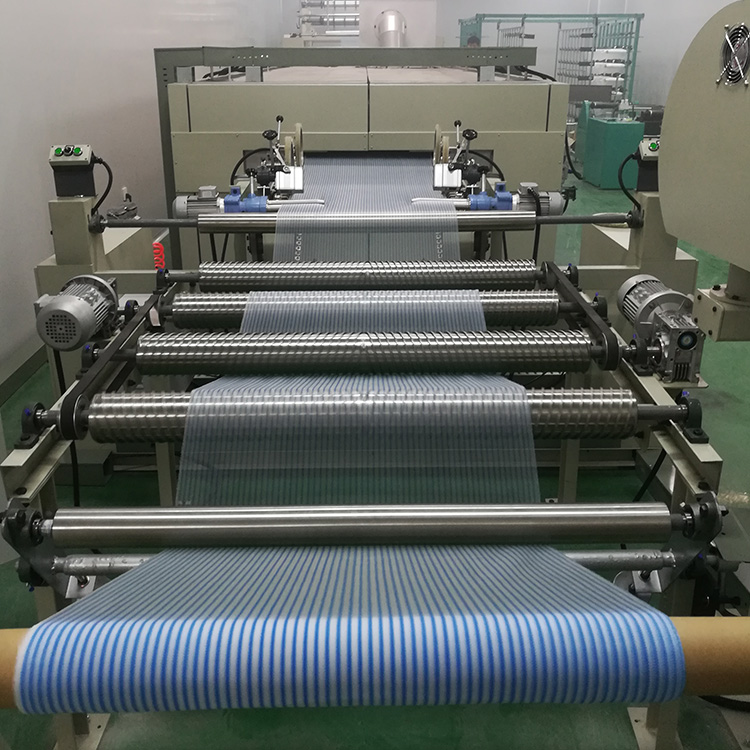
To fully appreciate the value of this equipment, one must first understand the thermodynamics of thermoplastic polymers. Polypropylene is a semi-crystalline polymer with a specific glass transition temperature (Tg) and melting temperature (Tm). When the knitted or woven mesh enters the thermal chamber, it must be heated to a precise temperature that lies between its Tg and Tm. This carefully controlled thermal environment allows the amorphous regions of the polymer chains to gain mobility, effectively relaxing the mechanical stresses introduced during the knitting or weaving process. The evolution of polypropylene mesh processing has demanded equipment that can provide uniform heat distribution across the entire width and length of the fabric. Once the internal stresses are relaxed, the polymer chains realign into a more stable configuration. The fabric is then rapidly cooled, locking this new, stress-free molecular structure in place. This process is known as heat setting. A specialized polypropylene mesh heat setting machine is engineered specifically to manage this delicate balance of temperature, time, and mechanical tension, ensuring that the structural integrity of the mesh is perfectly preserved without causing thermal degradation or melting.
The initial stage of the thermal finishing process is arguably one of the most critical. As the raw, untreated mesh is fed into the equipment, it is highly susceptible to edge curling and dimensional distortion. Advanced equipment utilizes sophisticated selvedge uncurlers and precision overfeed systems to gently guide the fabric onto the pin chains or clips. The overfeed system is particularly important; it dictates the longitudinal tension applied to the fabric. By carefully adjusting the overfeed ratio, operators can control the final weight per square meter (GSM) and the porosity of the mesh. In a high-quality polypropylene mesh heat setting machine, the tension control is managed by highly sensitive load cells and variable frequency drives (VFDs) that communicate in real-time with the central programmable logic controller (PLC). This ensures that the delicate mesh is held taut enough to prevent sagging, but not so tight that the individual filaments are stretched beyond their elastic limit, which would compromise the mechanical properties of the final product.
Once the fabric is securely pinned and tensioned, it enters the heating chambers. The thermal dynamics within these chambers dictate the success of the entire operation. Polypropylene is notoriously sensitive to temperature fluctuations; a deviation of even a few degrees can result in uneven shrinkage, localized melting, or inadequate stress relaxation. A state-of-the-art polypropylene mesh heat setting machine employs engineered nozzles that direct heated air uniformly across both the top and bottom surfaces of the fabric. The airflow must be perfectly balanced to prevent the lightweight mesh from fluttering or blowing off the pins. Furthermore, the heating zones are typically divided into multiple independent sections, allowing for a gradual ramping up of temperature. This stepped heating profile prevents thermal shock to the polymer and ensures deep, consistent heat penetration through the entire thickness of the mesh structure.
The final stage of the process is just as crucial as the heating phase. After the polymer chains have been relaxed and realigned in the thermal chambers, the new molecular structure must be permanently locked in place. This is achieved through rapid and controlled cooling. As the fabric exits the final heating zone of the polypropylene mesh heat setting machine, it is immediately subjected to high-velocity ambient or chilled air, and often passes over water-cooled cylinders. This sudden drop in temperature drops the polymer well below its glass transition temperature, freezing the molecular alignment. Proper cooling ensures that the fabric maintains its newly acquired dimensional stability. Following the cooling zone, the fabric is carefully wound onto rolls. The winding mechanism must operate with zero-tension or highly controlled low-tension parameters to prevent re-introducing mechanical stress into the freshly set mesh. Precision edge-trimming devices are often integrated into this final stage to provide clean, uniform rolls ready for cutting, packaging, or further processing.
The primary objective of thermal finishing is to impart dimensional stability, and this is where specialized equipment truly excels. Medical and technical meshes must undergo rigorous downstream processes, including ultrasonic cutting, laser cutting, and various sterilization methods such as ethylene oxide (EtO) gas, gamma irradiation, or steam autoclaving. If a mesh has not been properly heat-set, the elevated temperatures and pressures of these sterilization processes will cause the fabric to shrink unpredictably. By utilizing a highly precise polypropylene mesh heat setting machine, manufacturers guarantee that the fabric will retain its exact length, width, and geometric structure regardless of the environmental conditions it faces later. This stability is absolutely vital for surgical applications, where a surgeon relies on the exact dimensions of the implant to repair tissue defects effectively.
In the realm of implantable medical devices, biocompatibility is the highest priority. During the extrusion and knitting processes, various spin finishes, knitting oils, and lubricants are applied to the polypropylene yarns to reduce friction and prevent breakage. These chemical additives must be completely removed or neutralized before the mesh can be safely implanted into the human body. When it comes to medical polypropylene production, maintaining a sterile, contaminant-free environment is paramount. The high temperatures achieved within the thermal chambers not only relax the polymer but also serve to volatilize and drive off these residual manufacturing oils. A properly configured polypropylene mesh heat setting machine equipped with efficient exhaust and filtration systems ensures that these volatile organic compounds (VOCs) are safely extracted from the fabric, significantly improving the purity and biocompatibility of the final medical device and aiding in compliance with strict ISO 10993 biological evaluation standards.
The physical characteristics of a mesh, specifically its porosity (pore size) and areal density (weight per square meter), directly influence its performance. In hernia repair, for example, the pore size must be large enough (typically greater than 75 microns) to allow for macrophage infiltration, angiogenesis, and healthy collagen deposition, while minimizing the risk of chronic inflammation or infection. The mechanical tension applied by the polypropylene mesh heat setting machine during the thermal process allows manufacturers to precisely dictate these parameters. By manipulating the transverse tension (via the width adjustment of the chain rails) and the longitudinal tension (via the overfeed system), the machine locks the knitted loops into an exact, open configuration. This level of micro-structural control is impossible to achieve without highly specialized thermal finishing equipment.
Traditional textile finishing machines often struggle with lightweight, highly porous structures like PP mesh because their high-velocity airflow systems can distort the delicate fabric. Modern engineering has solved this through customized aerodynamic designs. Unlike standard equipment, a customized drying machine integrated into the heat setting line ensures that the convective heat transfer is gentle yet highly efficient. These advanced airflow systems utilize bypass dampers, variable speed blowers, and specially designed nozzle slots that create a perfectly balanced cushion of hot air. This "floating" effect supports the mesh as it travels through the chamber, preventing sagging and ensuring that the heat is distributed with absolute uniformity. This innovation is critical for preventing the "browning" or thermal degradation of the polymer, ensuring the mesh remains pristine and structurally sound.
The medical device manufacturing industry is heavily regulated, requiring meticulous documentation and traceability for every batch of product produced. To meet FDA 21 CFR Part 11 requirements and ISO 13485 quality management standards, the modern polypropylene mesh heat setting machine is equipped with advanced digital automation. High-resolution touch-screen interfaces allow operators to input specific "recipes" for different types of mesh, automatically adjusting the temperature, speed, overfeed, and width parameters to exact specifications. Furthermore, these machines feature continuous data logging capabilities. Sensors monitor the temperature of the fabric itself (not just the air in the chamber), the exhaust humidity, and the mechanical tension in real-time. If any parameter deviates from the validated tolerance window, the machine can automatically alert operators or halt production, ensuring that no out-of-specification material ever reaches the market.
The most prominent and critical application for this technology is in the production of surgical implants. Polypropylene is the gold standard material for hernia repair meshes, pelvic organ prolapse (POP) slings, and stress urinary incontinence (SUI) tapes. These implants must integrate seamlessly with human tissue while providing long-term mechanical support. The stringent requirements of medical mesh heat setting mean that the machine must operate flawlessly within a cleanroom environment. The heat setting process defines the flexibility, burst strength, and handling characteristics of the surgical mesh. A surgeon requires a mesh that lays flat, does not curl at the edges when cut, and has the appropriate stiffness to be easily manipulated during laparoscopic procedures. The exact thermal history imparted by the polypropylene mesh heat setting machine is what guarantees these vital handling characteristics.
Beyond the medical field, dimensionally stable polypropylene meshes are heavily utilized in demanding industrial applications. Because PP is highly resistant to acids, alkalis, and organic solvents, it is an ideal material for liquid and gas filtration systems, aquaculture netting, and spacer fabrics used in automotive and aerospace composites. In these applications, the mesh often operates under high pressure or in extreme environmental conditions. If the pores of a filtration mesh deform under pressure, the filtration efficiency is completely compromised. Processing these technical textiles through a high-capacity polypropylene mesh heat setting machine ensures that the pore geometry remains rigid and consistent, providing reliable, long-lasting performance in harsh industrial environments.
It is a common misconception that any textile finishing equipment can handle polymer meshes. While a standard medical textile stenter might handle basic woven fabrics or natural fibers adequately, it is fundamentally ill-equipped for the rigorous demands of medical-grade polypropylene. Standard stenters often lack the precise temperature control required (often fluctuating by ±5°C or more), which is disastrous for PP, as its melting point is relatively low and its thermal processing window is extremely narrow. Furthermore, standard machines are typically constructed with carbon steel components and standard lubricants that can introduce particulate contamination and heavy metal residues into the fabric. In stark contrast, a dedicated polypropylene mesh heat setting machine designed for medical applications is constructed entirely of high-grade stainless steel (such as 316L) in all product-contact areas. It utilizes food-grade or medical-grade high-temperature lubricants, and is designed with smooth, crevice-free internal surfaces to prevent the accumulation of dust and bacteria, making it fully compatible with ISO Class 7 or Class 8 cleanroom environments.
To maximize the lifespan of the equipment and ensure consistent product quality, manufacturers must adhere to strict operational and maintenance protocols. First and foremost, thermal calibration must be performed regularly. The temperature sensors within the heating chambers of the polypropylene mesh heat setting machine should be calibrated against certified external standards to ensure absolute accuracy. Secondly, the pin chains and clips must be meticulously cleaned and inspected. Any buildup of volatilized polymer or residual spinning oils on the pins can prevent the fabric from being gripped securely, leading to tension loss and dimensional distortion. Implementing a preventative maintenance schedule that includes checking the alignment of the rails, verifying the functionality of the exhaust fans, and ensuring the VFDs are operating smoothly is essential. Furthermore, operators must be thoroughly trained not only on the mechanical operation of the machine but also on the polymer science behind the materials they are processing, enabling them to troubleshoot issues proactively and optimize the thermal recipes for new product developments.
Investing in highly specialized thermal finishing equipment is a strategic necessity for any manufacturer aiming to produce premium medical or technical textiles. The advantages of integrating a dedicated polypropylene mesh heat setting machine into your production line are substantial and directly impact the bottom line and product safety. Here is a summary of the core product advantages:
